
There’s a particular tension iPhone users live with during any memorable experience: the awareness that you’re simultaneously present and performing curation. You’re choosing the frame. You’re deciding which direction matters. You’re making real-time editorial decisions about which parts of this moment deserve documentation and which parts will exist only in biological memory, if they register at all.
The behavior became so automatic that most Apple users stopped recognizing it as a decision. You pointed the iPhone at the sunset, not the faces watching it. You captured the landmark, not the approach. You filmed the jump into the water, missing the expression right before. These weren’t mistakes—they were the inevitable mathematics of framing. Every choice to include something was simultaneously a choice to exclude everything outside the rectangle.
What’s revealing isn’t that 360-degree cameras exist now—it’s how many iPhone users had internalized framing as an unsolvable constraint rather than a technical limitation. The assumption ran deeper than camera operation. It shaped how people positioned themselves during experiences, who volunteered to film versus participate, and which moments got abandoned entirely because the framing problem seemed unsolvable.
Adventure documentation became a case study in acceptable loss. Someone always ended up behind the camera instead of in the experience. Group activities required negotiating who would sacrifice participation for documentation. iPhone users developed elaborate systems: everyone takes turns filming, someone always brings a tripod, we’ll just recreate it after for the camera. The workarounds felt normal because the alternative—capturing nothing—felt worse.
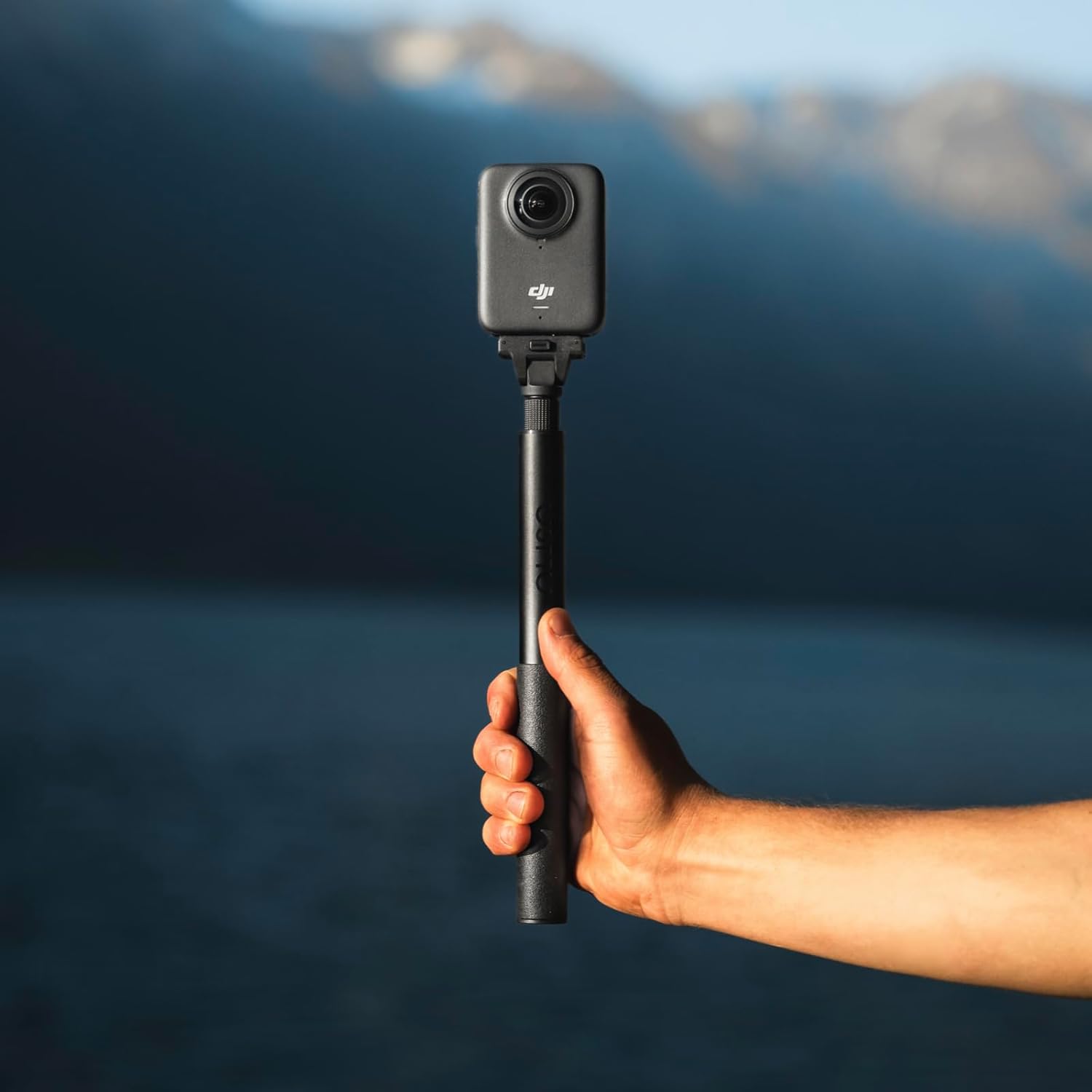
The 360-degree camera didn’t just capture more. It eliminated the moment of deciding what wouldn’t matter enough to save. For iPhone users accustomed to making those micro-decisions hundreds of times during any documented experience, the absence of that cognitive load revealed how much mental energy had been devoted to real-time curation. You didn’t realize you were constantly choosing until choosing became optional.
What shifted wasn’t the quality of the footage—it was the relationship to capturing it. iPhone users who’d spent years perfecting their framing instincts suddenly found those instincts irrelevant. Point it anywhere. It captured everywhere. The anxiety about missing something dissolved not because the camera was better, but because “missing something” stopped being geometrically possible.
The price has quietly dropped since many users first adapted to this habit. It now costs less than when most Apple users learned to work around it. The price shift went largely unnoticed, much like the behavior itself. A link is included solely to document the change.
The 360-degree capture didn’t transform how iPhone users document experiences. It just removed the layer of editorial decision-making that had been happening simultaneously with the experiences themselves. For Apple users who spent years training themselves to instinctively frame moments while living them, that absence of choice feels less like a feature and more like finally noticing how much of their attention had been devoted to exclusion.
"Note: Readers like you help support The Apple Tech. We may receive a affiliate commission when you purchase products mentioned on our website."