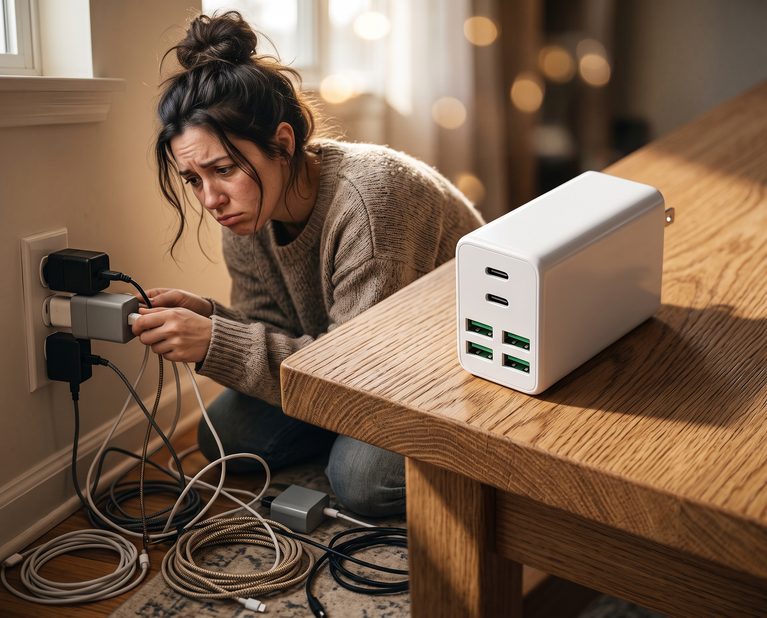
There’s a specific kind of stress that sets in around 20 percent battery. You start closing apps, lowering brightness, skipping the video you wanted to watch, calculating how many hours until you’re near an outlet. The phone is still functional, but your behavior changes. You’re managing scarcity, rationing attention, making choices based not on what you want to do but on what the battery will allow. It’s a low-grade tension that shapes the entire day, so familiar most people don’t even register it anymore.
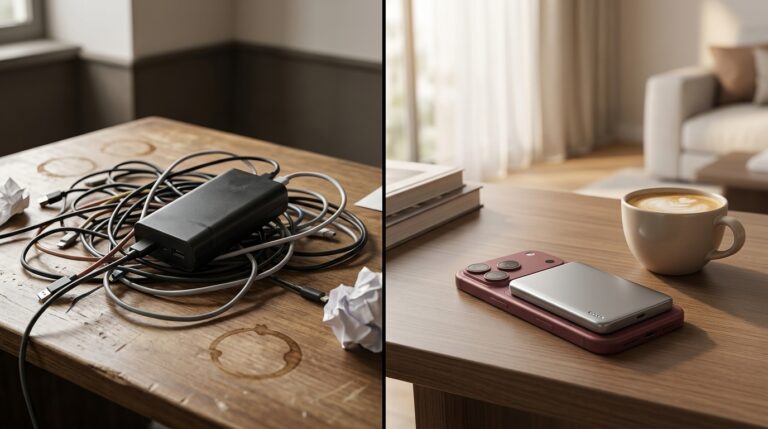
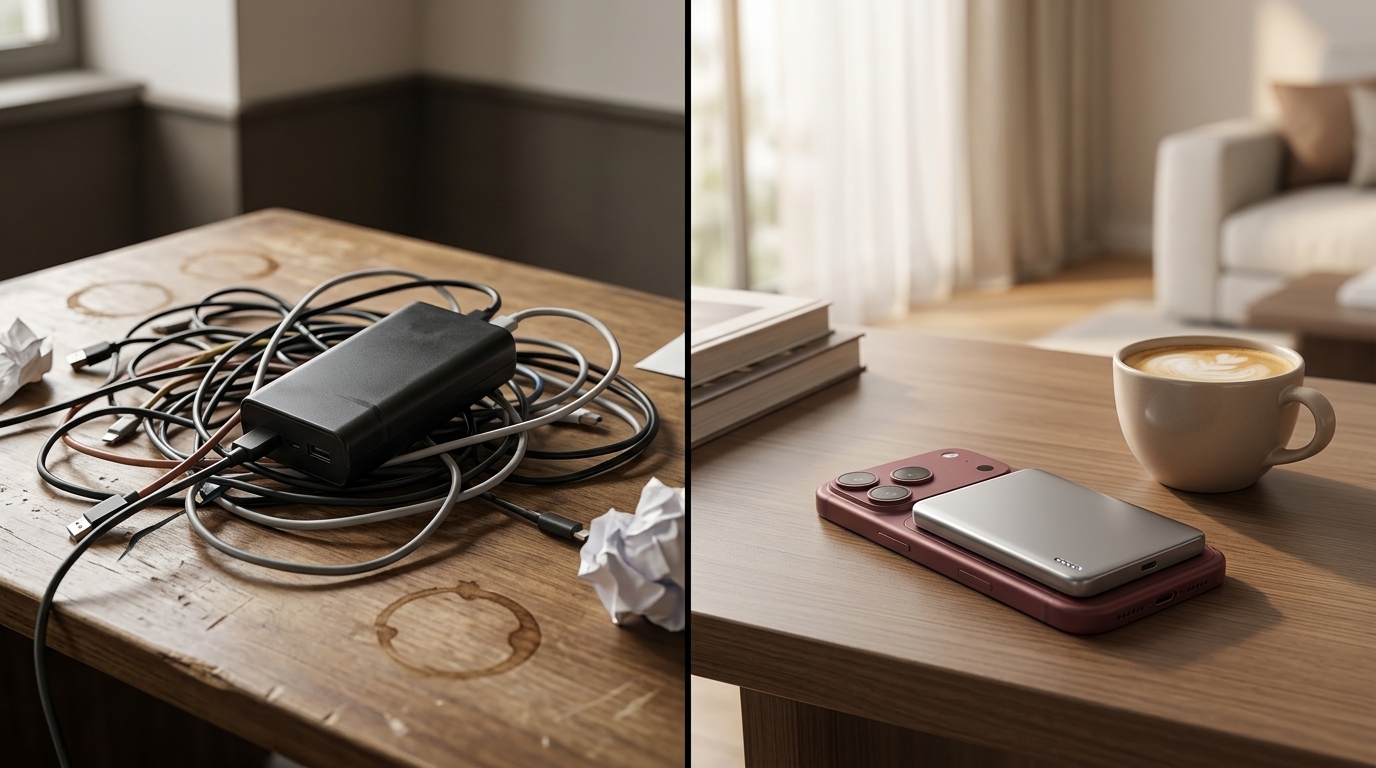
That tension has started to ease for iPhone users who’ve adopted slim magnetic power banks. The devices snap onto the back of the phone via MagSafe, charge wirelessly without cables, and are thin enough to slip into a pocket or bag without much thought. They don’t eliminate battery anxiety entirely, but they change its nature. Instead of worrying about how much charge is left, you worry about whether you remembered to bring the power bank. And for many people, that trade-off feels more manageable.
What makes these power banks different from earlier generations is how unobtrusive they’ve become. Older portable chargers were bulky, required cables, lived at the bottom of bags where they were forgotten or ignored. They were emergency equipment, something you packed for long trips or music festivals, not something you carried every day. The magnetic slim versions collapse that friction. They attach instantly, charge passively, and because they’re thin—some barely thicker than the phone itself—they don’t feel like carrying a second device. They feel like a case with benefits.
The behavioral shift is subtle but noticeable. People who carry these power banks report using their phones more freely throughout the day. They don’t think twice about navigation, streaming, extended camera use—activities that used to trigger calculations about whether the battery would last. The phone becomes less of a finite resource and more of a constant companion, one that can be topped off whenever needed without finding an outlet or stopping what you’re doing.
The anxiety doesn’t disappear completely, but it changes shape. Instead of conserving battery, you just know you have more when you need it. Some users describe it as insurance—they rarely drain the power bank fully, but knowing it’s there removes the mental load of monitoring percentage constantly. Others use it more actively, treating it as an extension of the phone’s battery rather than a backup, snapping it on every morning and letting it charge throughout the day.
There’s also a social dimension. Dead phones used to be common enough that nobody questioned it—you’d be unreachable for a few hours until you found a charger, and that was normal. But as smartphones have become more central to navigation, payments, communication, and authentication, a dead phone feels less like an inconvenience and more like being cut off from essential infrastructure. A power bank is a hedge against that vulnerability, a way to ensure you’re never truly disconnected, even if you forgot to charge overnight or spent the day using your phone more than planned.
The economics have shifted too. These slim magnetic power banks used to be premium accessories, priced high enough that most people stuck with bulkier, cheaper alternatives. But prices have come down—some models are currently available with discounts as steep as 33 percent on platforms like Amazon—bringing them into the range where they’re no longer a luxury but a practical consideration for anyone who uses their phone heavily.
Not everyone needs one. People who work from home, who are rarely far from an outlet, who use their phones lightly enough that a single charge lasts the day—they’re not solving a problem they have. But for those who commute, travel frequently, spend long days out, or just use their phones constantly, the power bank has become part of the daily kit. It sits in the bag alongside keys and wallet, something you check for before leaving, something you notice when it’s missing.
What’s changed isn’t the phone’s battery life—that remains roughly the same, incremental improvements notwithstanding. What’s changed is the user’s relationship with that limitation. The battery is still finite, but it’s no longer the constraint it used to be. You can use the phone how you want, when you want, and if it runs low, there’s a thin rectangle in your pocket that solves it. The percentage still matters, but it doesn’t dictate behavior the way it used to. And for people who’ve internalized years of battery anxiety, that shift feels like breathing room they didn’t realize was possible.
"Note: Readers like you help support The Apple Tech. We may receive a affiliate commission when you purchase products mentioned on our website."