
There exists a category of iPhone user who never fully accepted the headphone jack’s removal as an improvement. They tolerated it, adapted to it, maybe even convinced themselves that wireless was better most of the time. But some friction remained—Bluetooth pairing rituals, charging anxiety, the slight latency during video calls, the nagging sense that audio sounded different in ways they couldn’t quite articulate. For those people, the market eventually caught up with a solution: make the phone do what it used to do, but externally, with added hardware costs.
The DAC—digital-to-analog converter—used to be invisible infrastructure inside every phone. It took digital audio files and turned them into analog signals that headphones could translate into sound. This happened automatically, instantly, without anyone thinking about chip specifications or signal quality. When phones eliminated the headphone jack, they didn’t eliminate the need for this conversion. They just shifted where it happens: in wireless earbuds, in USB-C adapters, or in increasingly sophisticated external dongles that do the job better than the phone ever did, which raises uncomfortable questions about why the phone stopped doing it at all.
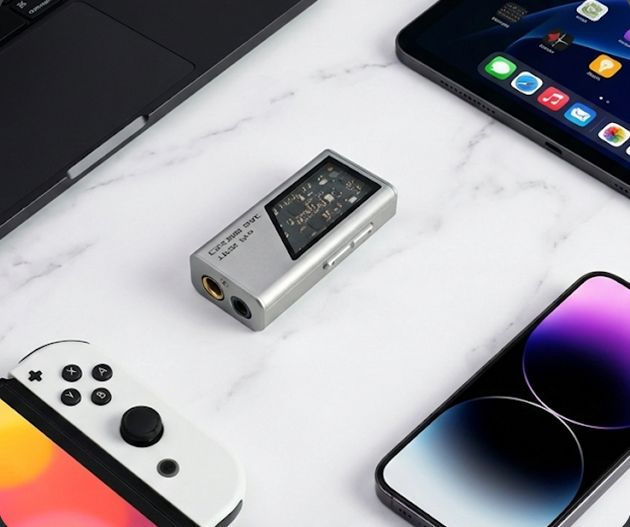
The dual CS43198 chip configuration means something specific to audio engineers and almost nothing to casual listeners until they hear the difference. These chips handle the conversion with more precision, less noise, and greater dynamic range than the generic converters in basic USB-C adapters. The audible gap isn’t dramatic—it’s not like switching from AM radio to vinyl. It’s subtler: clearer instrument separation, more defined bass response, less digital harshness in high frequencies. The kind of difference you don’t notice in a direct comparison but feel when you go back to standard output.
Hi-resolution audio support—32-bit depth, 384kHz sampling rates—exists in a peculiar space. Most music isn’t recorded at these specifications. Most people can’t reliably distinguish them from CD-quality audio in blind tests. But the capability matters anyway, because it represents headroom. The system can handle more information than currently exists, which means it’s not the limiting factor. For people who’ve invested in high-quality recordings or lossless streaming subscriptions, knowing the hardware can match the source material eliminates one variable in a complex audio chain.
The 4.4mm balanced output is the detail that reveals who this product is actually for. Standard 3.5mm jacks work fine for most headphones. Balanced connections reduce interference and crosstalk, providing marginally cleaner audio for headphones designed to take advantage of them. It’s a feature that would be absurd overkill for someone listening on $30 earbuds. But for the subset of users who own $300 IEMs—in-ear monitors—and care deeply about audio reproduction, it’s the difference between adequate and appropriate. The product isn’t trying to serve everyone. It’s serving the people who never wanted wireless in the first place.
EQ adjustment represents functionality that once lived in iTunes and gradually disappeared as Apple’s audio philosophy shifted toward “trust us, flat response is correct.” But flat response assumes perfect source material played in ideal acoustic environments. Real listening happens in noisy coffee shops, on airplanes, during commutes. The ability to boost bass that gets lost in ambient noise or reduce treble that sounds harsh through specific headphones isn’t audiophile pickiness—it’s adaptation to circumstance. Moving that control to hardware means it works regardless of which app is playing audio.
The irony is that you now need a separate device to do what the phone accomplished silently for decades. The iPhone got thinner by millimeters. The user’s pocket got more crowded with adapters. The trade-off was presented as obviously worthwhile—wireless is the future, cables are vestigial. But futures are unevenly distributed, and for people whose headphones cost more than their phone case, the wireless future keeps getting delayed indefinitely.
Microphone support matters more than the spec list suggests. Video calls, voice memos, podcast recording—these all require functional mic input, which basic audio adapters don’t always handle cleanly. The ability to use wired headphones with inline mics while maintaining call quality means the dongle becomes transparent. You’re not working around the phone’s limitations. You’re restoring functionality that used to be assumed.
What’s peculiar about this entire product category is that it exists purely as correction—fixing a problem that was deliberately created through design choices positioned as improvements. The dongle costs more than many wired headphones. It requires its own carrying consideration, its own mental overhead about whether it’s in your bag. It’s one more thing to lose, forget, or replace. But for the people who buy it, these costs are preferable to accepting that wireless is good enough, or that phone manufacturers know better than users what they need from their audio hardware.
The 10% discount barely registers for something this specific. If you’ve decided you need a portable DAC, price is rarely the determining factor. You’re already committed to spending money to solve a problem that shouldn’t exist. What matters is whether the hardware does what it promises: turns USB-C back into a headphone jack, but better than the headphone jack ever was. That transformation—from absence to improvement—is what the market is actually selling.
"Note: Readers like you help support The Apple Tech. We may receive a affiliate commission when you purchase products mentioned on our website."