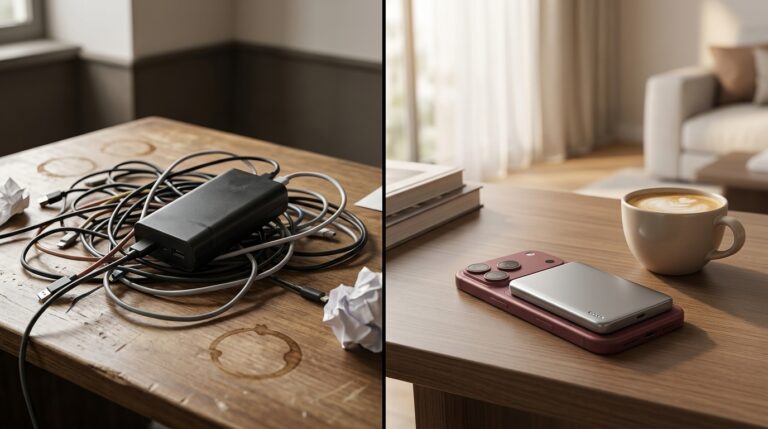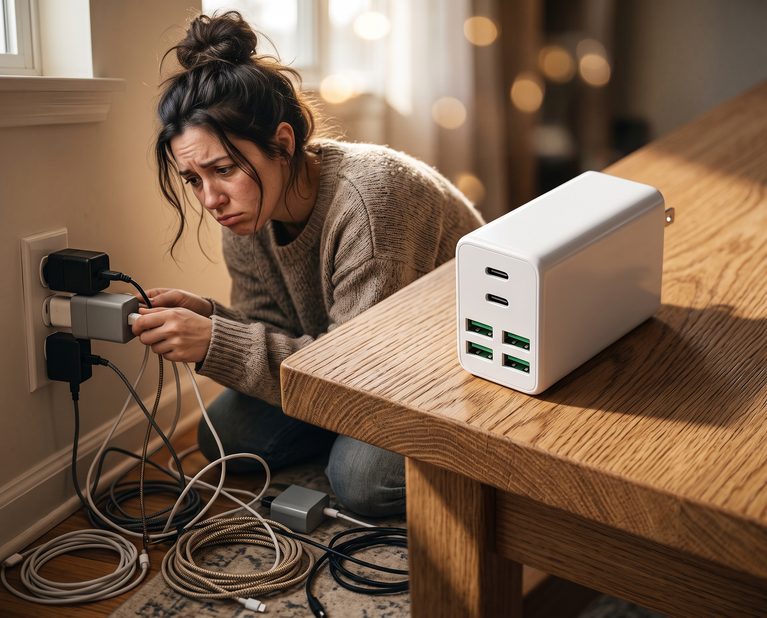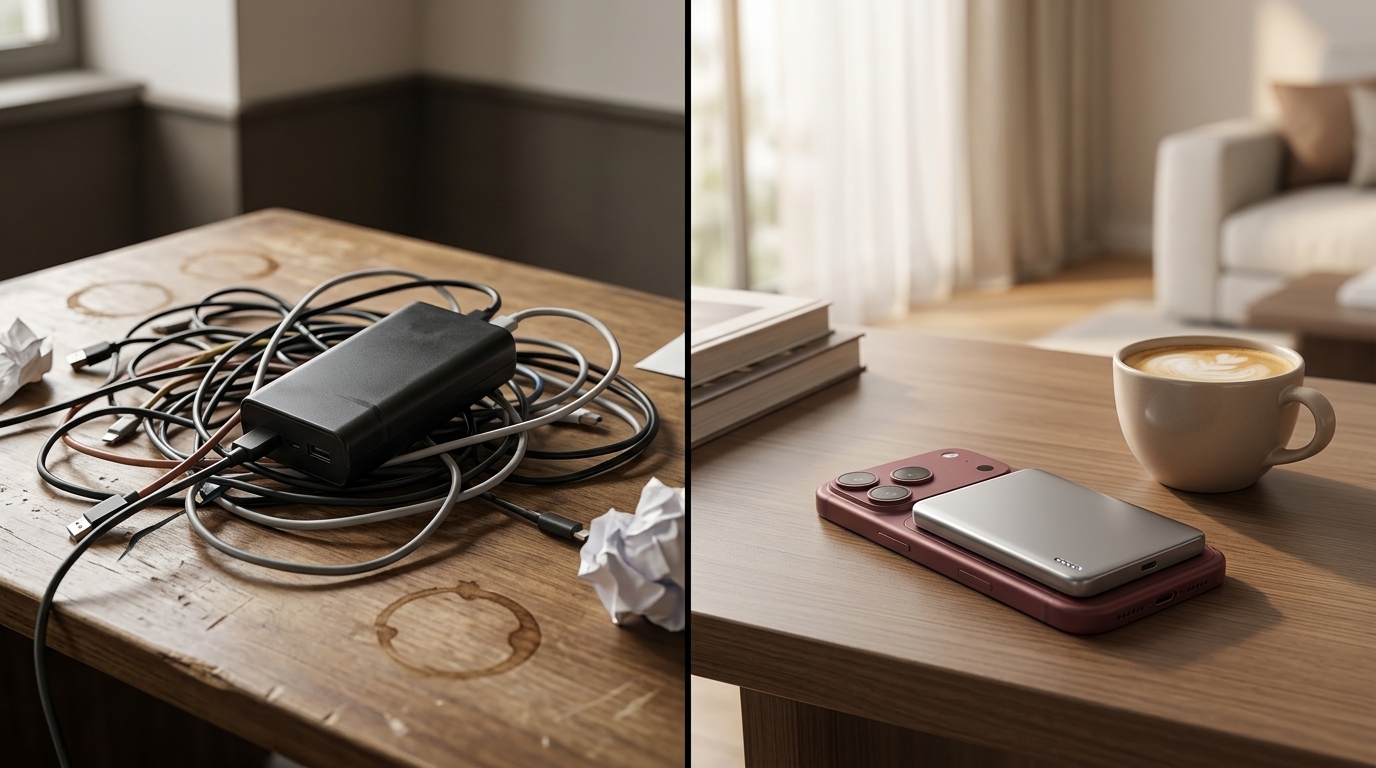

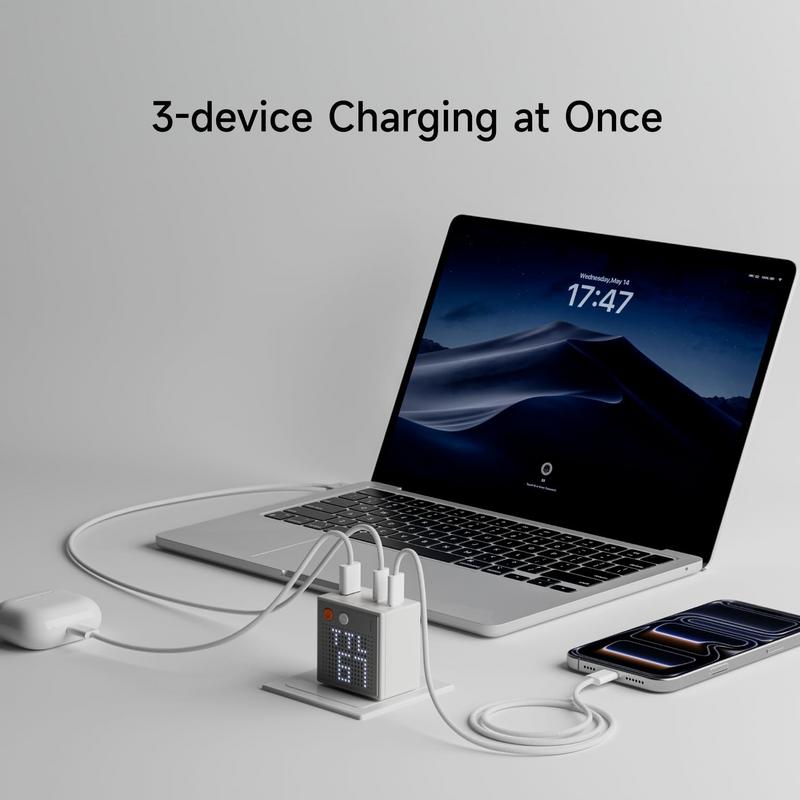
There is a quiet evolution happening in the way many of us manage the power needs of our Apple ecosystem. It’s less about the devices themselves, and more about the invisible threads of power that connect them, shaping our daily habits and travel routines. For years, the scene was familiar: an iPhone, an iPad, maybe an Apple Watch, and a MacBook, each with its own power adapter, demanding a dedicated outlet and often creating a tangle of cables.
This daily ritual, often unnoticed until it causes a low-level friction, became a subtle background hum in our technologically saturated lives. The moment of packing for a trip, for instance, often involved a minor internal debate: which chargers are truly essential? Which can be left behind to save precious space? The cumulative weight of multiple bricks and cables, while individually negligible, often added up to a small, recurring inconvenience, particularly for those who navigate between home, office, and frequent travel.
Observably, a shift has been underway. Many have begun to consolidate, seeking a single, more capable power source to tend to their collection of Apple hardware. The internal calculation remains the same—keep everything charged—but the method is quietly adapting. It’s an unspoken acknowledgment of how deeply integrated these devices are into our personal and professional workflows, demanding constant readiness.
Consider the arrival in a new hotel room. The first instinct, after dropping bags, is often to locate available power outlets. Then comes the small, almost unconscious act of unfurling cables, arranging the iPhone on the nightstand, plugging in the iPad for an overnight charge, and ensuring the MacBook is topped up for the morning. In this small, physical moment, the desire for efficiency becomes clear. A single, capable wall adapter that can comfortably power a MacBook Air, an iPhone, and perhaps even AirPods simultaneously, quietly streamlines this entire process, reducing the need to hunt for multiple sockets or prioritize which device gets power first.
This behavioral adaptation is not driven by grand technological statements, but by the quiet accumulation of minor frustrations. The search for the right cable, the frustration of a slow charge when juggling multiple devices, or the lingering battery anxiety when only one outlet is available. These are the small, everyday challenges that subtly push users towards more integrated and compact charging solutions, even if they don’t articulate it as such.
The habit of checking battery percentages throughout the day, particularly on an iPhone, remains a constant. It’s a background process that informs our decisions: Can I make it through the evening without a top-up? Will this charger handle my iPad Pro and iPhone 15 simultaneously and still provide meaningful power? These quiet dependencies reinforce the value of a consolidated, reliable power source.
The ongoing refinement of USB-C Power Delivery technology, enabling faster and more efficient charging from a single port, has undoubtedly facilitated this shift. It offers a practical answer to the problem of device sprawl, allowing a more organized approach to power management. Recent listings for such compact, high-output chargers have reflected reductions compared with earlier availability, a quiet acknowledgment of evolving market dynamics.
Ultimately, these new routines aren’t about the chargers themselves, but about the unspoken human need for simplicity and preparedness in an increasingly connected life. The evolving power brick merely serves as a quieter, more efficient enabler of the Apple ecosystems we carry with us every day.
This product has recently appeared more often in conversations around portable Apple setups and everyday charging routines.
Check current availability here
How does a multi-port USB-C charger integrate with the diverse power requirements of Apple devices?
Modern multi-port USB-C chargers with Power Delivery (PD) technology intelligently allocate power across connected Apple devices, from iPhones and AirPods to iPads and MacBooks. They sense the optimal charging profile for each device, ensuring efficient and safe power delivery, often consolidating multiple individual chargers into one unit.
Can a single high-wattage GaN charger effectively replace individual chargers for an iPhone, iPad, and MacBook Air?
Yes, for many users, a single high-wattage GaN (Gallium Nitride) charger with multiple USB-C PD ports can indeed replace several individual Apple chargers. These compact chargers are capable of providing sufficient power for a MacBook Air, while simultaneously fast-charging an iPhone and iPad, streamlining desk or travel setups.
What behavioral shifts are commonly observed when Apple users adopt more compact, multi-port charging solutions?
Users often report a reduction in cable clutter, a more organized approach to device charging, and an improved sense of preparedness for travel. The habit of carrying fewer individual bricks and cables becomes normalized, reducing the low-level friction associated with managing multiple power accessories.
Does using a third-party multi-port charger impact the battery health of Apple devices, compared to Apple’s own adapters?
When using reputable third-party chargers that adhere to industry standards like USB-C Power Delivery (PD), there is generally no adverse impact on the long-term battery health of Apple devices. These chargers are designed to communicate with devices to deliver appropriate power, similar to Apple’s own adapters, maintaining charging efficiency and safety protocols.
Verdict
The quiet adoption of consolidated charging solutions reflects a deeper behavioral shift among Apple users. It’s an evolutionary response to the ever-present demand for power across multiple devices, driven by a subtle desire to reduce friction in daily routines. This move towards single, versatile power bricks is less about technological marvel and more about the human preference for simplicity and order amidst digital complexity. It underscores how deeply our devices are woven into the fabric of our days, subtly reshaping our habits in the pursuit of uninterrupted connectivity and effortless preparation.
"Note: Readers like you help support The Apple Tech. We may receive a affiliate commission when you purchase products mentioned on our website."