

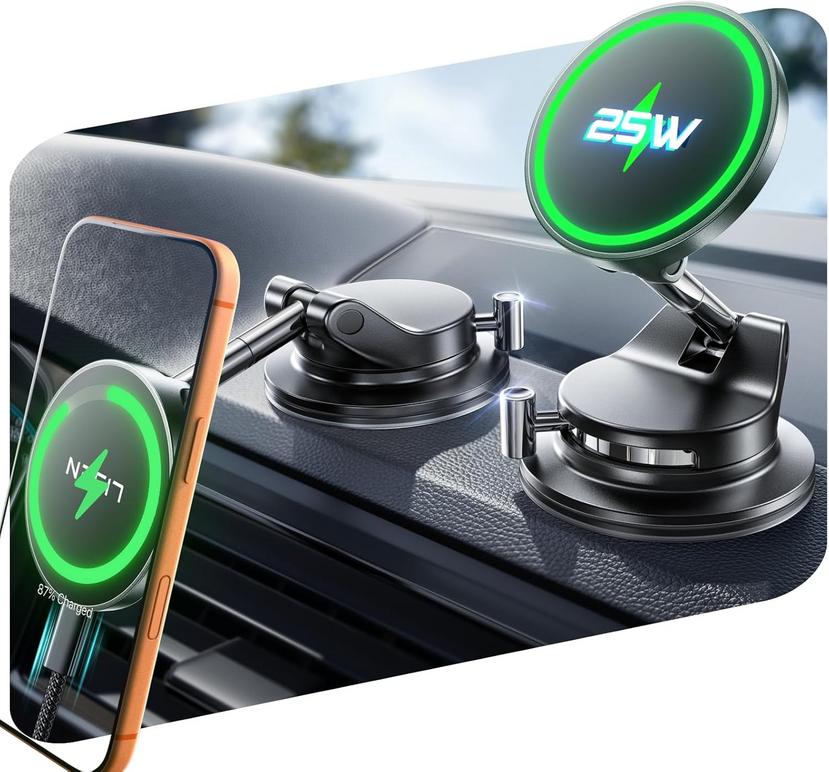
The evolving landscape of in-car connectivity reveals how Apple users subtly adjust their routines, transforming mundane journeys into extensions of their digital lives through intuitive device management.
For years, the act of integrating an iPhone into the car’s ecosystem was often a series of compromises. Drivers became accustomed to a silent ritual of adjusting spring-loaded clamps, fumbling with finicky vents, or wrestling with suction cups that occasionally lost their grip. Each solution brought its own minor friction: the precise alignment needed for a Lightning cable, the precarious balance on a dashboard, or the constant visual reminder of a phone precariously positioned. These small, repetitive inconveniences were largely accepted as part of navigating with a smartphone, a quiet tax on convenience that few articulated but many experienced daily.
Then, a gradual shift began to take hold. The increasing prevalence of magnetic mounting solutions, particularly those leveraging MagSafe capabilities, quietly introduced a new rhythm. The satisfying, almost imperceptible “snap” of an iPhone settling into place against a car mount became a new part of starting a journey. This small, mundane moment — the device effortlessly aligning and initiating a charge — represented a departure from the previous routine of fumbling for a port or ensuring a tight clamp. It was less about a new product and more about the elimination of a recurring micro-frustration.
This transition extends beyond mere physical security; it subtly addresses the underlying anxiety of device power. For many Apple users, the expectation of a continuously powered iPhone is now deeply ingrained. Long drives, especially, once meant a careful rationing of battery life or a scramble to connect a cable before a map app drained the last percentages. With the effortless magnetic dock now often providing consistent wireless power, the mental load associated with battery management during transit has lessened, enabling a more seamless reliance on the device for navigation, entertainment, and communication.
The impact also extends to the aesthetic and functional cleanliness of the car’s interior. The visual clutter of multiple cables snaking across the console or the presence of bulky, generic phone holders is gradually receding. In their place, a simpler, more integrated approach allows the iPhone to appear as a natural extension of the vehicle’s dashboard, contributing to a sense of workspace reduction, even within a mobile environment. This quiet streamlining of the in-car experience reflects a broader trend among Apple users towards more intentional and less obtrusive technology integration.
What is perhaps most striking is how quickly this magnetic, wireless interaction has normalized within the Apple ecosystem. For many iPhone owners, the act of placing their device on a compatible car mount now feels less like adapting to a new technology and more like engaging with an expected evolution of their existing devices. The muscle memory of a quick, confident placement and removal has become a familiar gesture, almost as intuitive as unlocking the device itself. It’s a testament to how subtle design shifts can profoundly influence daily habits.
This quiet normalization points to a deeper pattern: the way Apple users often integrate new conveniences not as revolutionary disruptions, but as natural extensions of an established relationship with their devices. The moments of friction that were once tolerated now stand out in relief, highlighting a gradual, almost imperceptible elevation of the everyday. It’s a calm recognition that, for many, the ad-hoc nature of in-car device management was a piece that had been silently missing.
Listings currently reflect reductions of roughly 33 percent compared with earlier availability.
This product is currently available on Amazon and has been drawing attention among Apple users interested in cleaner and more adaptable everyday setups.
Check availability and latest pricing here
Question
How does MagSafe technology enhance iPhone usability in a vehicle?
MagSafe offers a precise magnetic alignment for iPhones, simplifying the act of securely attaching the device to a compatible car mount. This allows for quicker, more consistent placement and removal, often initiating wireless charging simultaneously, streamlining in-car workflows like navigation and hands-free communication.
Question
Is wireless charging in cars compatible with various iPhone models?
Wireless car chargers primarily support iPhones equipped with MagSafe (iPhone 12 series and newer) for optimal magnetic alignment and charging speeds. Many chargers also offer standard Qi wireless charging, which can power other compatible iPhones, though without the magnetic lock.
Question
What are the benefits of USB-C connectivity for car chargers in the Apple ecosystem?
USB-C has become a universal standard, offering faster power delivery and broad compatibility across many modern Apple devices and accessories. Using a car charger with a USB-C input means Apple users can often employ the same cables and power bricks they use for other devices, reducing cable clutter and enhancing versatility.
Question
How do these car mounts address concerns about phone stability and safety during driving?
Modern car mounts, particularly those with strong magnetic connections like MagSafe, aim to provide stable device placement that minimizes movement on various road conditions. This consistent hold reduces the need for drivers to adjust their device while in motion, contributing to fewer distractions and a more focused driving experience.
Verdict
The subtle evolution of in-car iPhone management reflects a broader habit shift among Apple users. What was once a recurring dance with cables and uncertain mounts has quietly transformed into an almost instinctive magnetic connection. This behavioral adaptation highlights a growing expectation for seamless integration, where devices not only remain powered but also become effortlessly situated within the daily rhythms of transit. It underscores how small changes in interaction can lead to a more fluid and less friction-filled relationship with technology, even in mundane environments like the automobile.
"Note: Readers like you help support The Apple Tech. We may receive a affiliate commission when you purchase products mentioned on our website."