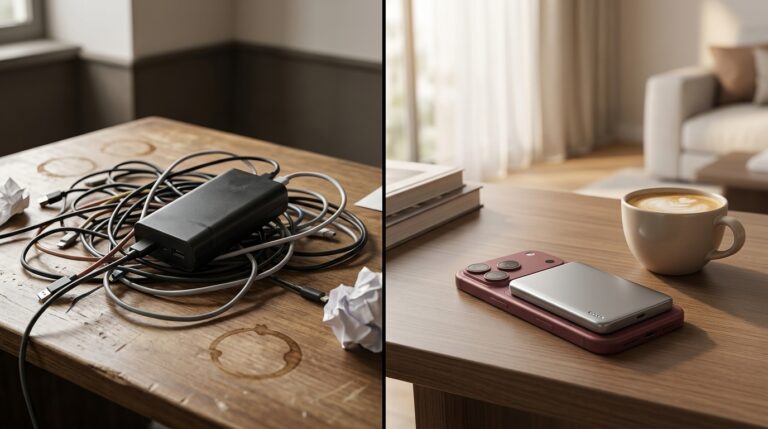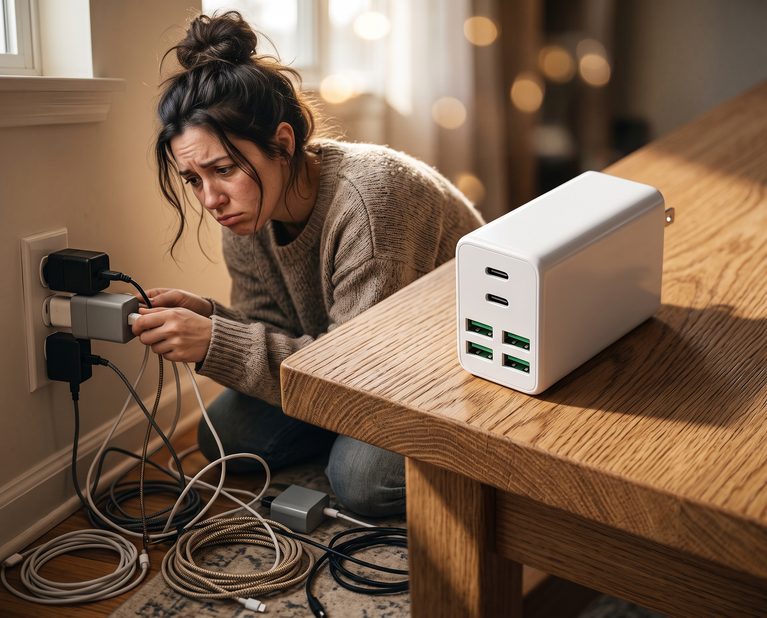


Outlet scarcity wasn’t always a problem. Homes built decades ago had outlets designed for lamps, appliances, and maybe a TV. That was sufficient because most electronics were stationary and few in number. Modern bedrooms, offices, and living rooms require power for phones, tablets, laptops, watches, earbuds, e-readers, smart home devices, and more. The infrastructure hasn’t caught up. Most rooms still have the same number of outlets they always did, but the number of devices needing power has multiplied.
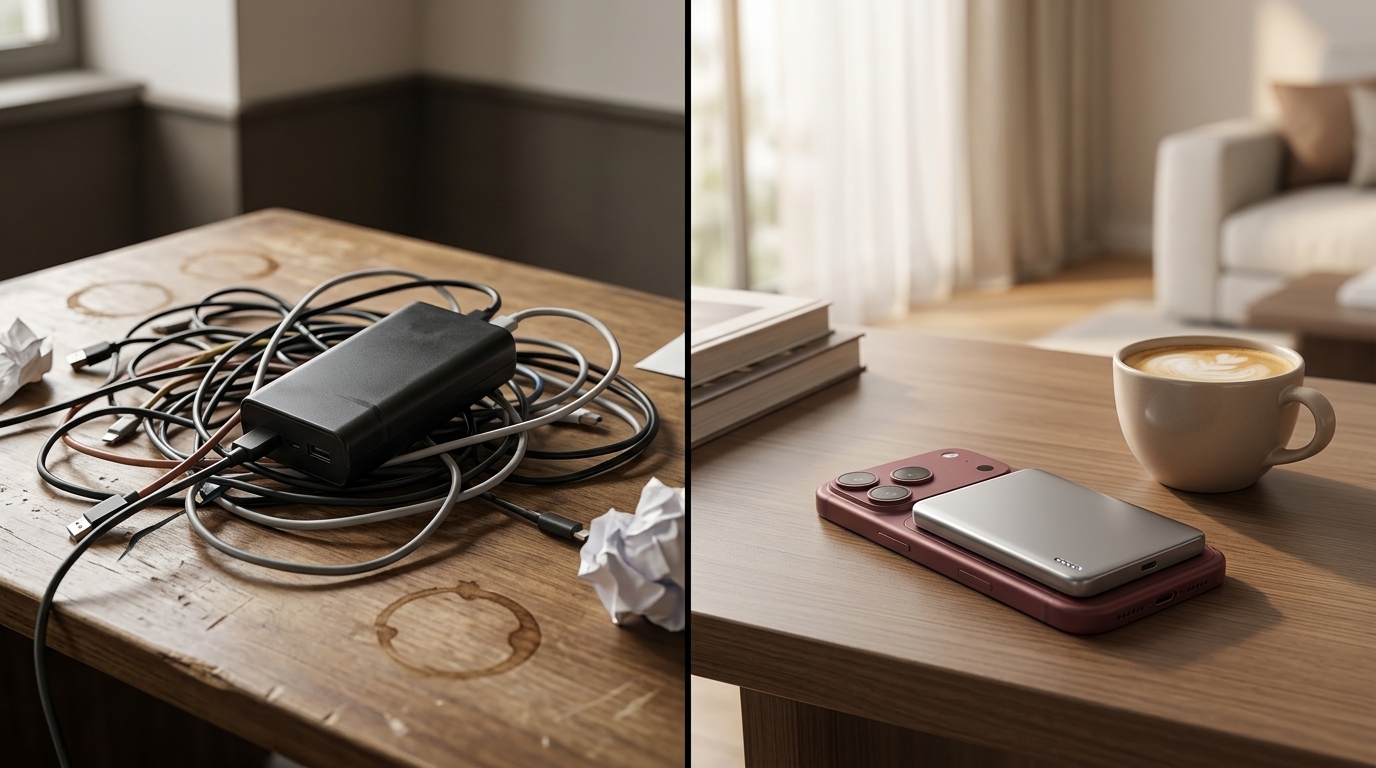
Power strips exist, but traditional ones introduce their own issues. They’re horizontal, which means they occupy significant desk or floor space. Plugging in multiple large adapters blocks adjacent outlets. Cable management becomes chaotic as cords drape in every direction. The strip itself needs to live somewhere accessible, which usually means it’s visible and contributing to visual clutter. It solves the outlet shortage but creates new problems in the process.
Tower-style power strips address the spatial problem by building vertically instead of horizontally. They occupy minimal desk or floor space—essentially just their footprint—while providing multiple outlets stacked upward. Large adapters can plug in at different levels without blocking each other. The vertical orientation also means cables naturally drape downward instead of sprawling across surfaces, which reduces visible cable mess even if the total amount of cable remains the same.
USB ports integrated directly into the tower eliminate the need for separate charging adapters for many devices. The iPhone, iPad, AirPods case, and most other Apple accessories can charge via USB-C or USB-A. Having those ports built into the power source means fewer wall adapters competing for outlet space and less clutter overall. It’s a consolidation that mirrors how USB-C has consolidated cable types—fewer components doing more work.

Ten-foot extension cords expand placement options significantly. A power strip with a short cord must live close to the wall outlet, which may not align with where devices actually need charging. A longer cord means the strip can sit on a desk, nightstand, or floor location that’s convenient for access while still reaching the nearest outlet. That flexibility is the difference between the power strip being useful versus being awkwardly positioned and underutilized.
Night lights seem like an unnecessary addition until you’re fumbling for a phone charger in the dark. A subtle light at the base of the power tower provides enough illumination to locate cables and ports without being bright enough to disrupt sleep or feel intrusive in a bedroom. It’s a small feature that addresses a specific friction point—trying to plug something in at night without turning on overhead lights.
Surge protection matters more than many people realize. Power fluctuations can damage sensitive electronics, and Apple devices are expensive enough that protecting them makes sense. A power strip with integrated surge protection acts as insurance against voltage spikes from lightning, grid issues, or appliance switching. It’s protection that’s invisible until it’s needed, at which point it’s the difference between a working device and a fried logic board.
The current listing shows $32 at the time of publishing. View current listing. Price at time of publishing. Subject to change.
"Note: Readers like you help support The Apple Tech. We may receive a affiliate commission when you purchase products mentioned on our website."