


Apple’s ecosystem presents itself as unified, but the reality inside most households is fragmentation. One parent upgraded to an iPhone 15 and embraced USB-C. The other is holding onto a perfectly functional iPhone 12 with Lightning. A teenager inherited an iPhone 11. An iPad from 2019 still charges via Lightning. AirPods from two years ago use Lightning. The Apple Watch uses its own proprietary puck.
This creates a cable problem that Apple’s marketing materials don’t acknowledge. Every family trip, every carpool, every evening where multiple people need to charge simultaneously becomes a negotiation over cable compatibility. Who brought the Lightning cable? Does anyone have USB-C? Can the iPad charge off the same brick as the MacBook, or does that require a different wattage?
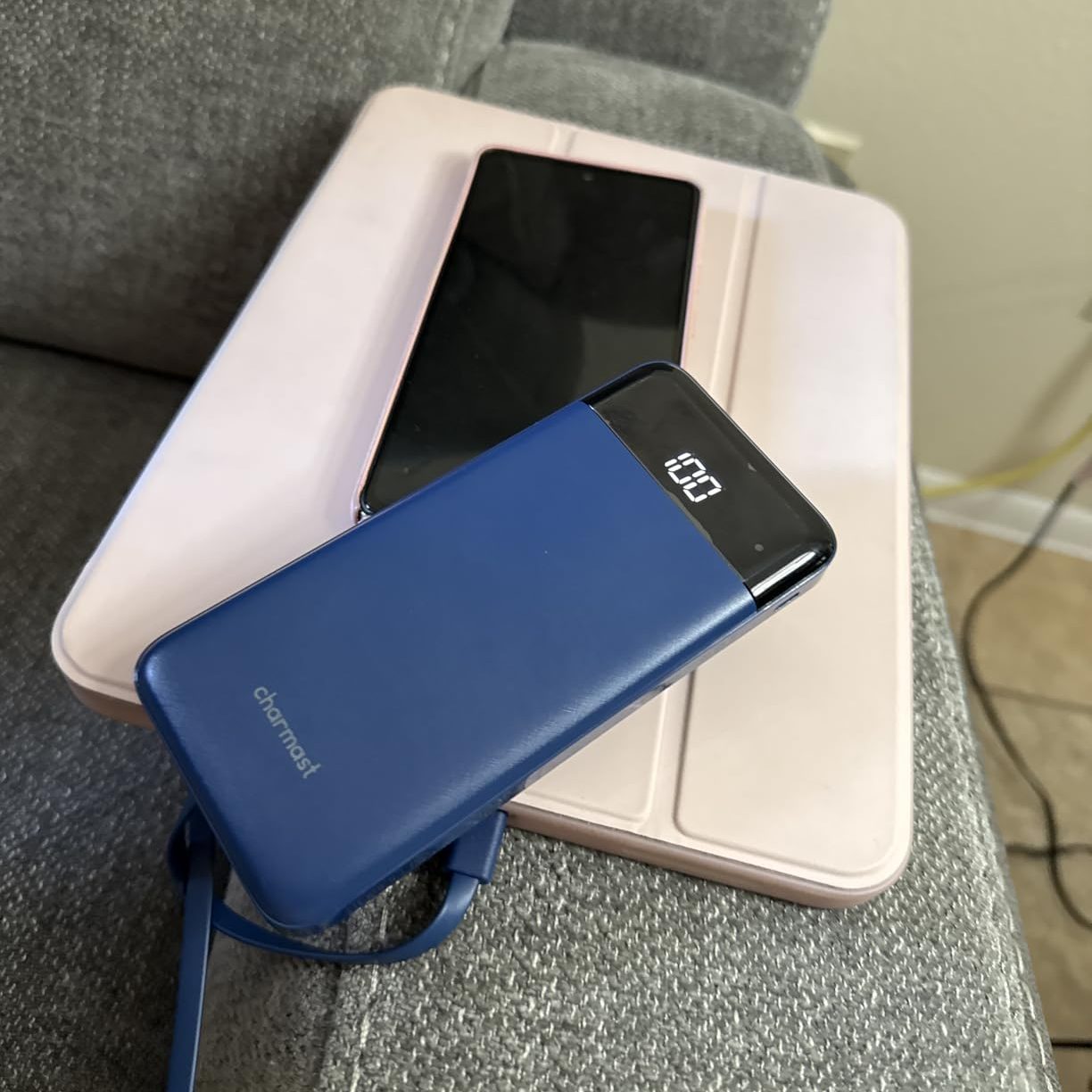
The universal power bank with built-in cables is a hedge against that fragmentation. It carries Lightning, USB-C, and micro-USB simultaneously, attached permanently to the device itself. No one needs to remember which cable to pack. No one gets left with a dead phone because they grabbed the wrong cord. The power bank becomes infrastructure that doesn’t require the household to coordinate around Apple’s transition timeline.
What’s notable is how common this setup is in families that consider themselves “Apple households.” They own predominantly Apple devices, but the devices span enough generations that full USB-C adoption remains years away. Replacing a functional iPhone costs $800. Replacing functional AirPods costs $130. The math doesn’t justify upgrading on Apple’s schedule just to achieve cable uniformity.
SIMILAR
iPhone and MacBook users are compensating for a port problem Apple created
iPhone users are eliminating the tangled cable from every car charging session
iPhone users are transforming nightstands into silent charging infrastructure
So instead, families stock charging gear that accommodates legacy devices alongside current ones. The power bank that works with everything becomes more valuable than the MagSafe battery that only works with recent iPhones. It’s a pragmatic choice, but it’s also a rejection of Apple’s vision for how charging should work—wireless, elegant, proprietary, and unified around a single standard.
The built-in cables add another layer of convenience. Cables get lost. They get borrowed and never returned. They fray at the strain relief point after six months of daily use. When the cable is permanently attached to the power bank, those failure modes disappear. The cable can’t be forgotten because it never leaves. It can’t be borrowed because it’s tethered. It still frays, but when it does, you replace the entire power bank, not just the cable.
This mirrors a broader pattern in how families interact with Apple’s ecosystem: they adopt the parts that work and route around the parts that don’t. USB-C adoption is happening, but it’s happening slowly, unevenly, across devices that get replaced on different cycles. In the meantime, the household charging infrastructure needs to support everything, not just the newest generation.
Six outputs means six devices can charge simultaneously. For a family of four with twelve devices between them, that coverage matters. The power bank becomes a shared resource during road trips, flights, or any scenario where outlets are scarce and every device matters equally, regardless of which generation it represents.
Previously listed at $29.99, current listings hover around $20.98. That pricing reflects the power bank’s role as a transitional solution—affordable enough to justify buying for a household that knows it will eventually migrate fully to USB-C, but not yet, and not all at once.
The power bank becomes a diplomatic solution—carrying every cable type simultaneously so no family member’s device gets stranded based on which generation they’re still using. It’s the opposite of Apple’s clean, unified vision, but it’s the reality of how households actually navigate an ecosystem in mid-transition, where the old standard and the new standard coexist uncomfortably for years longer than the keynote presentations ever acknowledged.
"Note: Readers like you help support The Apple Tech. We may receive a affiliate commission when you purchase products mentioned on our website."






