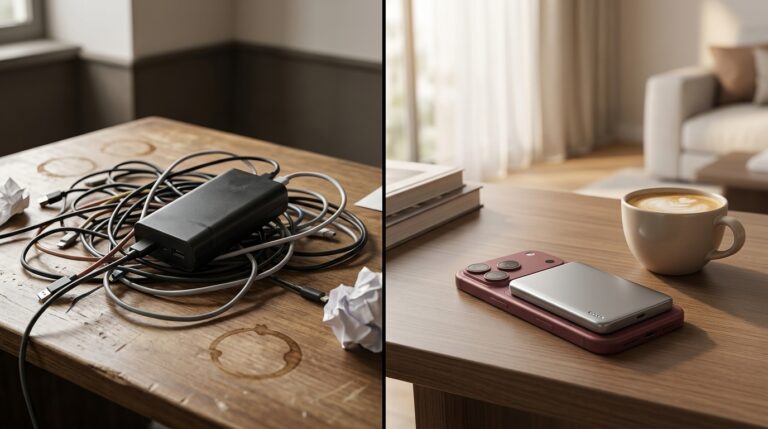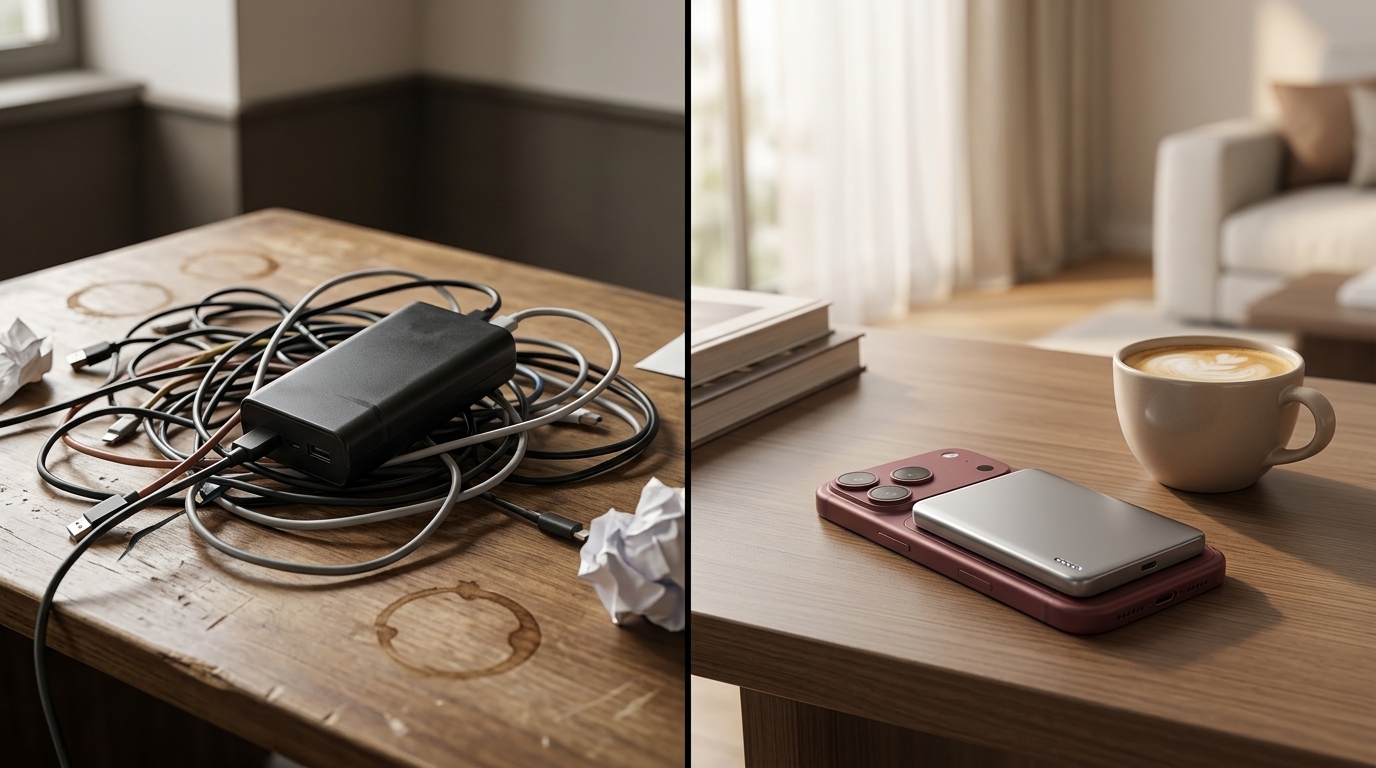


Charging routines at home develop organically. The iPhone plugs in overnight. The Apple Watch charges in the morning while showering, or on a desk during the workday. AirPods recharge whenever their case runs low. These habits form around available outlets and surfaces, shaped by the specific geography of where people live and work. It’s inconsistent, but it functions.
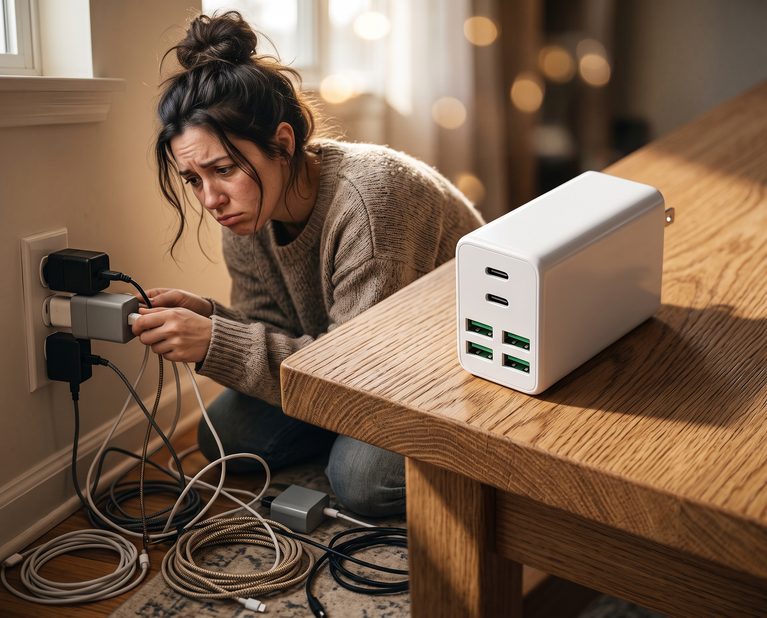
Travel breaks all of this. Hotel rooms don’t have the same outlet configuration. Desks and nightstands are in different positions. The spatial memory that makes home charging effortless becomes irrelevant. Suddenly, everything needs to be thought through: which device charges first, how many outlets are actually available, whether the cables packed are the right ones. What was automatic becomes manual, and the friction is immediate.
MagSafe simplified part of this by aligning the iPhone magnetically, but it didn’t address the multi-device problem. The Apple Watch still needs its specific charger. AirPods need their own power source. Carrying three separate charging solutions for a weekend trip feels excessive, especially when luggage space is contested by clothing, toiletries, and work equipment. The inefficiency becomes obvious in ways it never was at home.
Foldable charging pads collapse the logistical problem without requiring people to change their routines significantly. The iPhone, Apple Watch, and AirPods all dock in their expected positions—just on a single surface instead of three separate ones. That surface folds flat for packing, which means it occupies minimal space in a bag. Once at the destination, it unfolds, plugs into a single outlet, and replicates the multi-device charging setup people were using at home.

Business travelers adopted this faster than leisure travelers, likely because they move between locations more frequently and the accumulated friction adds up. A consultant staying in hotels three nights a week experiences the cable management problem eighteen times a month. That’s enough repetition to justify changing the system. Someone who travels quarterly might tolerate the old approach indefinitely.
The material choice—whether it’s plastic, metal, or fabric—affects whether the charging pad lives in a bag full-time or gets packed selectively for trips. Lightweight, durable designs stay packed. Heavier or more fragile options get added and removed based on trip specifics. That difference determines whether the new routine actually sticks or becomes another travel accessory that seemed like a good idea but ended up unused.
Some people still prefer separate chargers. They like the flexibility of charging devices in different rooms, or they’ve optimized their cable situation in ways that work for them. But once someone transitions to a consolidated travel charging setup, going back feels like a regression. The spatial efficiency and reduced decision-making become hard to give up, even when circumstances change.
Previously listed at $52, the current listing shows $32.27 at the time of publishing. View current listing. Price at time of publishing. Subject to change.
"Note: Readers like you help support The Apple Tech. We may receive a affiliate commission when you purchase products mentioned on our website."