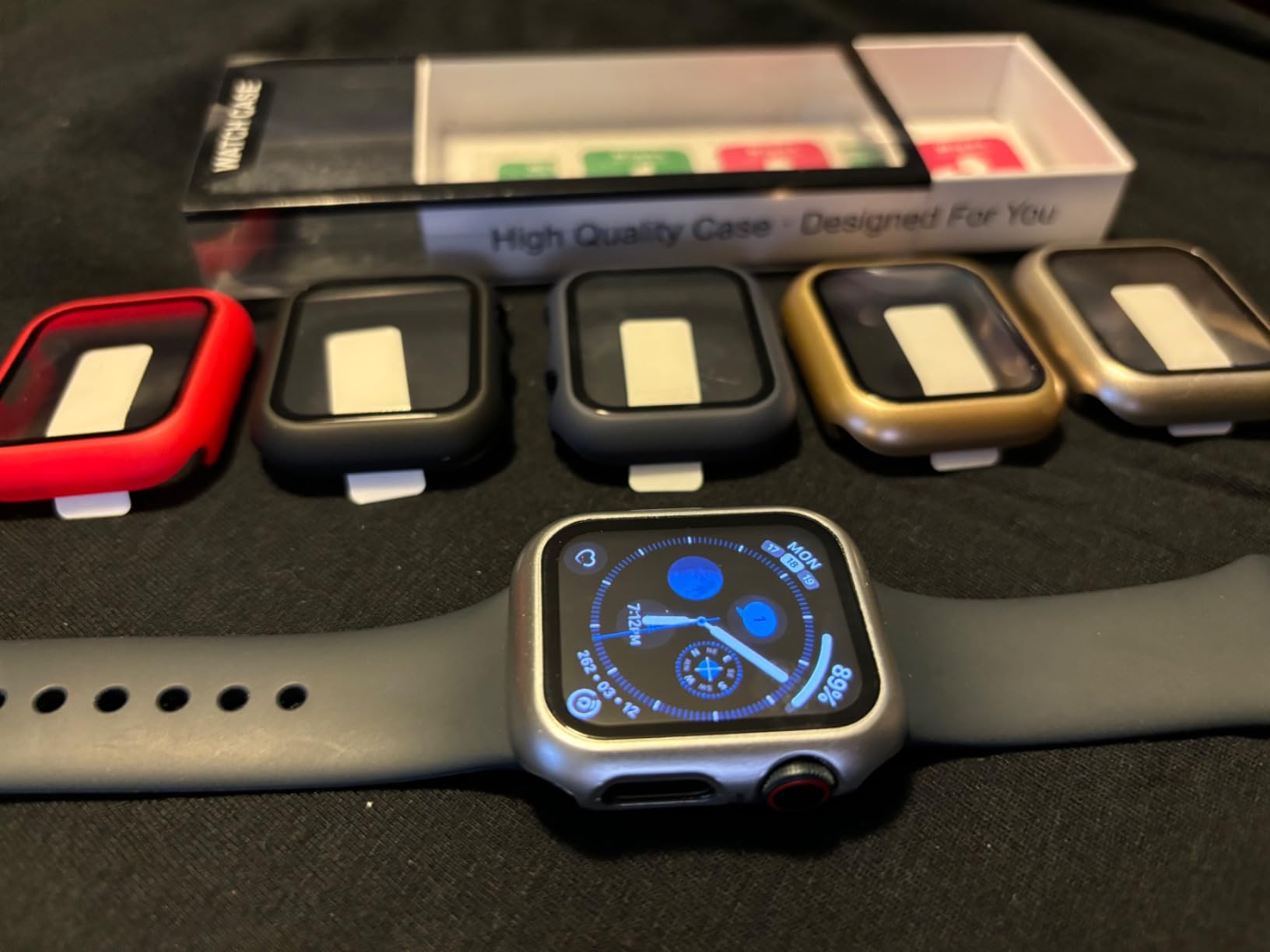
The Apple Watch is designed to be worn without a case. The materials—aluminum, stainless steel, titanium—are chosen for durability and aesthetics. The curves, the thinness, the way the display tapers into the case—all of this is intentional. But the watch is also expensive, and it’s worn in environments where impacts are inevitable. The solution for many users is a protective case, but adding one changes the object in ways that go beyond simple bulk.
A hard polycarbonate case with integrated tempered glass screen protection does what it promises: it absorbs impacts, prevents scratches, and shields the display from cracks. For users who prioritize longevity or plan to resell the watch, this is a rational choice. The watch remains pristine underneath, and the case can be removed when it’s time to trade in or sell. But the case also adds thickness, alters the color, and obscures the original design. What was once a seamless curve becomes a hard edge. The tactile experience changes.

The six-pack approach—multiple cases in different colors—attempts to turn protection into personalization. Instead of one case that stays on permanently, the user can swap cases to match outfits or moods. In theory, this makes the case less of a compromise and more of an accessory. In practice, swapping cases is a process. The fit is usually snug, which means removal requires force, and repeated removal risks scratching the watch itself—the very thing the case was meant to prevent.
Screen protectors introduce their own set of frictions. Tempered glass is tougher than the plastic film alternatives, but it’s also more prone to edge lifting, especially if the case doesn’t fit perfectly. A protector that lifts at the corners collects dust and lint, creating a visible gap that undermines the seamless look. Some users replace protectors every few months. Others remove them entirely after the first lift and decide the risk of a scratch is preferable to the annoyance of a compromised seal.
SIMILAR
iPhone and MacBook users are compensating for a port problem Apple created
iPhone users are eliminating the tangled cable from every car charging session
iPhone users are transforming nightstands into silent charging infrastructure
The ultra-thin marketing language is accurate in relative terms—these cases are thinner than bulkier alternatives—but thin is still thicker than nothing. The Apple Watch is designed to be minimal, and adding even two millimeters changes the profile. On smaller wrists, this difference is more pronounced. The watch no longer sits flush against the skin. It protrudes slightly, catching on sleeves and creating pressure points during sleep.
Previously listed at $9.99, current listings hover around $8.48, placing protective cases in the budget tier of Apple Watch accessories. The low price point reflects commoditization—dozens of manufacturers produce nearly identical cases, competing primarily on color options and pack quantity rather than meaningful design differentiation.
The broader question is whether protection is worth the alteration. Some users case their watches from day one and never think about it again. Others try a case, remove it after a week, and accept the risk of scratches as the cost of using the device as designed. Neither approach is wrong, but the split reveals a deeper tension: the watch is meant to be both durable and beautiful, and in some use cases, those qualities are in conflict.
"Note: Readers like you help support The Apple Tech. We may receive a affiliate commission when you purchase products mentioned on our website."