
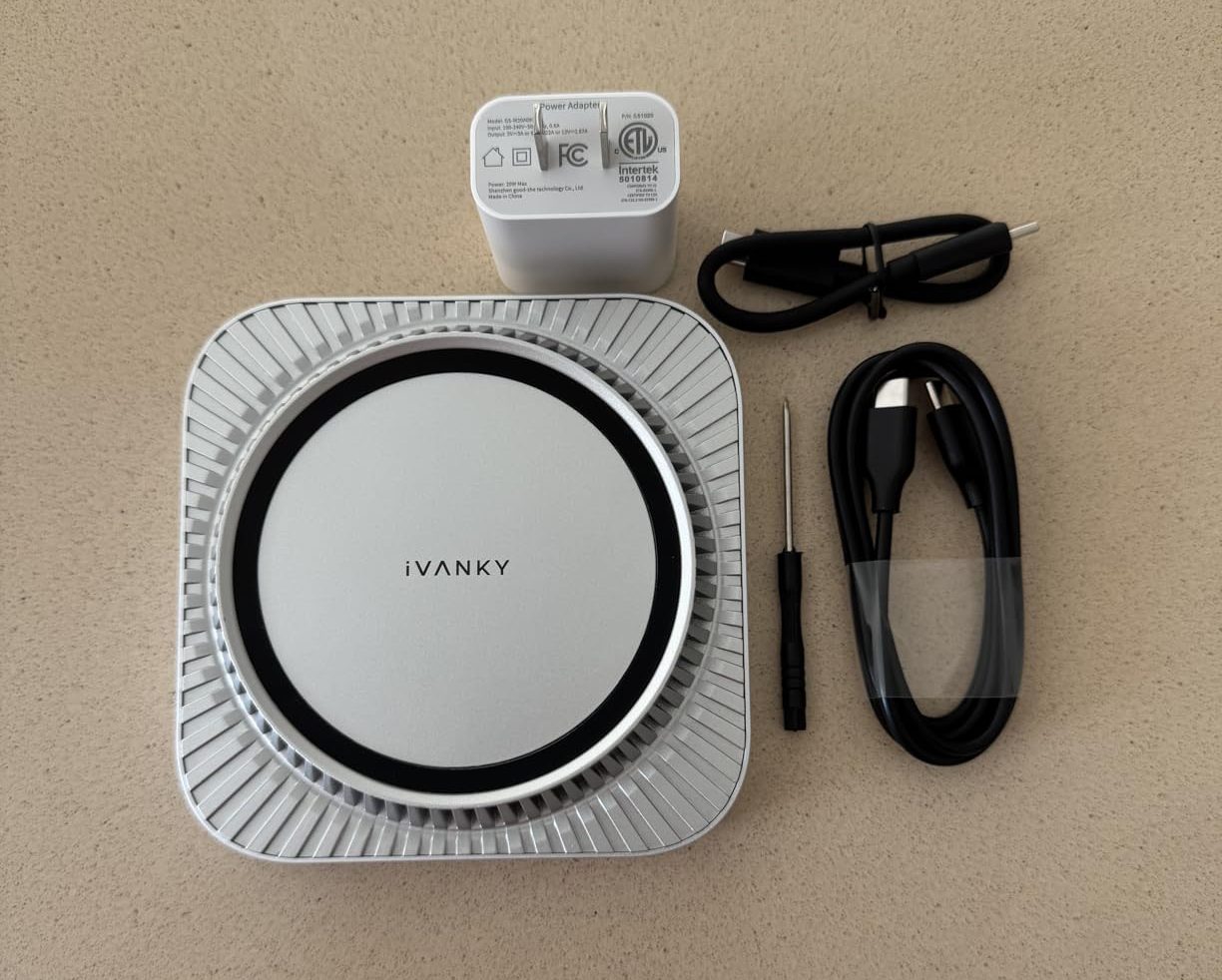
The Mac mini’s compact design introduced spatial constraints that have forced users to rethink how they connect peripherals to their workspace setup.
When Apple released the Mac mini in its most compact form, the design trade-off seemed reasonable: sacrifice some accessibility for a footprint that barely occupies desk space. But people who actually use the machine daily discovered a friction point that becomes more annoying over time. All the ports are on the back. Every SD card, every USB drive, every peripheral connection requires reaching behind the unit or spinning it around.
This matters more than it sounds like it should. If you’re a photographer importing SD cards multiple times a day, or someone who regularly connects external storage, or a person who uses their desktop for tasks requiring frequent peripheral swapping, the port placement creates constant minor interruptions. You can’t see what you’re doing. You’re fishing cables behind a monitor. It breaks workflow rhythm.
The workaround that emerged involves hub devices that sit on top of or beside the Mac mini, essentially relocating the ports to accessible positions. Some designs incorporate storage expansion as well, acknowledging that the mini’s internal capacity doesn’t match how people actually store their work. The hubs become a shell around Apple’s minimalism, adding back the functionality that got designed away.
What’s revealing is how this represents a broader tension in Apple’s design philosophy. The company optimizes for visual cleanness and spatial efficiency, assuming most people will set up their computer once and leave it alone. But workflows have changed. People connect and disconnect devices constantly. They use multiple monitors, external drives, card readers, audio interfaces. The mini’s elegance assumes a static setup that doesn’t match dynamic use patterns.
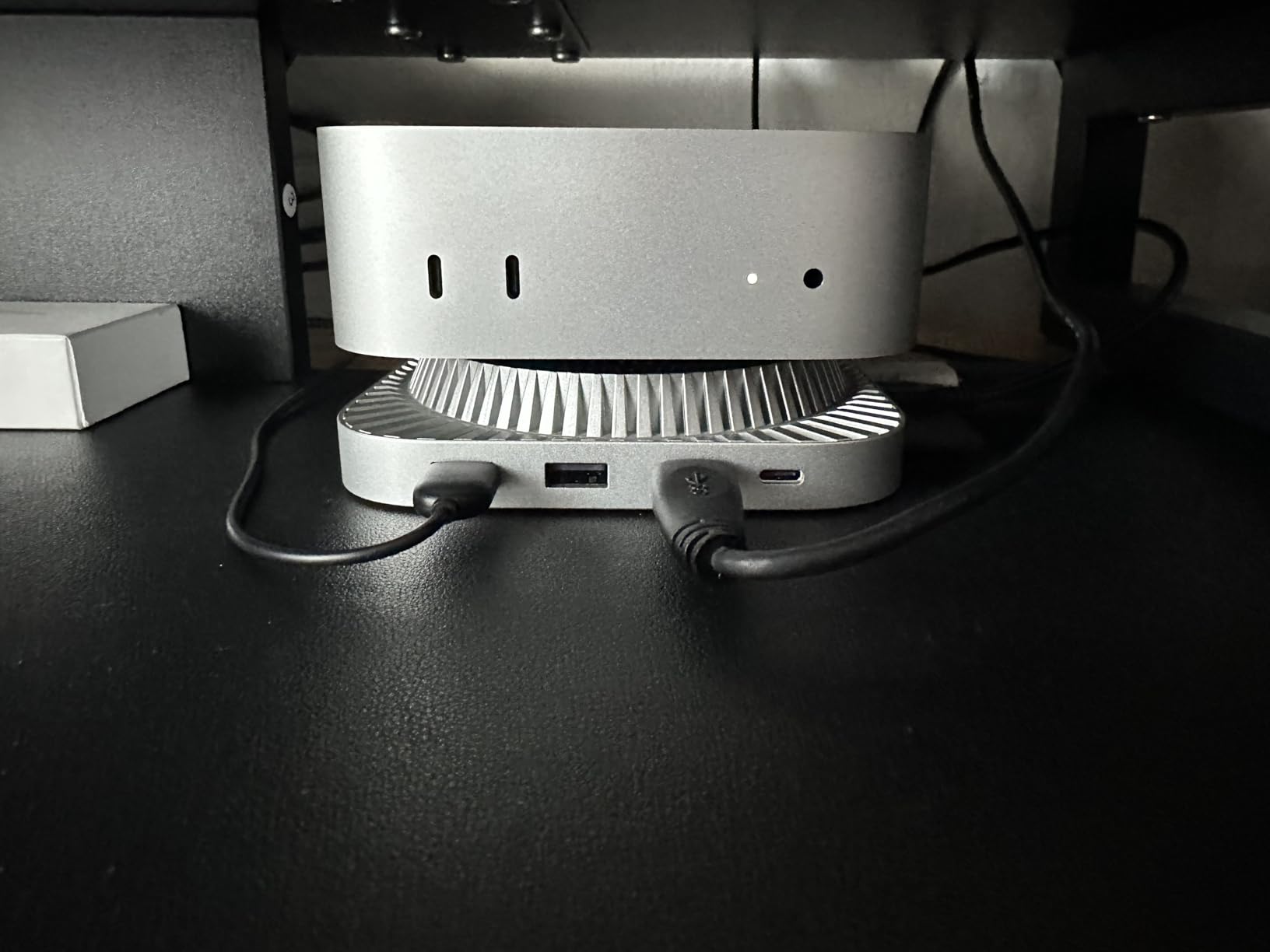
This also highlights how professional users and Apple’s consumer-focused design sometimes diverge. The Mac mini gets marketed partly toward creative professionals, but those users often need port access throughout their day. The contradiction creates a market for accessories that undo Apple’s spatial optimization in favor of practical accessibility.
There’s also a subtle psychological shift happening. People used to accept that computer ports were inconveniently located—that was just how computers worked. But as devices became more central to workflows, tolerance for that friction decreased. The expectation shifted toward tools that adapt to human behavior rather than requiring adaptation from humans.
The result is desktop setups where the Mac mini sits inside or underneath a hub that doubles or triples its connectivity and brings everything forward. The machine’s footprint grows back to something closer to what Apple was trying to minimize. Function trumps form once real work begins.
Previously listed at $99.99, multi-port hub stands designed for Mac mini units current listings hover around $54.99(CODE 6XZGUNKM).
"Note: Readers like you help support The Apple Tech. We may receive a affiliate commission when you purchase products mentioned on our website."