

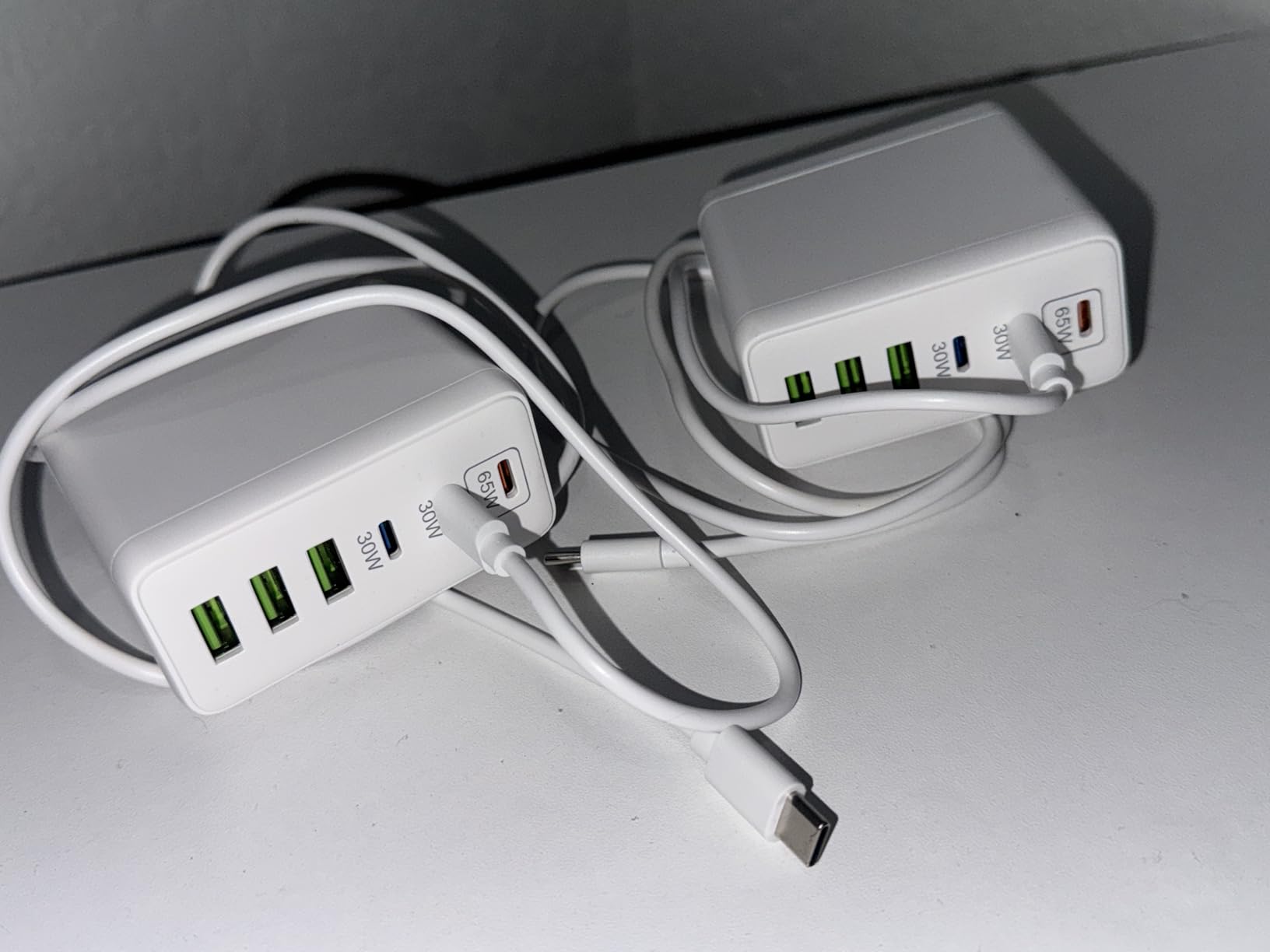
The hub replaced six individual chargers, which meant six fewer wall adapters competing for outlet space and six fewer cables crossing the desk. As remote work normalized and home offices became permanent, the infrastructure limitations of residential spaces became evident. Houses weren’t designed with office-level outlet density, creating charging bottlenecks that high-capacity hubs address.
The 200W total output enables genuine simultaneous fast charging across multiple power-hungry devices. MacBook Pro drawing 60-80W, iPad at 30W, iPhone at 20W, plus additional devices—the math requires substantial wattage to avoid throttling speeds. Lesser hubs force users to charge sequentially or accept slow charging when multiple devices connect.
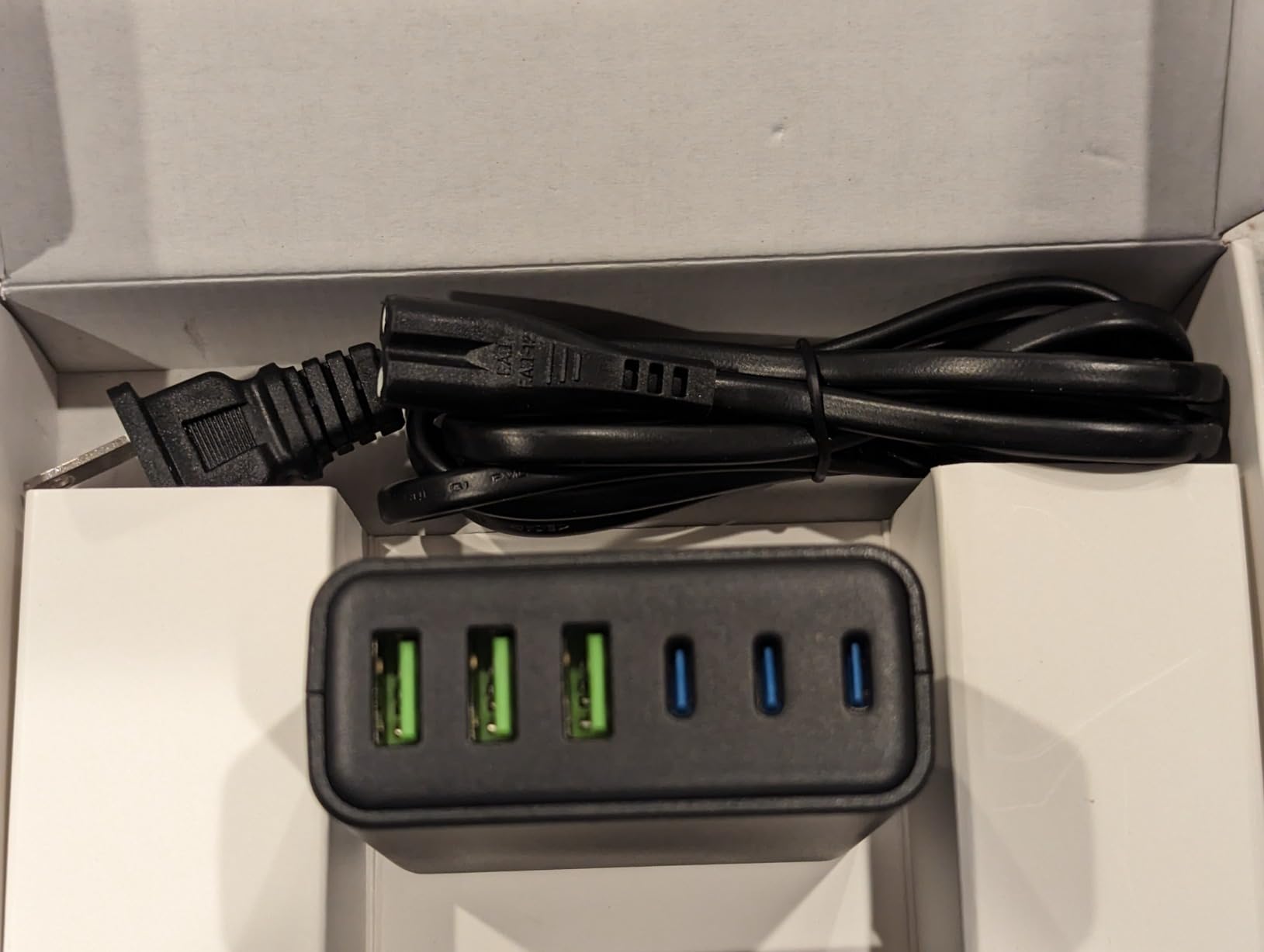
GaN technology makes this capacity possible in portable form factors. Traditional silicon-based chargers at 200W would be brick-sized and generate significant heat. Gallium nitride enables laptop-charging power in packages roughly the size of a smartphone, cool enough to sit on desks without thermal concerns.
The foldable plug design addresses travel portability despite the hub’s high wattage. The prongs collapse flush with the body, transforming it from a bulky desktop fixture into something that packs relatively flat in bags. This enables mobile professionals to replicate their multi-device charging setup wherever they work.
The two-pack configuration is unusual for high-wattage hubs, suggesting these target users who maintain multiple office locations—home office and corporate workspace, or primary residence and second home. The pricing makes dual-location infrastructure feasible rather than extravagant.
What’s notable is how these hubs have become visible desk objects rather than hidden infrastructure. Their prominence on desk surfaces—necessary for accessing ports—means they’ve evolved from purely functional accessories into considered elements of workspace organization and aesthetics.
Previously listed at $33.29, current listings hover around $29.96 for two units. The per-hub cost makes replacing distributed charging infrastructure with centralized hubs economically attractive, especially when considering the reduced outlet congestion and cable management benefits.
"Note: Readers like you help support The Apple Tech. We may receive a affiliate commission when you purchase products mentioned on our website."