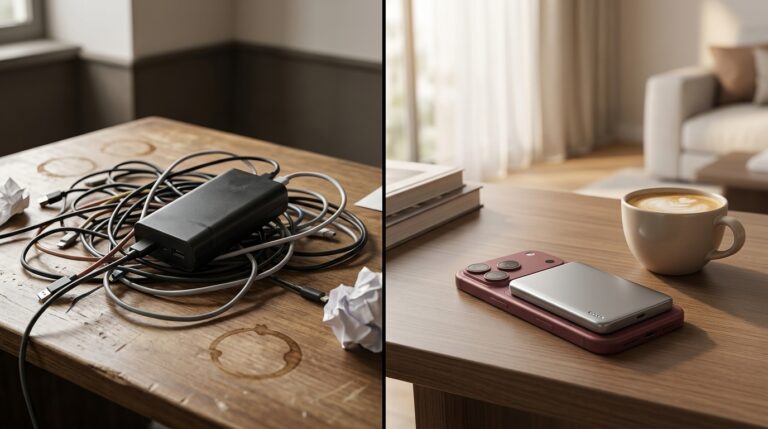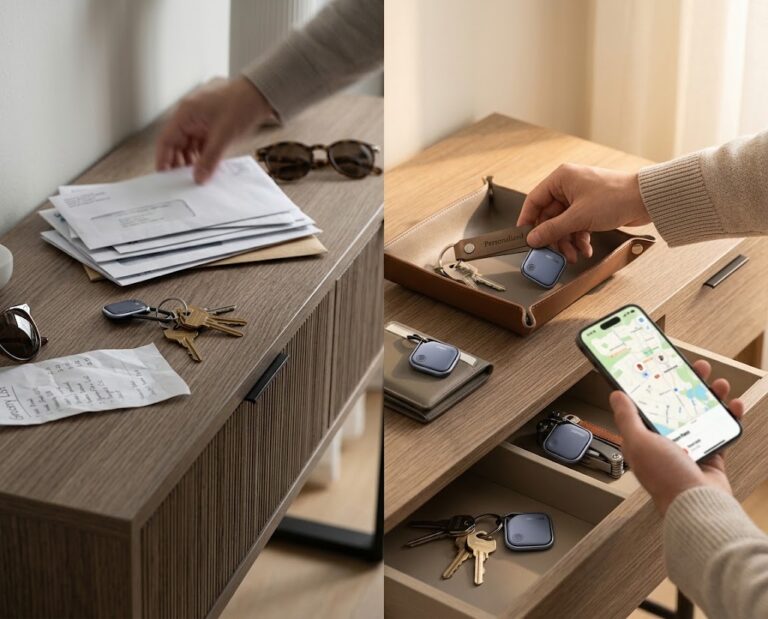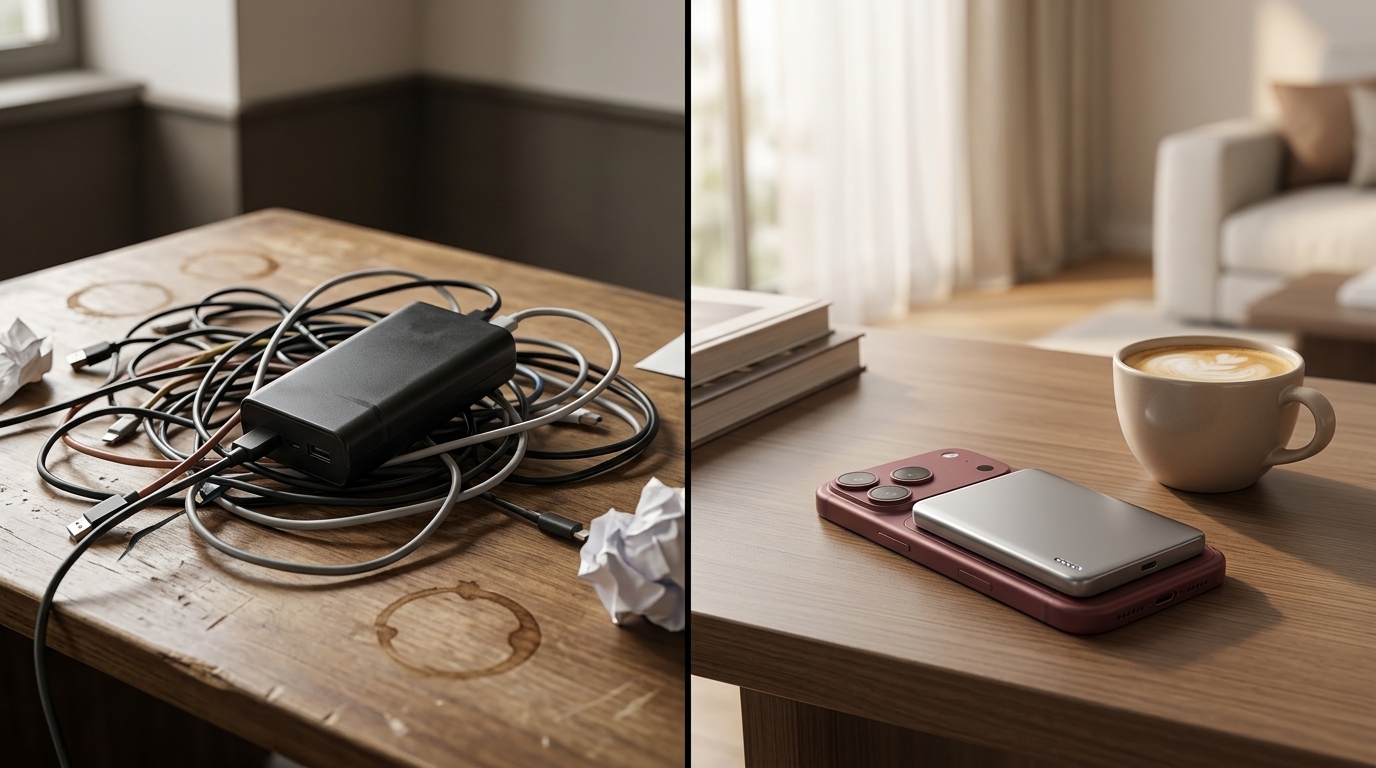


The physical landscape of our workspaces has undergone a silent transformation over the last few years. Where desks were once dominated by a tangle of white rubberized cables and various wall bricks, there is a growing movement toward structural minimalism. This shift isn’t just about aesthetics; it is a response to the increasing cognitive load of managing multiple battery percentages across a suite of interconnected devices. When the iPhone, Apple Watch, and AirPods all demand attention simultaneously, the friction of cable management becomes a legitimate hurdle to a focused workflow.
The introduction of MagSafe changed the relationship between the iPhone and the surface it rests upon. It moved the act of charging away from a deliberate, two-handed mechanical connection and toward a fluid, magnetic interaction. This evolution has allowed for a new kind of verticality in desk organization. By elevating the device, the screen remains within the line of sight, enabling Face ID to trigger effortlessly for incoming notifications without the user ever needing to break their stride or pick up the hardware.
There is a specific kind of relief found in designated zones for technology. In the broader Apple ecosystem, the continuity between devices is seamless in software, yet often fragmented in power. We sync our notes and hand off our emails, but we frequently power our gear in disparate corners of the room. Centralizing this process into a single footprint acknowledges the reality of how we actually live with these tools. It treats the watch and the earbuds not as accessories, but as vital components of a singular digital experience.

Travel routines particularly highlight the fragility of a cable-heavy existence. Anyone who has spent a night in a hotel room searching for enough available outlets to support an entire kit knows the frustration of tiered charging—prioritizing the phone over the watch, or the watch over the headphones. Transitioning to a singular, consolidated hub removes that mental inventory. It turns a chaotic nightly ritual into a simple gesture of placement, ensuring that the entire ecosystem is synchronized and ready by morning.
Nightstand clutter is more than a visual nuisance; it often contributes to the very digital distractions we try to avoid before sleep. A disorganized pile of cords invites fumbling in the dark, which usually leads to checking the screen and falling down a rabbit hole of blue light. A fixed, structured dock provides a tactile certainty. Knowing exactly where each piece of glass and metal belongs creates a boundary between the device as a tool for interaction and the device as an object in repose.
We are also seeing a change in how we perceive device longevity and reliability. Reliability in the modern era is less about the hardware failing and more about the human failure to maintain a charge. By integrating power into the furniture of our lives—the desk, the bedside table, the entryway console—the act of charging becomes passive. It happens in the background of our routines rather than being a task we have to remember to perform.
This move toward consolidation also reflects a deeper appreciation for the industrial design of the products themselves. When an Apple Watch is perched on a dedicated mount rather than laying flat on a desk, its design is celebrated rather than hidden. There is a quiet sophistication in a setup that treats power delivery as an architectural element of the home office. It suggests that the tools we use to navigate our professional and personal lives deserve a permanent, respected place in our physical environment.
Previously listed at $48.00, the current listing shows $28.99 at the time of publishing. View current listing. Price at time of publishing. Subject to change.
"Note: Readers like you help support The Apple Tech. We may receive a affiliate commission when you purchase products mentioned on our website."