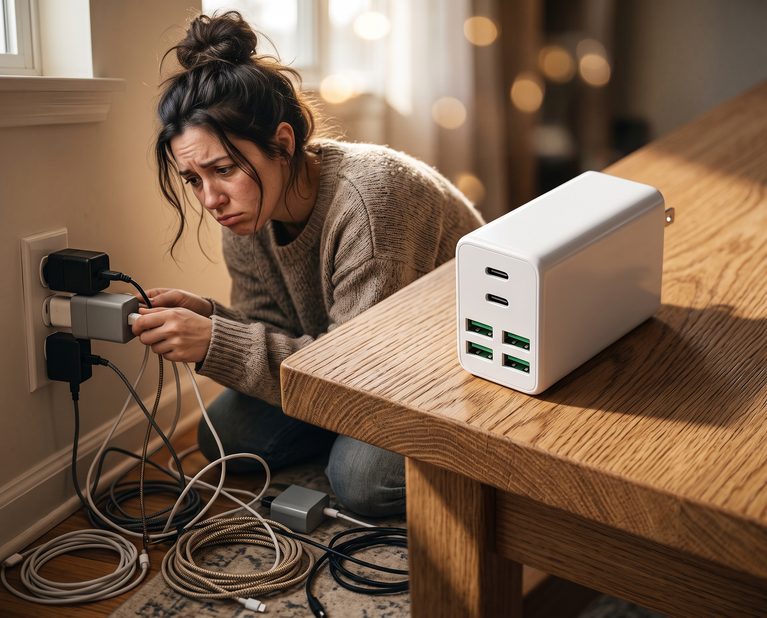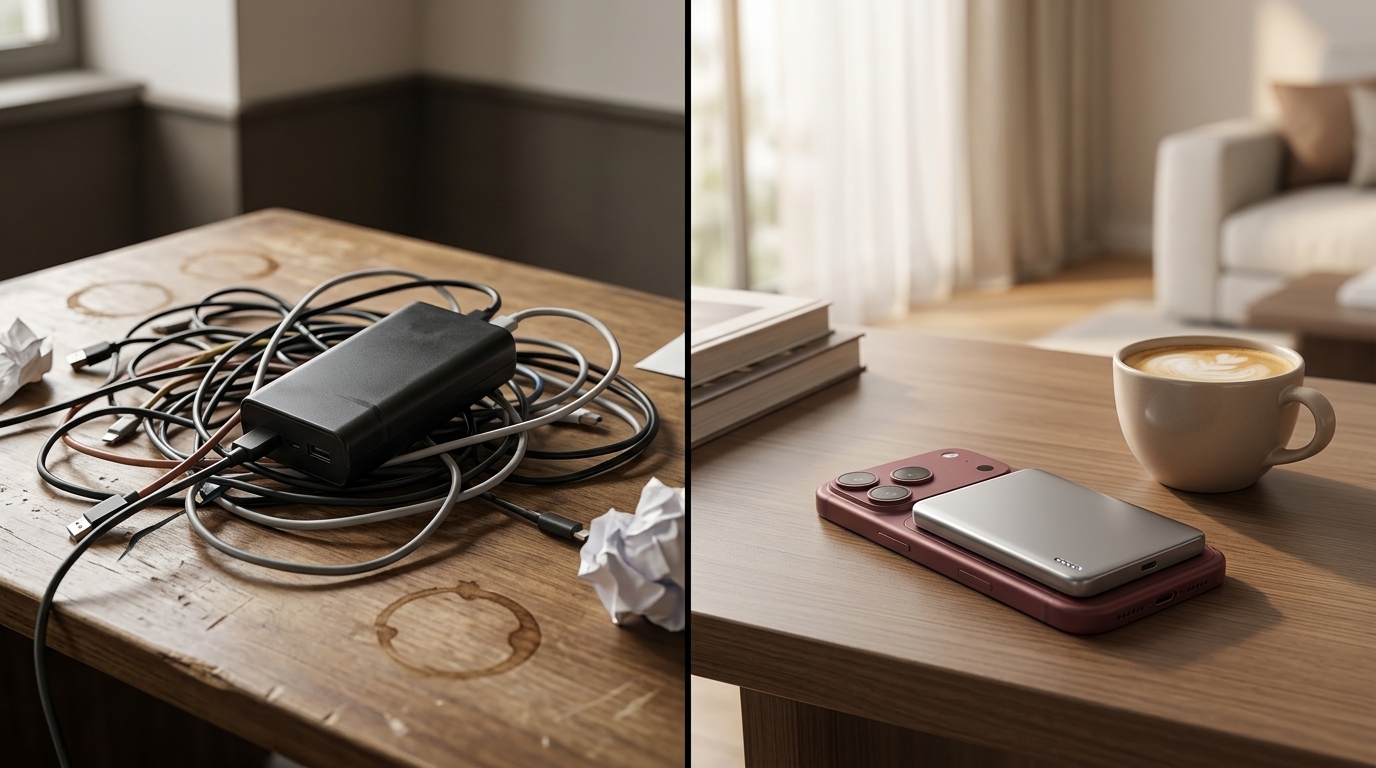


The charging situation in most homes with Apple devices follows a predictable pattern. There’s the MacBook charger that lives at the desk, the iPhone cable by the bed, another in the kitchen, and at least one adapter that migrated to a bag and never returned. It works, technically, but it’s a system born from accumulation rather than design. People know where their charging spots are, even if those spots require navigating around furniture or unplugging something else first.
What’s harder to pin down is whether this matters enough to change. Multi-device charging hubs promise consolidation—one spot where the MacBook, iPhone, iPad, and whatever else need power can all connect simultaneously. The appeal is obvious in theory. Fewer cables snaking across surfaces, fewer adapters monopolizing outlets, less mental overhead tracking which device charged last. But adoption isn’t universal, even among people who would clearly benefit.
Part of the resistance is habit. Charging routines calcify over time. The iPhone goes on the nightstand because it always has. The MacBook stays tethered at the desk because that’s where work happens. Disrupting that—centralizing everything into a single hub—requires admitting the current system isn’t working, which feels unnecessary until a trip forces the issue. Suddenly, packing five different chargers for a weekend away makes the inefficiency visible.
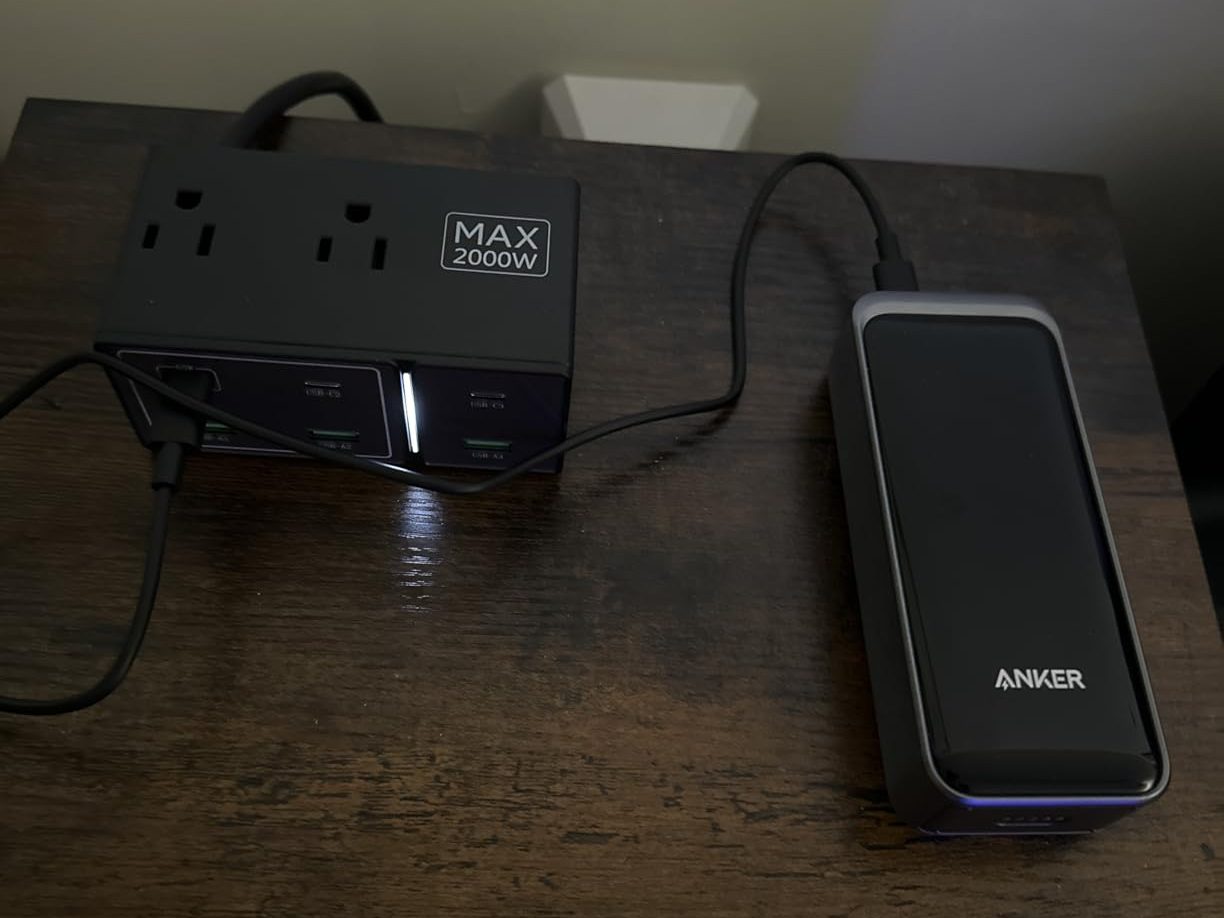
Travel exposes the gap between how people think they charge and how they actually do. A charging station that can handle a MacBook alongside an iPhone and iPad collapses what would normally require multiple outlets and adapters into a single point. Hotel rooms and airport lounges become less of a negotiation. But once home, that same hub often sits unused, because the distributed charging setup already existed and changing it feels like solving a problem that’s only intermittently annoying.
The wattage question complicates things further. A MacBook Pro under load needs serious power. An iPhone doesn’t. A hub that can deliver both simultaneously sounds practical, but most people don’t consciously think about wattage until something charges slowly or not at all. The technical details fade into background infrastructure—it either works or it doesn’t, and when it works, no one notices.
Apple’s shift to USB-C across nearly everything should have simplified the landscape, but it mostly just standardized the confusion. Yes, one cable type now works for the MacBook, iPad, and iPhone 15 or 16. But that doesn’t mean people stopped using their old Lightning cables, or that they’ve retired the various charging bricks accumulated over years of device ownership. The new standard coexists with the old one, creating even more cable clutter in the short term.
There’s also an outlet problem that no charging hub fully solves. Home and office spaces weren’t designed for the current density of electronics. Even with a multi-port station, someone still needs to decide where it lives, which outlet it occupies, and whether that location actually makes sense for daily workflow. The hub sitting on a desk doesn’t help if the iPad usually charges in another room. Centralization only works if it matches behavior, and behavior is stubbornly decentralized.
Previously listed at $26, the current listing shows $12.99 at the time of publishing. View current listing. Price at time of publishing. Subject to change.
"Note: Readers like you help support The Apple Tech. We may receive a affiliate commission when you purchase products mentioned on our website."