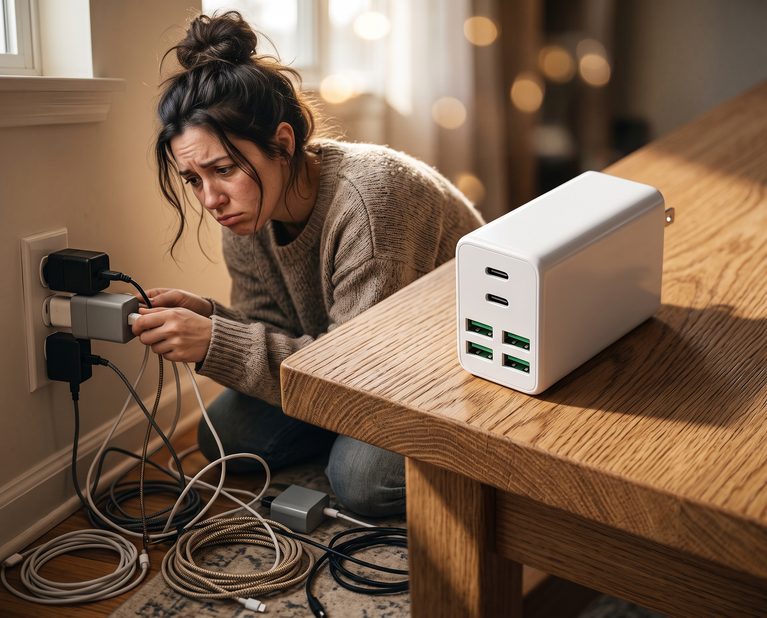
The adapters lived everywhere—one in each bag, one at the desk, one by the car—because you never knew when you’d need to connect something that predated USB-C. iPhone 15 and later models abandoned Lightning for USB-C, solving some compatibility problems while creating new ones. Accessories with USB-A connections—flash drives, keyboards, legacy charging cables—no longer plug directly into iPhones.
The four-pack purchasing pattern reflects the distributed nature of this problem. Adapters need to be present wherever connection needs might arise—home office, living room, car, travel bag. Buying four eliminates the friction of moving a single adapter between locations or forgetting it when it’s suddenly needed.

The OTG capability—On-The-Go data transfer—enables iPhones to read from USB flash drives and connect to peripherals directly. This functionality expands what iPhones can do with external storage, making them more viable as primary computing devices for certain workflows that involve file transfer between devices.
The USB 3.0 specification matters for data transfer speeds. Older USB 2.0 adapters work for charging and basic file transfer but bottleneck at slower speeds. USB 3.0 enables the faster data rates that iPhone 15 and later models support, making large file transfers practical rather than patience-testing.
What’s revealing is how adapter proliferation represents a transitional period in ecosystem evolution. Eventually, USB-C will dominate and adapters won’t be necessary. But during the years-long transition while USB-A devices remain in circulation, adapters function as essential compatibility infrastructure.
The compatibility list spanning iPhone, Mac, iPad, and Samsung devices reflects USB-C’s cross-platform adoption. These aren’t iPhone-specific adapters—they’re universal USB-C accessories that happen to work with iPhones alongside numerous other devices.
Previously listed at $6.99, current listings hover around $6.29. The extremely low price for four adapters makes distributed placement economically trivial, removing cost as a barrier to keeping adapters wherever they might be needed.
"Note: Readers like you help support The Apple Tech. We may receive a affiliate commission when you purchase products mentioned on our website."