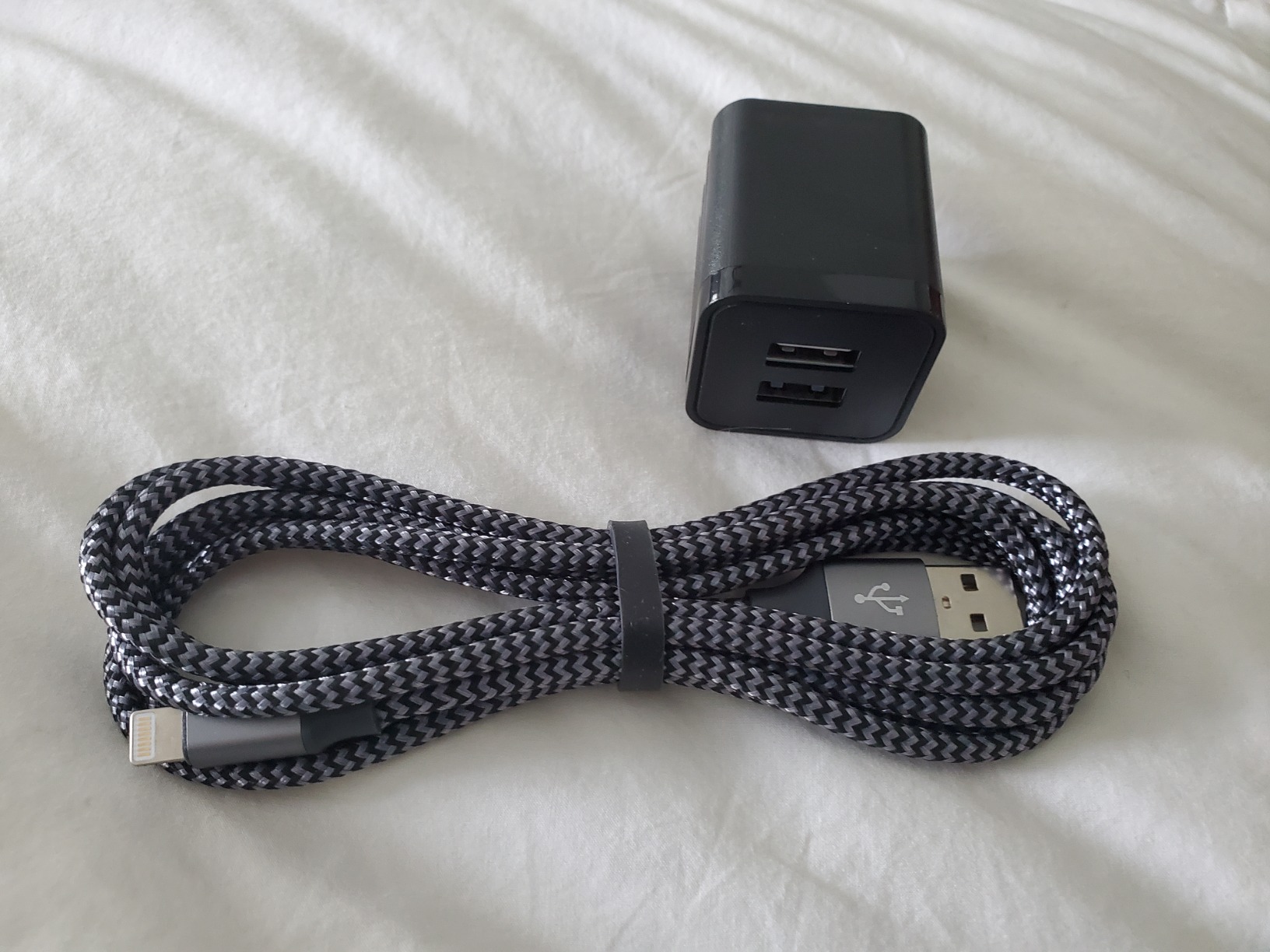
Apple ships iPhones with a one-meter cable. It’s enough to stretch from a nightstand outlet to the bed, assuming the outlet is right next to the nightstand and the nightstand is right next to the bed. But that assumption collapses constantly. Outlets are across the room. They’re behind furniture. They’re already occupied by lamps, alarm clocks, or a partner’s charging gear. The one-meter cable becomes a constraint, not a convenience.
The six-foot cable is a hedge against spatial chaos. It reaches outlets that aren’t conveniently placed. It allows the phone to charge on the far side of a king bed when the near side’s outlet is taken. It lets you plug in behind a couch and still use the phone on the couch, rather than sitting on the floor next to the wall like a college student in 2010. The extra length doesn’t solve the outlet scarcity problem, but it makes the problem slightly more negotiable.
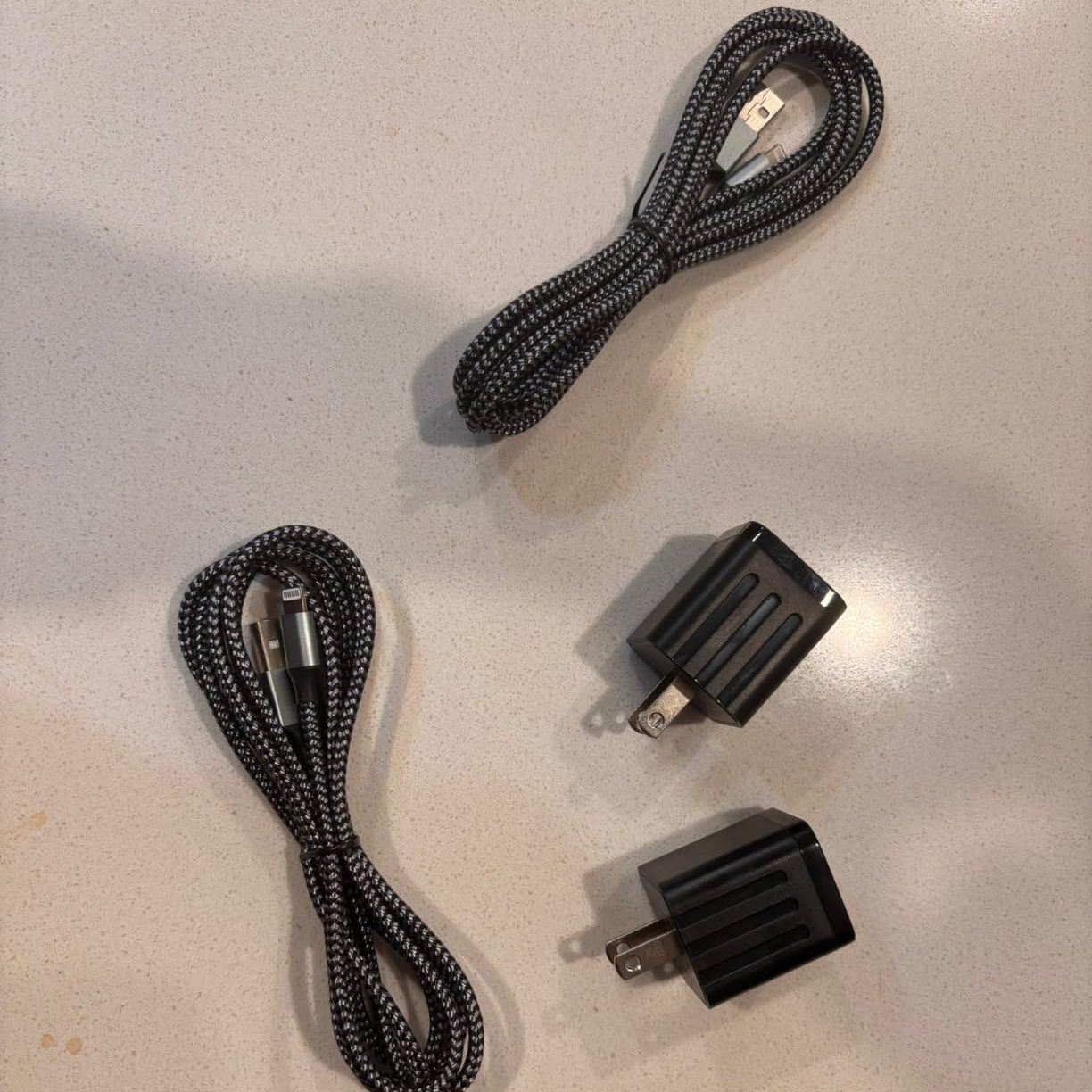
What’s interesting is how this behavior clusters around shared spaces. Roommates, partners, families—any household with multiple iPhone users competing for the same infrastructure. The person who gets to the bedroom first claims the outlet closest to their side of the bed. The second person either accepts a worse outlet or buys a longer cable to compensate. The cable becomes a tool for reclaiming charging access without direct confrontation.
Hotel rooms amplify this friction. A standard room has two outlets near the bed, maybe. But a couple traveling together has four devices minimum—two iPhones, maybe an iPad, possibly an Apple Watch. The math doesn’t close. Someone’s phone ends up charging on the bathroom counter, or plugged in across the room by the desk, or not charging at all because the negotiation over outlet priority felt too petty to vocalize.
SIMILAR
iPhone and MacBook users are compensating for a port problem Apple created
iPhone users are eliminating the tangled cable from every car charging session
iPhone users are transforming nightstands into silent charging infrastructure
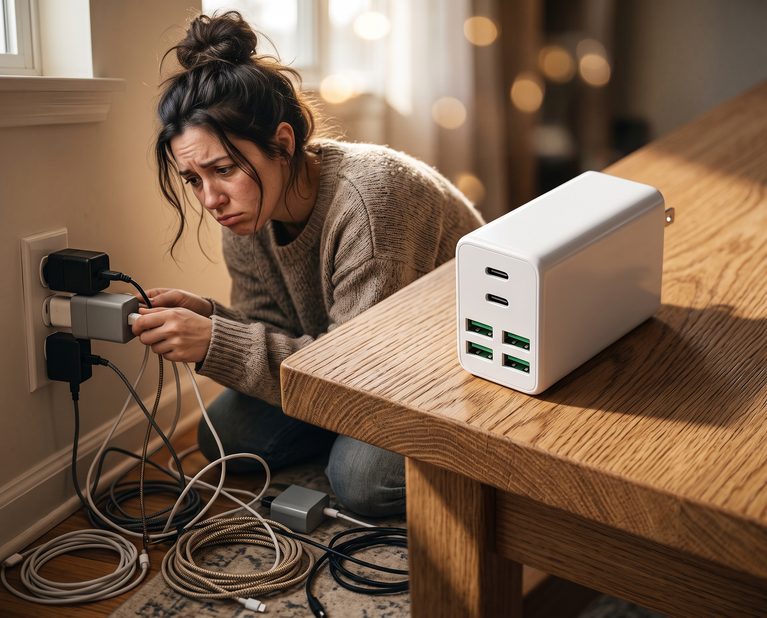
The dual-port adapter is the other half of the solution. It doesn’t create new outlets, but it splits existing ones, allowing two devices to charge from a single wall socket. Combined with the six-foot cable, it’s a package deal: share the outlet, extend the reach, and hope that’s enough to avoid the nightly ritual of deciding whose phone is more critical to charge overnight.
Apple’s ecosystem assumes charging happens in optimized environments—MagSafe pucks on nightstands, USB-C hubs on desks, wireless chargers scattered across the home. But most people don’t live in optimized environments. They live in apartments where outlets are scarce and inconveniently placed. They stay in hotels that were wired in the 1990s. They share bedrooms where charging access is a zero-sum game.
The long cable doesn’t fix that, but it makes the compromises less uncomfortable. You can charge from a worse outlet and still reach the bed. You can share a power strip with a partner without one of you sitting on the floor. The phone remains usable during the final minutes before sleep, instead of being stranded on a distant nightstand, out of reach.
Previously listed at $20.99, current listings hover around $13.35 for a two-pack. That pricing reflects the cables’ role as spatial infrastructure—bought in pairs, distributed across rooms, and replaced when one frays from being stretched at awkward angles to bridge the gap between outlet and bed.
The cable length becomes the determining factor in whether you can charge your phone and still use it before sleep, or whether you’re tethered to the wall, contorted awkwardly to read one last message. For iPhone users navigating shared spaces and suboptimal outlet placement, the six-foot cable is less about technical performance and more about reclaiming a few feet of autonomy in a charging landscape that was never designed for the number of devices people actually own.
"Note: Readers like you help support The Apple Tech. We may receive a affiliate commission when you purchase products mentioned on our website."