
The iPhone was engineered to be held. Every curve, every weight distribution decision, every texture choice assumes the device will spend most of its life in a human hand. But a behavioral shift has emerged that challenges that assumption: users are setting their phones down and leaving them there, propped at an angle, for hours at a stretch.
This isn’t aboutideo calls, though those accelerated the trend. It’s about the cumulative fatigue of holding a phone for the amount of time people actually use their phones. Scrolling through social media for thirty minutes while lying in bed. Watching a full-length movie on a flight. Following a recipe in the kitchen while cooking. Monitoring a group chat during a slow workday. Each context involves sustained attention, and sustained attention requires the phone to be visible without being held.
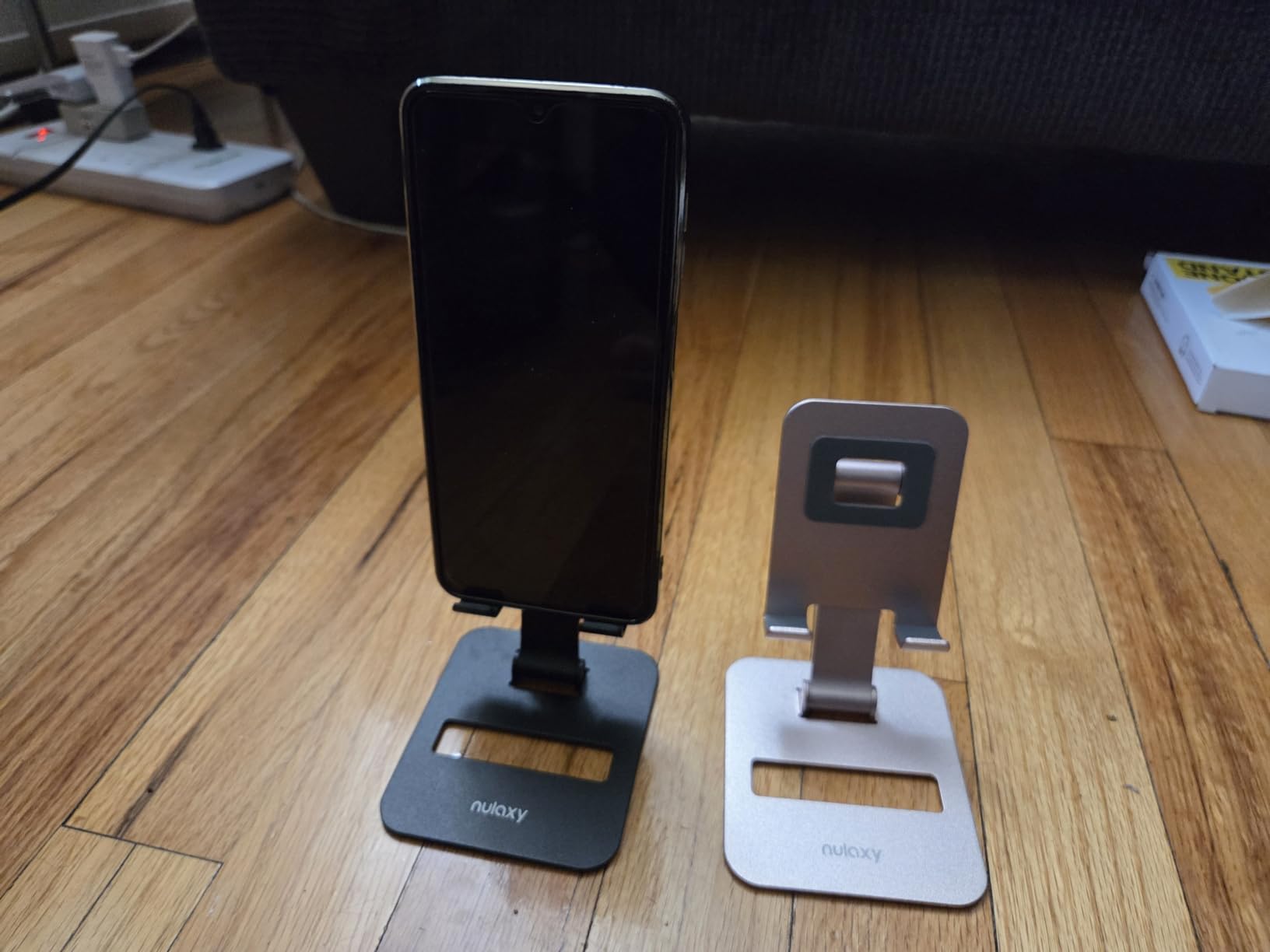
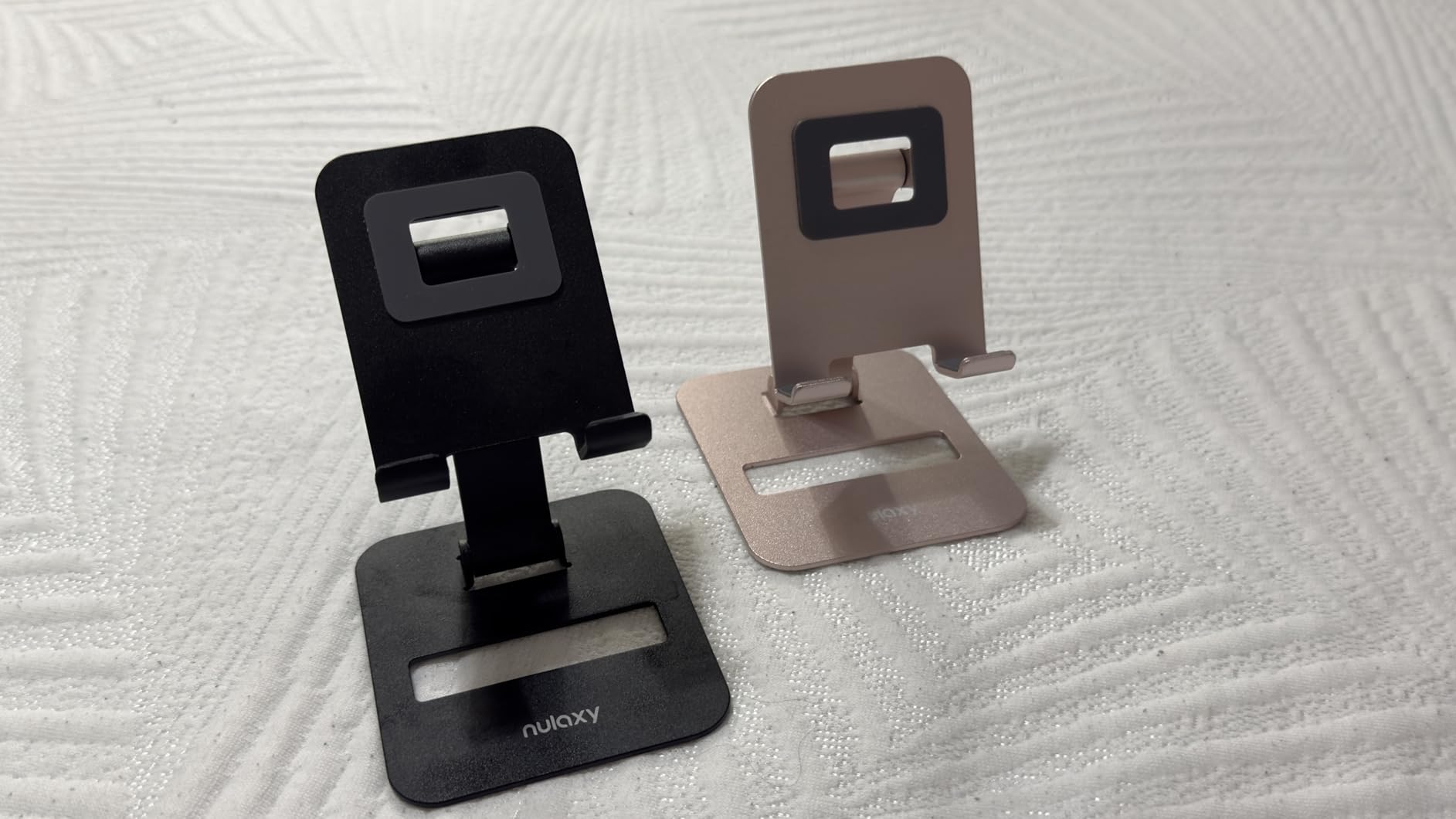
The desk stand solves this by making the phone a fixed object. It sits at an adjustable angle, stable, readable from a distance, requiring no grip strength or wrist endurance. The user’s hands are free to type on a laptop, take notes, eat lunch, or simply rest. The phone becomes ambient—present, but not demanding constant physical engagement.
What’s telling is how quickly this setup becomes permanent. The stand isn’t retrieved from a drawer when needed and put away when done. It lives on the desk, the kitchen counter, the nightstand. The phone returns to it reflexively, the same way keys go in a bowl by the door. The stand becomes part of the room’s infrastructure, and the phone becomes part of the stand.
SIMILAR
iPhone and MacBook users are compensating for a port problem Apple created
iPhone users are eliminating the tangled cable from every car charging session
iPhone users are transforming nightstands into silent charging infrastructure
This behavior exposes a tension Apple has never fully addressed. The company designs for elegance and portability, but portability assumes movement. When the phone stops moving—when it sits in one place for two hours while the user watches YouTube or monitors a Slack channel—the design priorities invert. Lightness doesn’t matter. Thinness doesn’t matter. What matters is stability, adjustability, and the ability to exist at eye level without human intervention.
The stand becomes an admission that the phone’s design—sleek, flat, optimized for portability—is fundamentally incompatible with prolonged stationary use. The iPhone has no kickstand. It has no adjustable hinge. It doesn’t prop itself up. It requires an accessory to perform the one function that defines how millions of users interact with it for multiple hours each day: staying upright and visible without being held.
Buying two stands, one for the desk and one for the bedroom, is common enough that they’re sold in pairs. That redundancy reflects the behavior’s ubiquity. The phone needs a home in every room where stationary use happens, and for most iPhone users, that’s at least two rooms, sometimes more.
Previously listed at $9.99, current listings hover around $8.99 for a two-pack. That pricing reflects the stand’s role as baseline infrastructure—cheap enough to justify multiple units, essential enough that going without one feels like a regression once you’ve adapted to having it.
The irony is that the iPhone, designed to be the most portable computer ever created, now spends significant portions of its operational life entirely stationary, propped at a 60-degree angle, watched from a distance by users whose hands have finally given up on holding it. The stand doesn’t change what the phone does—it changes how long the user can sustain doing it without physical discomfort. And for a device that dominates multiple hours of daily attention, that shift from handheld to freestanding has quietly become the default.
"Note: Readers like you help support The Apple Tech. We may receive a affiliate commission when you purchase products mentioned on our website."