

Bedside tables weren’t designed for the number of devices people now keep within arm’s reach. An iPhone charging cable made sense when it was the only thing that needed power overnight. Then came the Apple Watch, which required its own magnetic puck. Then AirPods, which could charge wirelessly or via cable depending on the case generation. Suddenly, the nightstand needed three separate charging solutions, three outlets, or a power strip that ruined the aesthetic most people were trying to maintain in their bedroom.
MagSafe helped with the iPhone part. Magnetic alignment meant no more fumbling in the dark to connect a cable. But it didn’t solve the broader problem—multiple Apple devices still meant multiple charging surfaces. Some people arranged them in a row. Others stacked charging pads awkwardly. A few gave up and charged devices in other rooms, which defeated the purpose of having them nearby for alarms, notifications, or late-night use.
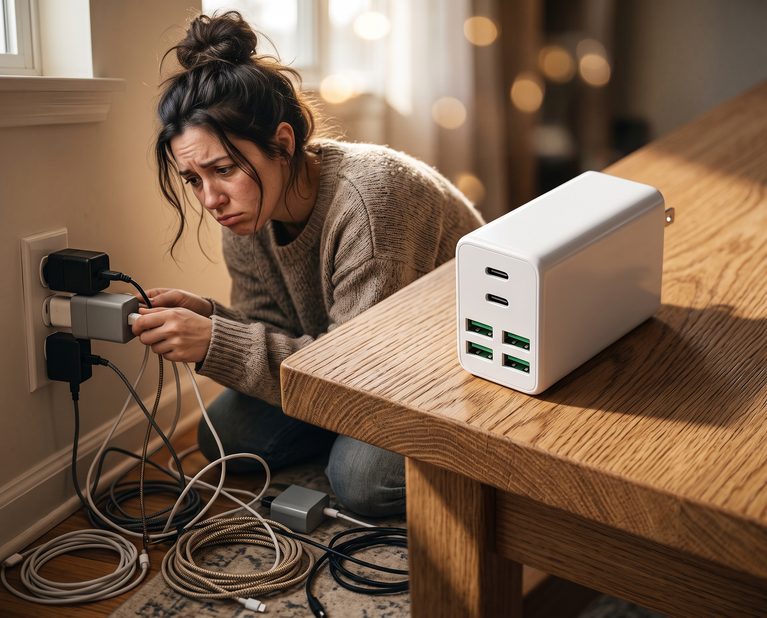
Consolidation makes sense in theory, but in practice it requires admitting the current setup isn’t working and committing to something different. That’s a higher bar than it sounds. Most people tolerate inefficiency longer than they’d admit, especially for something as mundane as charging. The shift usually happens after a specific frustration—knocking the Apple Watch charger off the nightstand for the third time in a week, or realizing the iPhone didn’t charge because the cable had come loose overnight.
Travel forces the issue differently. At home, a messy charging setup is invisible most of the time. On the road, it becomes obvious. Packing the iPhone MagSafe charger, the Apple Watch cable, and the AirPods case means dedicating bag space to accessories and hoping the hotel room has enough outlets near the bed. A single folding stand that handles all three devices collapses that logistical puzzle into something simpler. One item, one outlet, everything charged.

Aluminum construction isn’t just about durability—it’s about not looking like cheap plastic sitting on a nightstand. People care about this more than they let on. Charging accessories occupy visible space in bedrooms, offices, and living rooms. If they’re ugly or obviously budget-tier, they detract from the environment. If they’re neutral or premium-looking, they blend in. It’s a small thing, but small things accumulate into whether someone actually uses something or leaves it in a drawer.
Foldable designs solve a problem that stationary stands can’t: they fit into the routines of people who move between locations regularly. A stand that collapses flat works on a nightstand at home, a desk at the office, and a hotel room during travel. The charging behavior stays consistent across contexts, which reduces the friction of adapting to different spaces. Muscle memory takes over—devices go in the same spots, charge the same way, regardless of location.
Some people don’t need this. They charge devices separately and don’t mind the scattered setup. Others have moved entirely to wireless charging ecosystems and never looked back. The divide isn’t about technology preference—it’s about whether the current system creates enough friction to motivate change. For those who’ve crossed that threshold, reverting to individual chargers feels like a downgrade. For those who haven’t, the current setup is fine, even if it’s objectively messy.
Previously listed at $40, the current listing shows $30.97 at the time of publishing. View current listing. Price at time of publishing. Subject to change.
"Note: Readers like you help support The Apple Tech. We may receive a affiliate commission when you purchase products mentioned on our website."