A decade ago, a family of four might own four devices total. Two iPhones, maybe an iPad, possibly a laptop. Charging was straightforward—one device per person, one outlet per device, maybe a power strip to consolidate. But the Apple ecosystem doesn’t stay static. It accumulates.
Today, that same family owns closer to twelve devices. Four iPhones, upgraded on staggered cycles. Two iPads, one for work and one for the kids. Two pairs of AirPods, possibly a third for the teenager who lost the original case. An Apple Watch for the parent who tracks fitness. A MacBook for remote work. Another MacBook for the college student home on break. Maybe a Nintendo Switch, which charges via USB-C and gets thrown into the rotation by default.
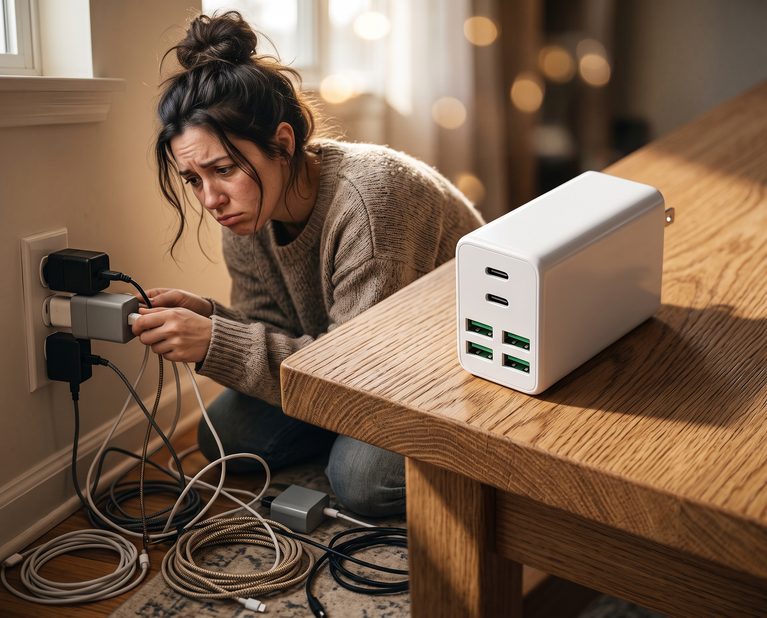
Twelve devices, all needing power, all converging on the same few hours each evening. The old strategy—scattered chargers across multiple rooms, each device claiming its own outlet—breaks down under this density. Outlets are finite. Wall space near beds and desks is finite. And the mental overhead of remembering which charger goes with which device, which cable supports fast charging, and whether the iPad’s 20W brick can safely charge the MacBook in a pinch becomes its own low-grade stressor.
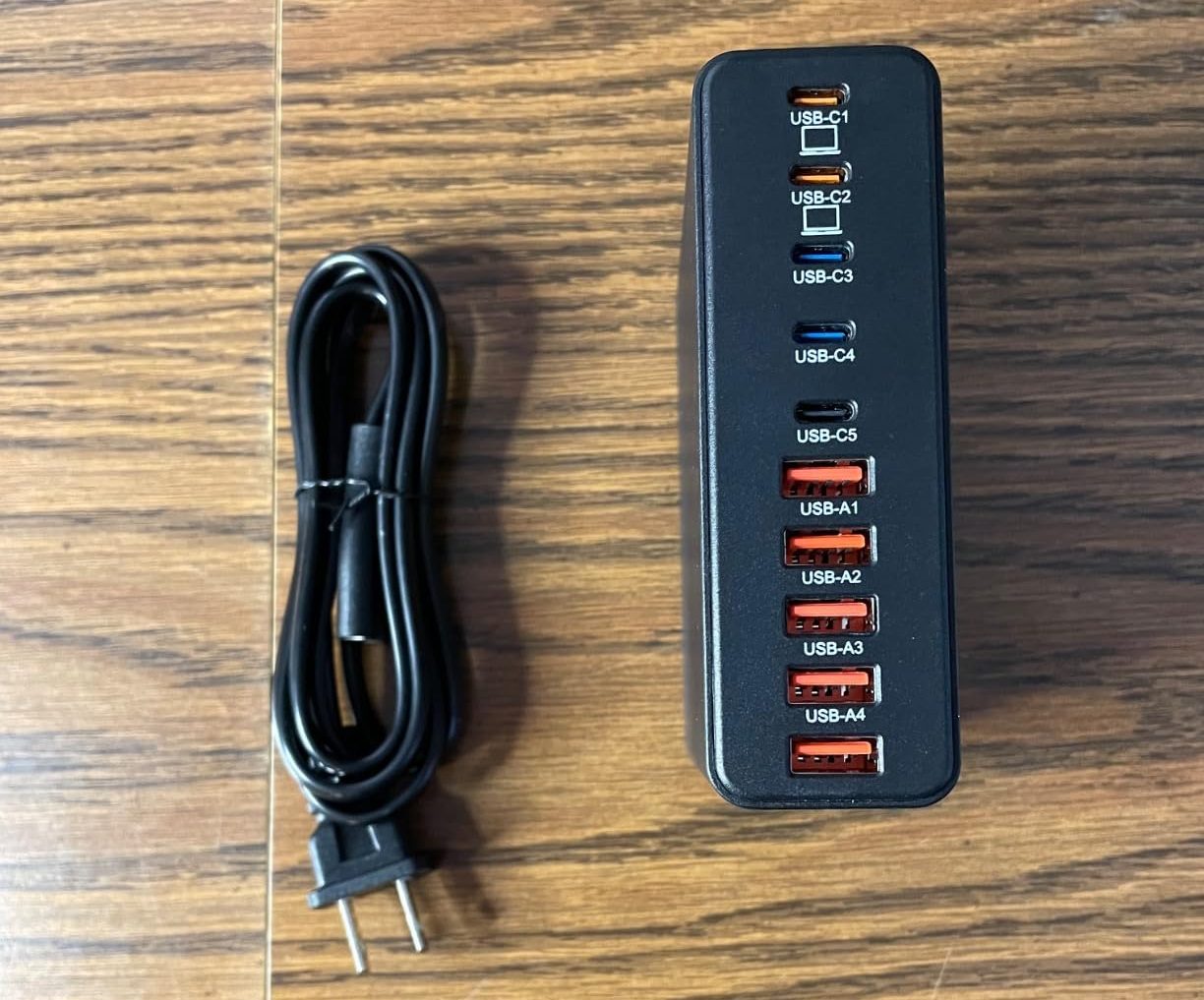
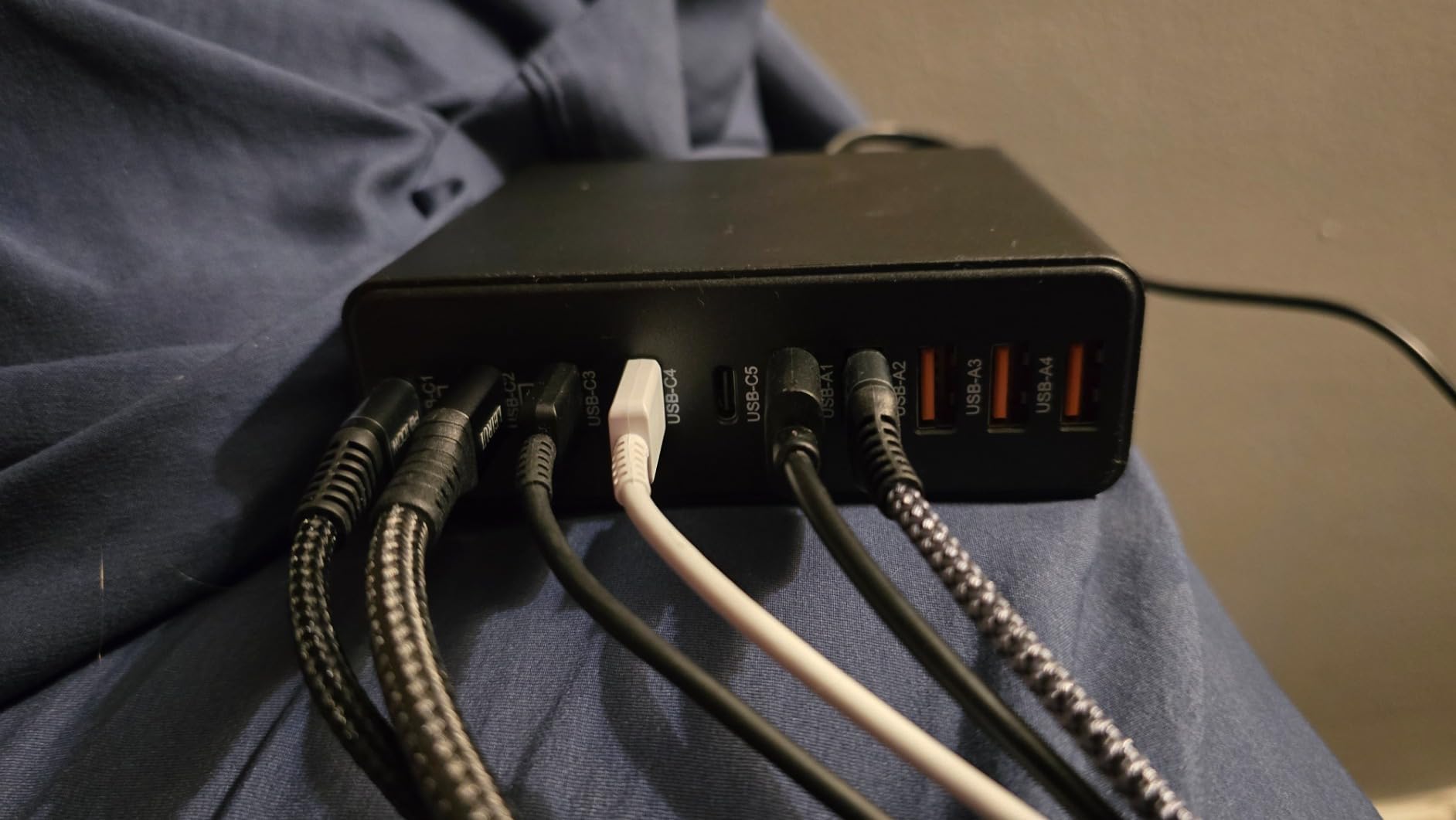
The ten-port hub is the infrastructural response. It doesn’t create new power—it redistributes existing power across more devices simultaneously. Every family member’s gear funnels into a single charging station, usually placed in a central location like a kitchen counter or a hallway table. The evening charge becomes a ritual: everyone drops their devices into the hub’s gravitational pull, cables snake outward, and by morning, everything is topped off.
SIMILAR
iPhone and MacBook users are compensating for a port problem Apple created
iPhone users are eliminating the tangled cable from every car charging session
iPhone users are transforming nightstands into silent charging infrastructure
What makes this setup notable is how it centralizes a behavior Apple designed to be decentralized. The company envisions charging as personal and wireless—a MagSafe puck on your nightstand, a charging case in your pocket, each device tended to individually. But families don’t operate that way. They optimize for efficiency, and efficiency means one hub, one outlet, one surge-protected point of failure managing the entire household’s power needs.
The hub’s capacity—750 watts across ten ports—reflects just how much simultaneous draw modern households generate. An iPhone pulling 20 watts, a MacBook pulling 60, an iPad pulling 30, AirPods pulling 5. Add it up across a family’s worth of devices, and you’re approaching the limits of what a single wall outlet was designed to handle. The hub doesn’t just split power—it manages load, prevents overheating, and negotiates which devices get priority when the draw exceeds capacity.
What’s lost in this consolidation is the illusion of device independence. When everything charges from the same hub, a single failure point can strand the entire household. A tripped breaker, a frayed cable, a port that stops working—any of these can cascade into a morning where no one’s phone charged overnight and the scramble begins.
Previously listed at $69.99, current listings hover around $49.98. That pricing reflects the hub’s role as critical infrastructure for households that have crossed the threshold from “we have some Apple devices” to “we are an Apple household, and the device count is now in double digits.”
The evening charge becomes a logistical event, where ten devices funnel into a single point of failure and everyone silently hopes the hub doesn’t overheat. It’s not the elegant, individualized charging experience Apple designs for, but it’s the pragmatic, high-density solution families actually need when the ecosystem has grown beyond the capacity of existing electrical infrastructure to support it gracefully. The gap between Apple’s vision and the lived reality of multi-device households has never been wider, and the ten-port hub is what fills it.
"Note: Readers like you help support The Apple Tech. We may receive a affiliate commission when you purchase products mentioned on our website."