Air travel created an unexpected ceiling for portable battery design. Regulations limit lithium battery capacity to 100 watt-hours in carry-on luggage, which translates to roughly 27,000 milliamp-hours under typical voltage configurations. Larger batteries exist, but they can’t legally travel on commercial flights, making them useless for their primary use case.
Frequent travelers adjusted their expectations downward. Instead of maximizing capacity, the new optimization became packing the most useful power into the regulatory threshold. Ten thousand milliamp-hours emerged as a practical sweet spot—enough for multiple phone charges, light enough to forget it’s in a bag, and well below any airline scrutiny.
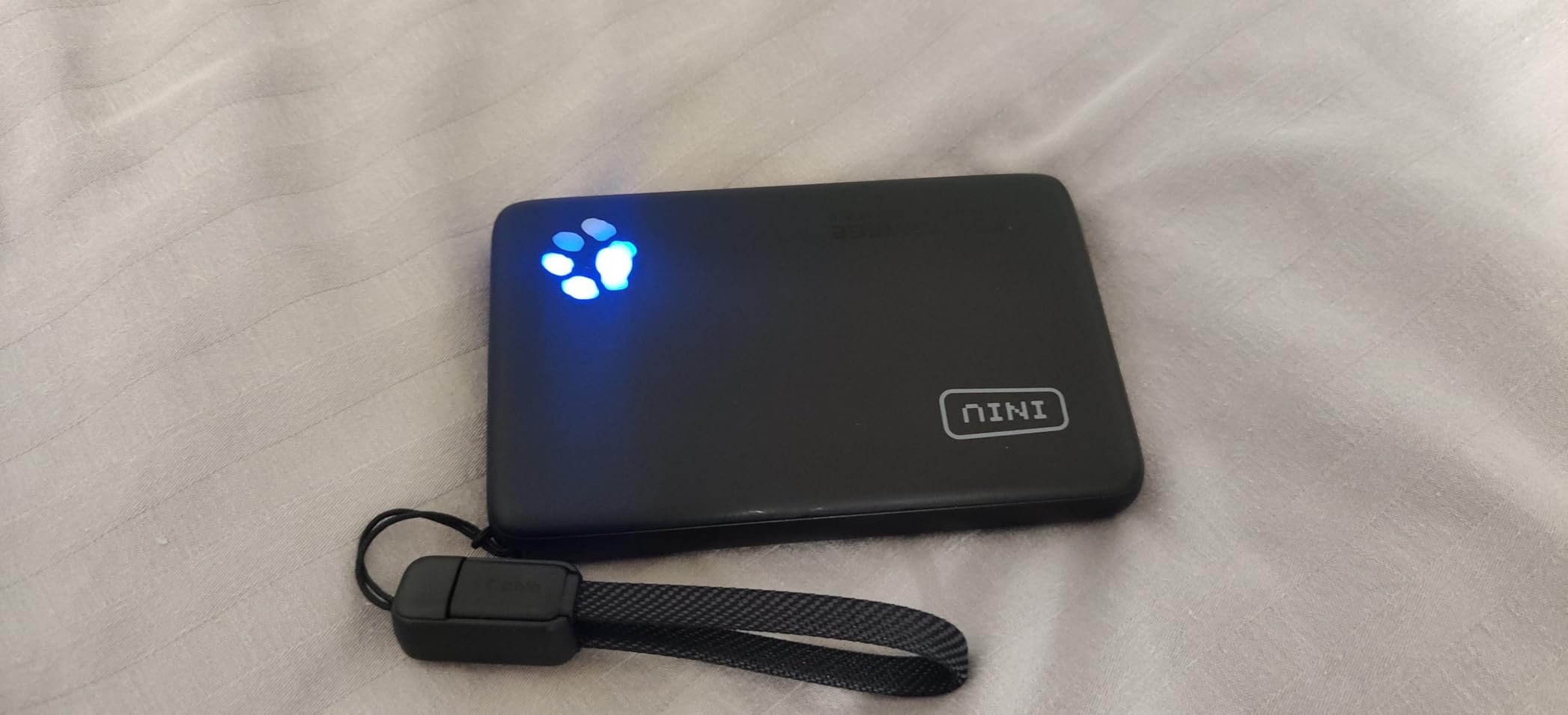
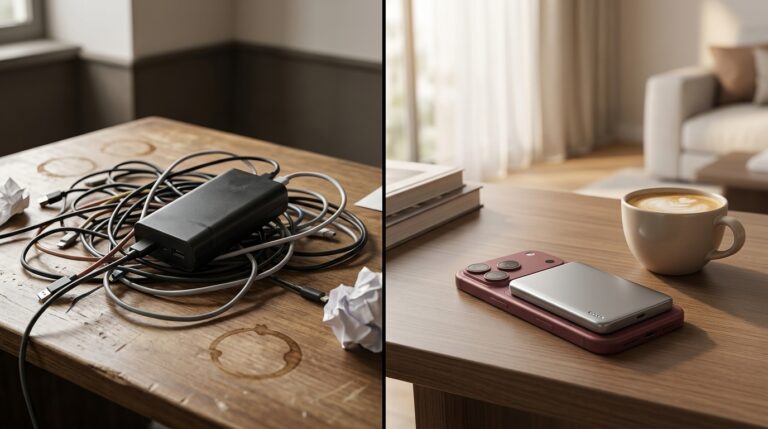
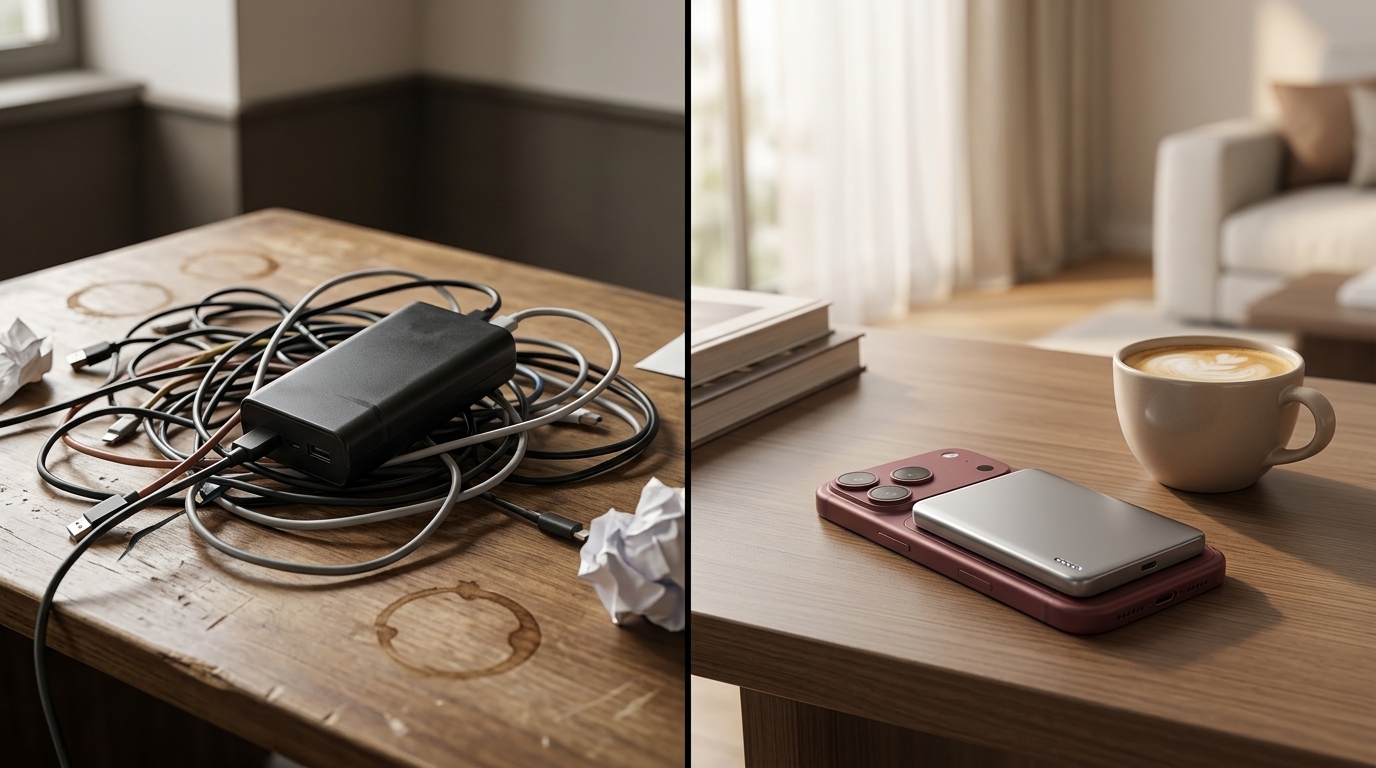
Integrated cables solved the secondary travel problem: loose cables that migrate to the bottom of luggage, tangle with other items, or simply get packed in different bags than the battery itself. Built-in USB-C cables mean the battery remains self-contained, ready to deploy the moment a phone dips into low power mode.
The slimness matters specifically for travel contexts. Thick batteries take up disproportionate space in bags already packed to capacity with clothing, toiletries, and work equipment. The premium on thin profiles reflects the reality that portable power competes for space with everything else travelers need.
SIMILAR
iPhone and MacBook users are compensating for a port problem Apple created
iPhone users are eliminating the tangled cable from every car charging session
iPhone users are transforming nightstands into silent charging infrastructure
Fast charging from wall outlets allows these smaller batteries to top off quickly in hotel rooms or airport lounges. The battery doesn’t need to hold enough power for an entire week-long trip—it needs to hold enough for a day’s heavy use and be able to recover overnight.
Usage patterns show adoption beyond traditional frequent travelers. Weekend trips, music festivals, outdoor events—any scenario where access to wall power becomes intermittent but phone dependency remains constant. The battery becomes trip insurance against the modern anxiety of digital disconnection.
Flight-safe batteries in the ten-thousand-milliamp-hour range typically cost between fifteen and thirty dollars depending on fast charging support and cable integration. Previously listed at $23.99, current listings hover around $18.67 for variants with attached USB-C cables.
The behavioral marker is simple: these batteries travel when larger ones stay home.
"Note: Readers like you help support The Apple Tech. We may receive a affiliate commission when you purchase products mentioned on our website."