

Multi-device households have lived with invisible territorial divisions for years. iPhone cables claimed certain outlets, Android chargers occupied others, and mixing them meant compatibility errors or damaged ports. The infrastructure reflected the platform split, creating redundancy that took up space and required mental tracking.
USB-C adoption across recent iPhone models collapsed that boundary. The same cable and power adapter can now serve devices from opposite ends of the ecosystem, which sounds minor until you consider how charging actually happens in shared spaces. Kitchen counters, living room end tables, car cup holders—these are communal territories where device ownership matters less than immediate need.
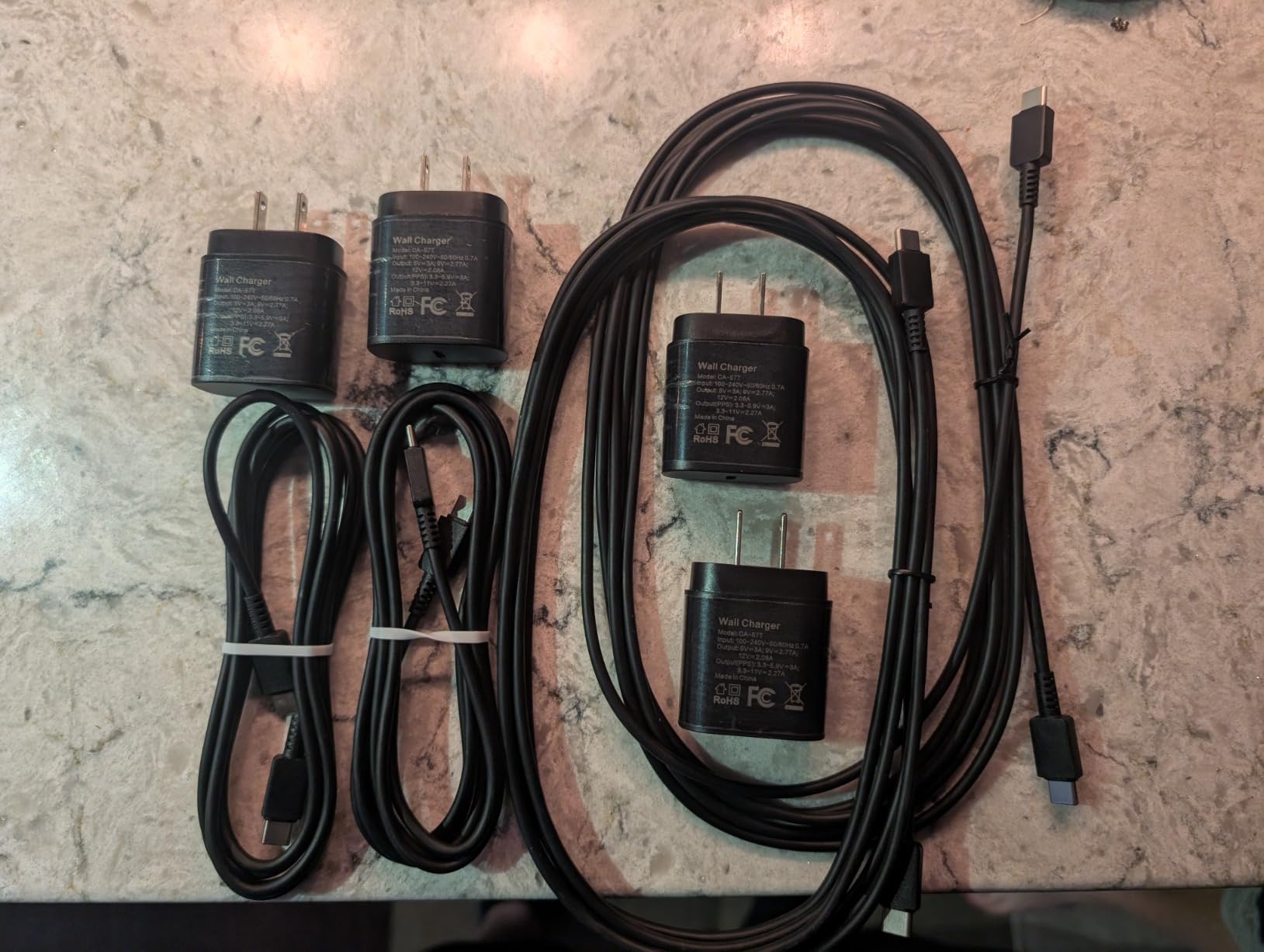
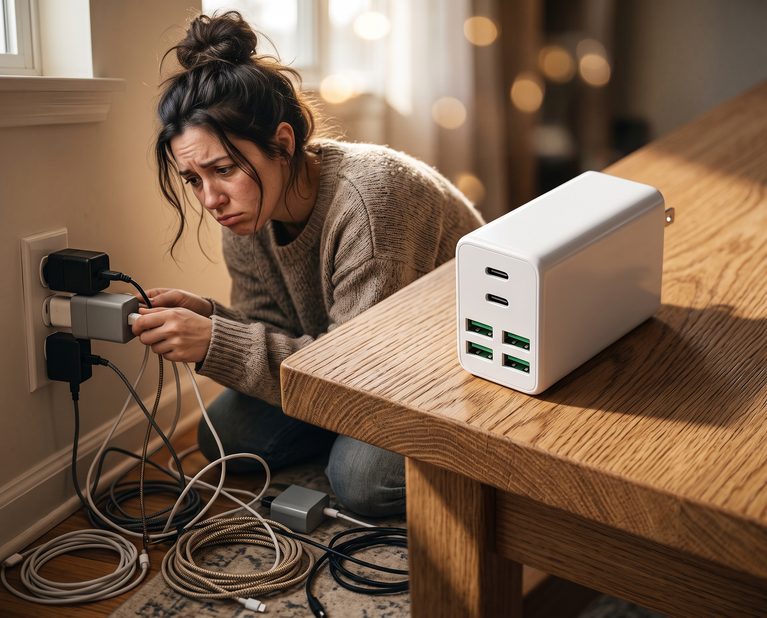
Families are responding by consolidating rather than maintaining parallel systems. Instead of separate charging stations for different platforms, multi-port adapters have become central hubs. One adapter, multiple cables, universal compatibility. The simplification is domestic rather than technical.
The behavioral shift appears in small moments: a teenager grabbing whichever cable is closest rather than hunting for the “right” one, a parent charging both their iPhone and their partner’s Samsung phone from the same wall adapter without thinking about it. The cognitive overhead of managing platform-specific infrastructure simply evaporates.
SIMILAR
iPhone and MacBook users are compensating for a port problem Apple created
iPhone users are eliminating the tangled cable from every car charging session
iPhone users are transforming nightstands into silent charging infrastructure
Fast charging adds another layer to the convergence. Power delivery standards have normalized across platforms, meaning the same adapter can deliver appropriate charging speeds whether it’s connected to an iPhone 16 or a Galaxy S25. The infrastructure becomes genuinely platform-agnostic.
Cable length emerges as a practical consideration in shared charging zones. Six-foot cables work for bedside tables, but ten-foot variants reach from wall outlets to couches, beds, or desks where the outlet placement wasn’t designed with modern device density in mind. Having both lengths available turns one adapter into a more flexible solution.
Multi-pack configurations cluster in the fifteen to twenty-five dollar range, with typical offerings including multiple adapters and varied cable lengths. Previously listed at $21.99, current listings hover around $19.79 for four-pack sets with extended cables.
The shift isn’t about choosing sides—it’s about refusing to maintain separate infrastructure when the devices themselves no longer require it.
"Note: Readers like you help support The Apple Tech. We may receive a affiliate commission when you purchase products mentioned on our website."