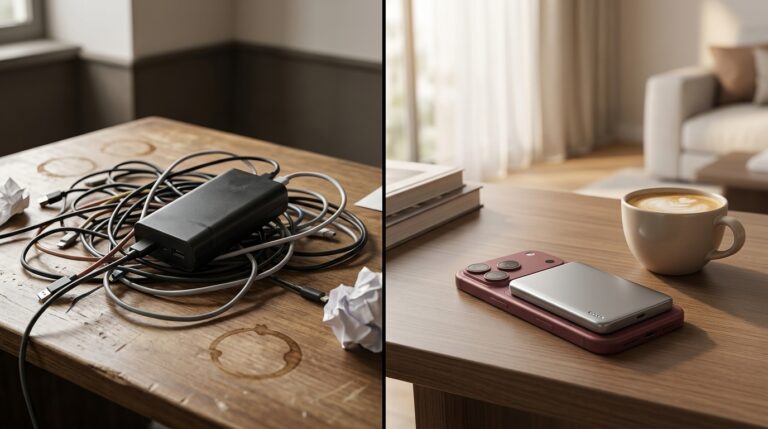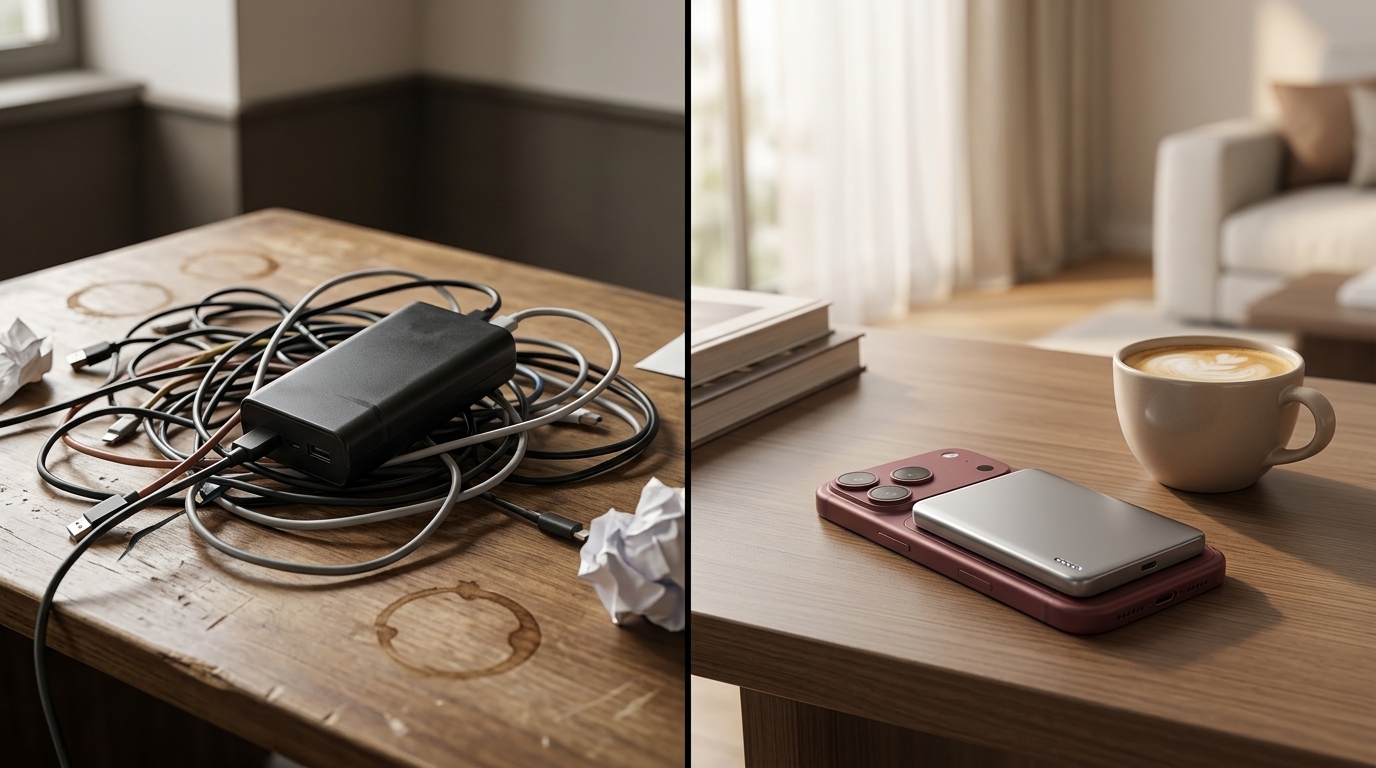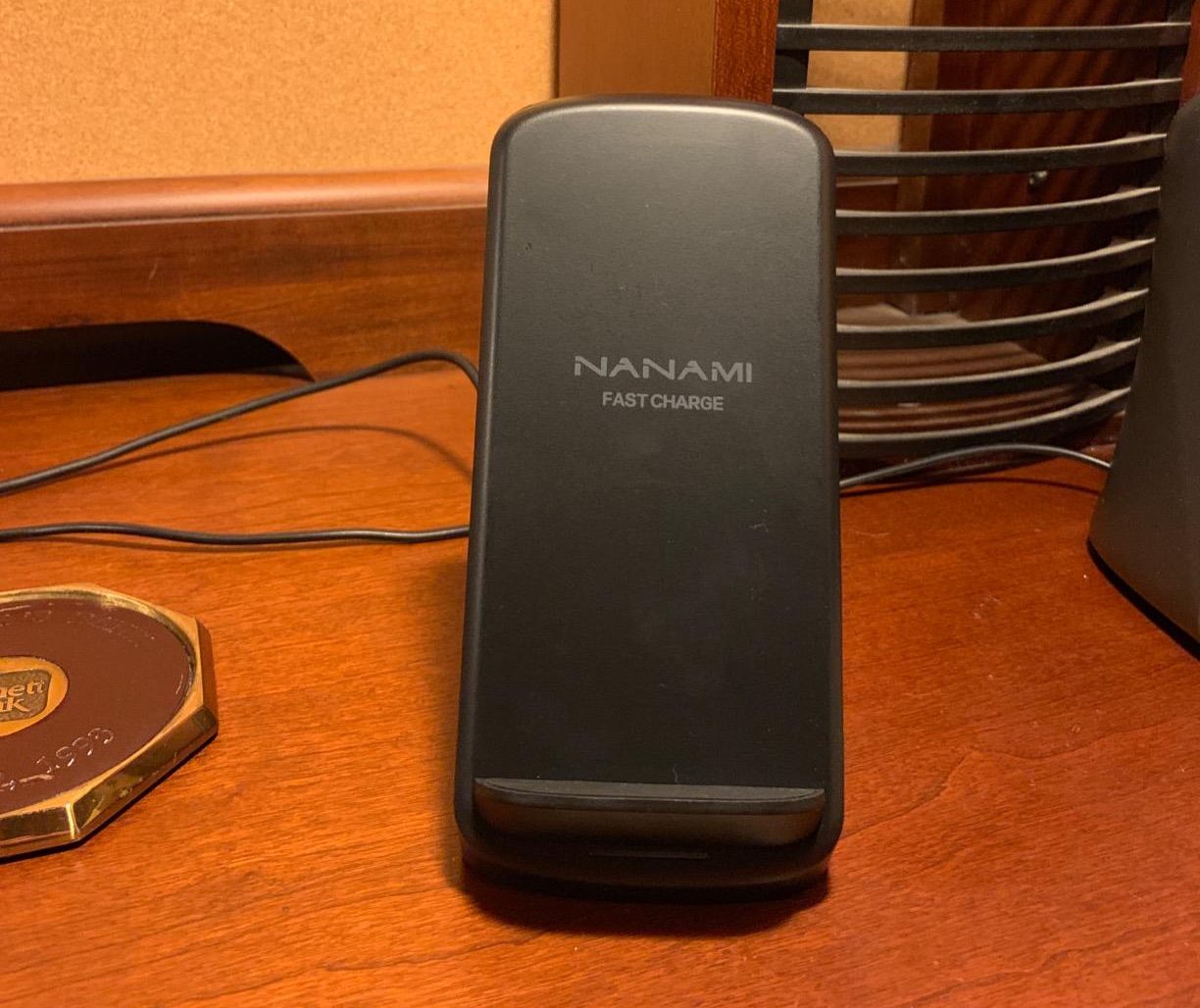
There’s a specific moment many iPhone users experience but rarely talk about: reaching for a charging cable at night and realizing they haven’t touched one in weeks. The transition happens without announcement or conscious decision. A stand appears on a nightstand. The phone lands on it. The muscle memory of plugging something in fades.
This behavioral drift isn’t tied to a single product launch or marketing push. It’s the result of years of incremental adoption, where wireless charging moved from experimental accessory to default nighttime posture. The iPhone has supported the technology since 2017, but widespread habit change took longer. People needed to forget the old way before the new one felt natural.
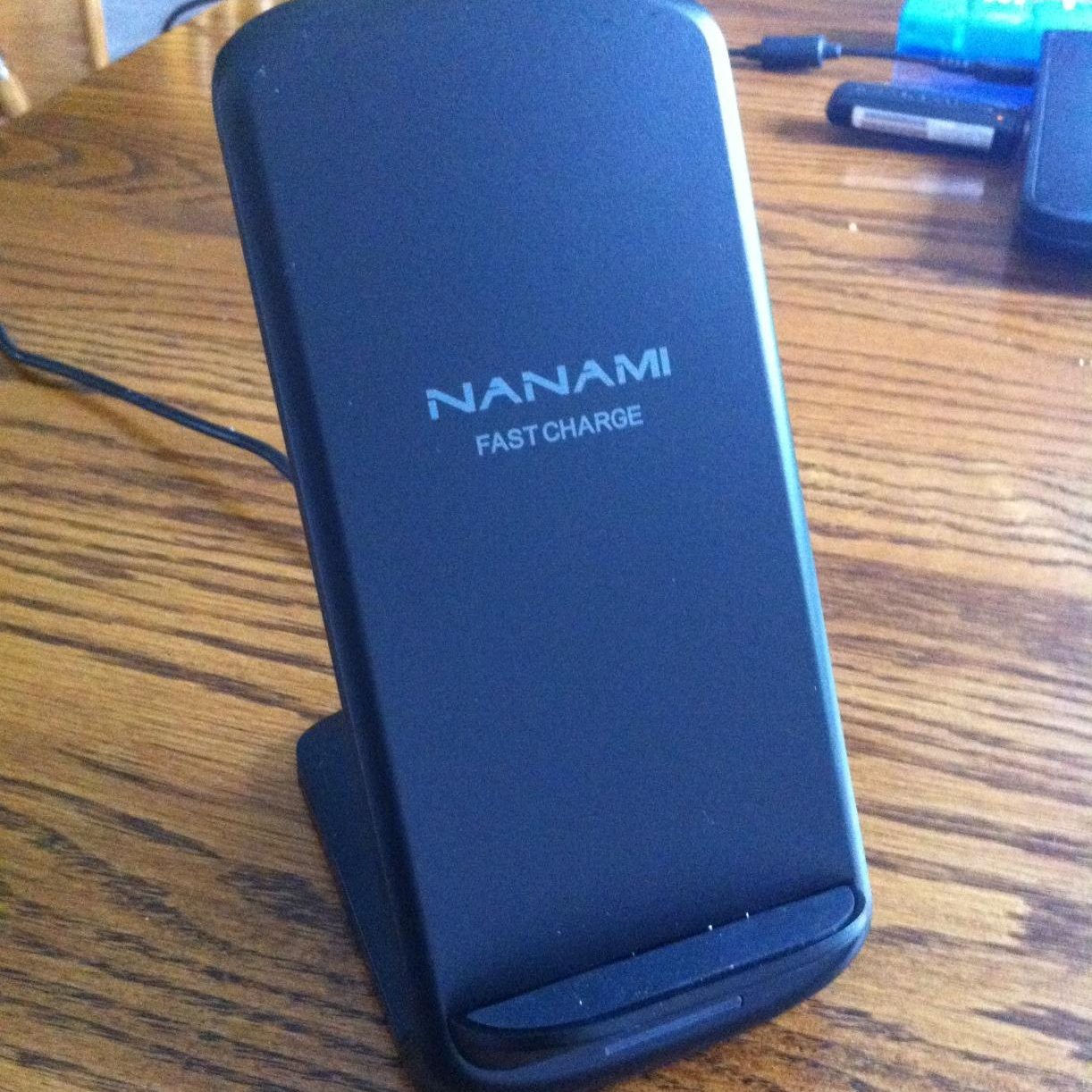
What makes this shift unusual is its lack of obvious trigger points. No one wakes up and declares they’re done with cables. Instead, a charging stand arrives—sometimes as a gift, sometimes on impulse—and sits unused for weeks. Then one night, the cable is across the room. The stand is closer. The phone goes down. It works. The next night, the same. Within a month, the cable migrates to a drawer.
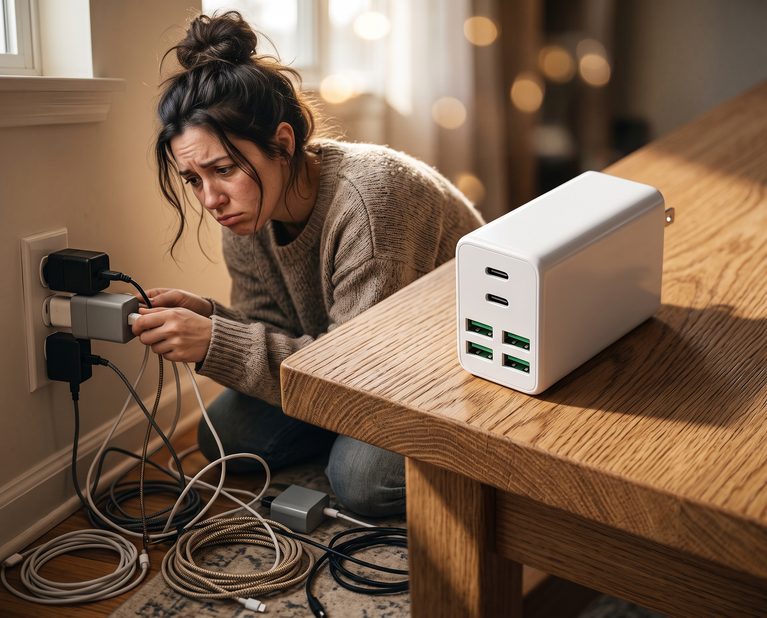
The appeal isn’t speed. Wireless charging remains slower than wired, especially compared to the fast-charging capabilities of modern USB-C connections. But speed becomes irrelevant when the phone sits untouched for eight hours. What matters is the reduction of a small, repetitive physical task. No fumbling in the dark. No connector orientation. No frayed cable to replace.
This creates a strange new relationship with device charging. The phone becomes an object that simply rests, rather than something that plugs in. Parents notice it first with teenagers, who treat charging stands like coasters. The phone lands. It charges. No ceremony, no acknowledgment. For older users, the shift can feel disorienting, a loss of tangible connection to the act of powering a device.
SIMILAR
This 71-inch iPhone tripod with wireless remote drops to $12.74 from $44.99
iPhone 17 Pro Max clear cases fall to $11 as users debate protection trade-offs
Apple Watch braided band pricing hits $7.59, testing user replacement patterns
The ecosystem implications are quieter but persistent. Once charging becomes location-based rather than cable-based, people start thinking about where their phone sits rather than where their cable is. Kitchen counters, office desks, living room side tables—each becomes a potential charging zone. The behavior spreads horizontally across spaces rather than vertically through device upgrades.
Not everyone makes this transition, and that’s part of what makes it notable. Wireless charging adopters rarely evangelize. They simply stop carrying cables in certain contexts. Travel becomes the exception, the one scenario where the old ritual returns. But at home, the cable stays hidden, a backup for emergencies that rarely come.
Previously listed at seventeen dollars ninety-nine, current listings for Qi-certified charging stands hover around thirteen dollars, reflecting a mature market where the technology is no longer positioned as premium. The price point suggests these devices have moved from enthusiast accessory to household staple, purchased not for novelty but for the small, unremarkable convenience they provide.
"Note: Readers like you help support The Apple Tech. We may receive a affiliate commission when you purchase products mentioned on our website."