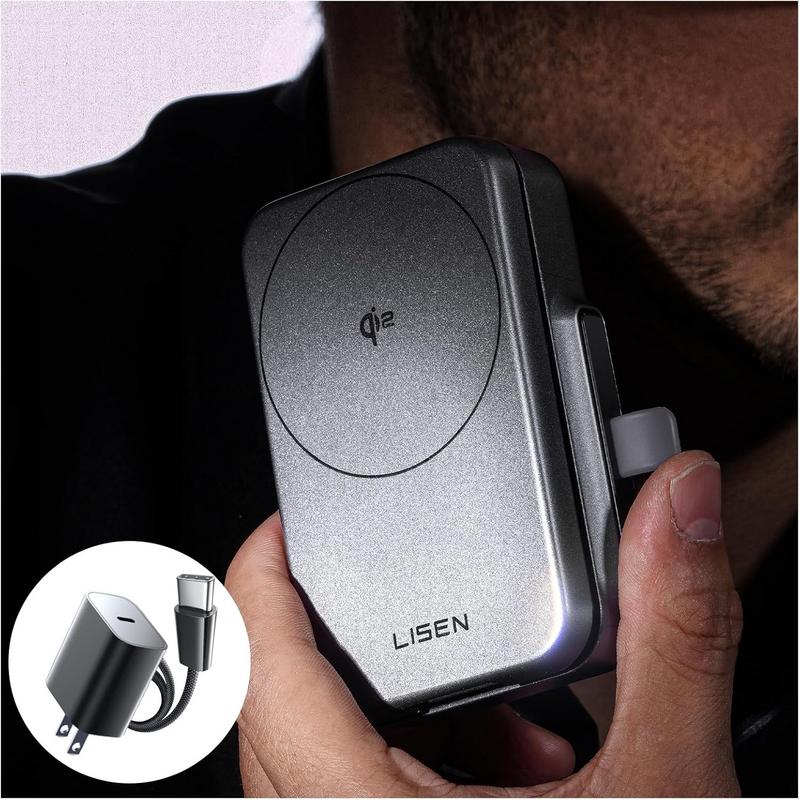
In many Apple-centric households, the nightly ritual of powering an iPhone, AirPods and Apple Watch unfolds in quiet symmetry. The soft glow of MagSafe adapters, the faint hum of a charging puck against an iPhone’s back—these small moments have woven themselves into routines. Over time, the scatter of cables across a nightstand and the low hum of adapters beneath a desk become background noise, noticed only when a sudden low-battery warning disturbs the calm.
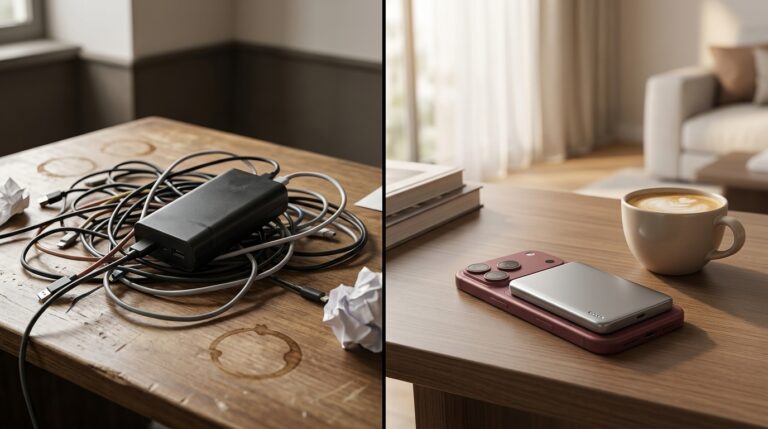
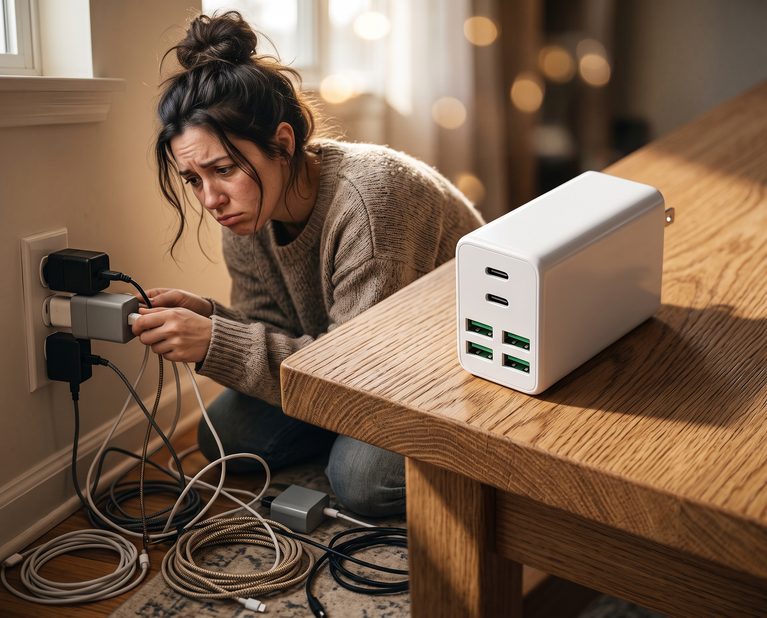
Daylight sheds light on the invisible tension of juggling multiple chargers. A MacBook charger coils beneath a laptop’s corner. An AirPods case leans against a separate cable. The Apple Watch’s magnetic disc hovers over papers. Each device stakes its claim on the desk, demanding alignment and an outlet. Even with MagSafe, locating a free plug can fragment a short work session into a delicate dance of cords and shifting devices.
At night, reaching for a cable in darkness crystallizes small anxieties. Fingers search for the familiar texture of braided wire, tracing it toward the phone. A soft click echoes as the magnet snaps the iPhone into place. Sometimes the alignment is off. A red battery icon flashes, and the device slips from its precarious balance. In that instant, the ecosystem’s hold on daily comfort is revealed: a single misalignment interrupts a ritual of rest.
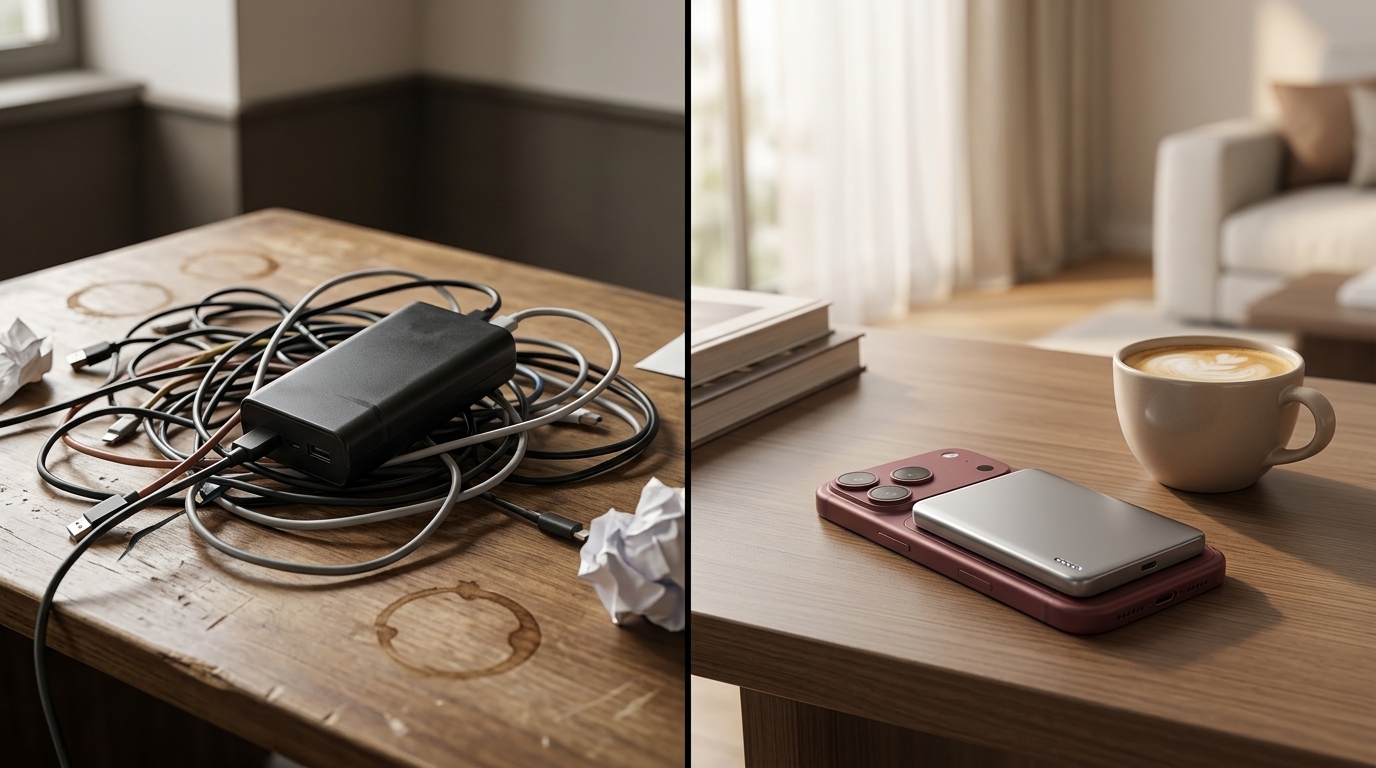
Such disruptions often prompt subtle changes. A compact charger replaces three loose cables, anchoring iPhone, AirPods case and Apple Watch in fixed positions. There is no announcement—only the gentle settling of each device into its dedicated spot. The nightstand gains order. The work desk feels lighter. Devices find predictable homes, every magnet and coil aligned toward a central axis that restores a sense of unobtrusive continuity.
Over the workday, the phone, iPad and laptop migrate from pockets to car dashboards to café tables. At each pause, hunting for a charger can jolt a conversation or interrupt a moment of focus. In quiet coffee shops, an iPhone set on its pad beside a MacBook signals readiness; in meeting rooms, it suggests an unspoken structure. The choreography of placing devices, once jarring, becomes part of a deeper cadence—one that anchors digital tools to familiar surfaces rather than letting them drift.
When travel demands a lighter load, the unified block slips into a backpack alongside a MacBook. Unpacking requires no rummaging through tangled cables or loose adapters. An airport lounge table transforms into a temporary command center the moment the charger unfolds. The consistent click of MagSafe against glass or metal reminds travelers that the ecosystem endures, even in transit, and that the quiet promise of power can follow without extra weight.
Recent listings reflect a 65% reduction compared with earlier availability, a muted signal of how minor frictions—tangled cords and outlet hunts—can influence product value. There is no celebratory announcement, but the lower price quietly acknowledges the demand for tools that accommodate lived routines rather than headline specifications. In this understated shift, the market responds to how we have come to treat charging not as a task but as an integral moment in daily life.
This product is available on Amazon.
Check current availability here
Is this station compatible with MagSafe iPhone models?
It adheres to the Qi2 MagSafe standard, aligning with iPhone 12 and later devices for up to 15W of wireless charging without extra adapters.
Can I power the charger with a USB-C adapter?
Yes, the base accepts a USB-C input and can be connected to any USB-C power adapter that offers sufficient output to run all three charging coils.
Does using a single hub affect battery management?
iOS battery management continues to regulate charging rates, so the shared station does not override built-in controls for optimized charging cycles.
Is it practical to carry this station while traveling?
The compact form minimizes cable clutter in a bag, while magnetic alignment keeps an iPhone in place, making setup straightforward in new environments.
Verdict
As Apple users have discovered, eliminating the low-level friction of multiple cables can recalibrate daily interactions with devices. A single charging hub does more than conjure an orderly desk; it reinforces the unspoken bonds within the ecosystem, shaping how we approach battery anxiety and device readiness. By streamlining the habitual act of charging, it reveals how minor design choices cascade into quieter nights and less scattered tasks, underscoring the subtle choreography of modern routines.
"Note: Readers like you help support The Apple Tech. We may receive a affiliate commission when you purchase products mentioned on our website."