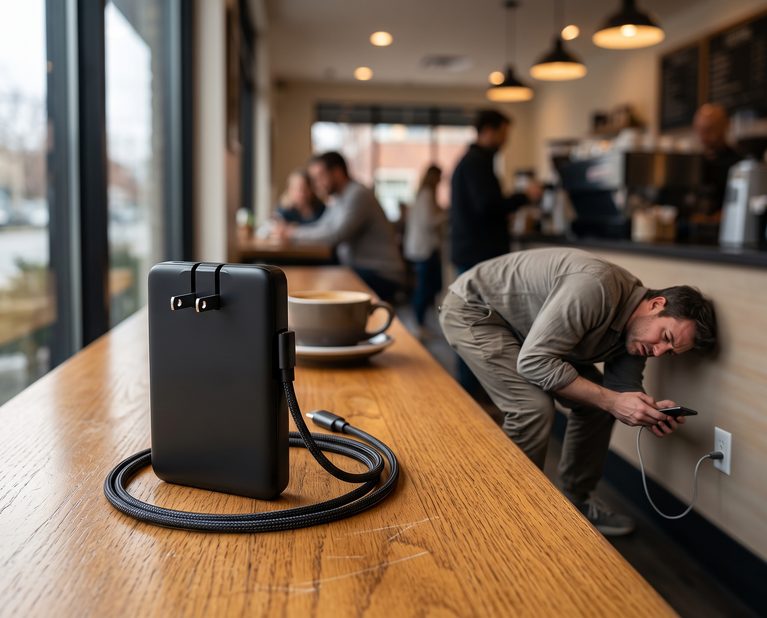
There’s a particular kind of frustration that comes from being ready to leave the house and discovering that your keys have apparently disappeared.
You check the kitchen counter. Nothing. The desk? Not there. You look inside yesterday’s jacket, retrace your steps, and eventually discover them sitting somewhere so obvious that you wonder how you missed them in the first place.
It happens to almost everyone.
And yet, we tend to interpret these little incidents as personal failures. We’re disorganized. We have terrible memories. We need to pay more attention.
But what if that’s the wrong explanation?
Psychologist Leon Festinger’s theory of cognitive dissonance offers an interesting way to examine this everyday problem. When our beliefs about ourselves conflict with our experiences, we feel uncomfortable. We then try to resolve that discomfort, often by changing our behavior or finding a new explanation.
If you think of yourself as an organized person but repeatedly lose your keys, something doesn’t quite add up.
Maybe the problem isn’t your memory. Maybe the system you’ve built around your belongings simply doesn’t work as well as you think it does.
The Myth of the Naturally Organized Person
We admire people who seem to have everything under control.
They remember appointments, arrive on time, keep their desks tidy, and somehow manage to leave the house without performing a frantic search for their wallet.
It’s tempting to assume they possess some special ability. Perhaps they’re naturally disciplined. Maybe they have exceptional memories.
But much of what we call organization has very little to do with remembering.
Think about your smartphone. You probably don’t memorize every appointment, address, phone number, and important date. You rely on calendars, contacts, reminders, and other tools to handle those details.
You wouldn’t necessarily describe yourself as forgetful because you need Google Calendar to remember a meeting scheduled three weeks from now.
You’d call that sensible.
The same principle applies to physical belongings, although we don’t always treat them that way.
We expect ourselves to remember where we left our keys, where we put our luggage, or which bag contains an important document. Yet these objects move around constantly, particularly when we’re busy.
The expectation that we should remember everything is often unrealistic.
A better approach is to build routines that don’t require perfect memory in the first place.
Your Brain Wasn’t Designed to Remember Every Little Thing
Consider a typical weekday morning.
Your iPhone is charging somewhere. Your laptop is in your bag. You’re checking messages while thinking about an upcoming meeting. Perhaps you’re listening to something through your AirPods while trying to finish breakfast.
Then you receive a notification.
You respond to it, remember an unfinished task, and move something from the table to make room for your coffee.
Where did you put your keys?
You might have been paying attention when you placed them down. Or perhaps your mind was already occupied with something else.
Human attention is selective. We don’t encode every ordinary moment into a reliable, easily retrievable memory. When an action happens automatically while we’re thinking about something else, remembering its details later can be difficult.
This doesn’t mean we should stop trying to be organized.
It means we should stop building organizational systems that depend entirely on remembering where everything is.
A designated place for your keys is one solution. Putting your wallet in the same compartment of your bag is another.
But routines aren’t perfect, either.
You might leave your keys in a different jacket. A family member might move your bag. You might be traveling and have no familiar place to put anything.
That’s where a little technology can make a practical difference.
Technology Should Reduce the Number of Things You Have to Remember
There’s an irony in modern digital life.
We have devices that can remind us about appointments, track our workouts, organize our photographs, and help us find our way across unfamiliar cities.
Yet we still spend several minutes looking for an object that might be sitting underneath a newspaper.
The solution isn’t necessarily another complicated productivity system.
Sometimes, it’s a small tool that solves one specific problem.
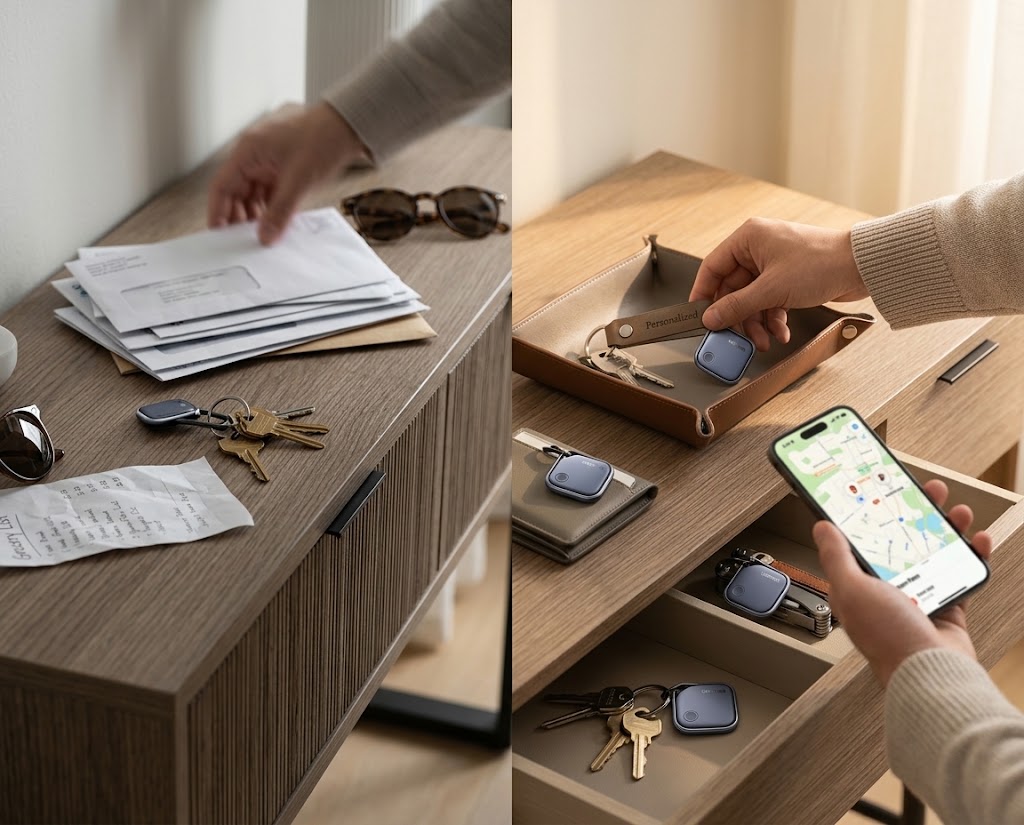
For people who use Apple devices, Bluetooth tracking tags are an example of this idea. Instead of relying exclusively on memory, you can use a compatible tracking system to help locate certain belongings.
The distinction matters.
A tracker doesn’t make you more disciplined. It doesn’t teach you to put your keys in the same place every evening. It simply gives you another way to find them when your usual routine breaks down.
And that’s a perfectly reasonable role for technology to play.
A Small Tracker, a More Practical Relationship With Forgetfulness
This is where products such as the UGREEN FineTrack Air Tracker Tags enter the conversation.
UGREEN makes a range of accessories for everyday technology users, and the FineTrack Air Tracker Tags are designed for people who use Apple’s ecosystem.
The four-pack format is particularly relevant because losing track of belongings isn’t limited to one set of keys.
You might have a set of house keys, a car key, a work bag, and luggage that you use when traveling. Each creates a different opportunity for that familiar moment of uncertainty.
Having multiple tags means you can consider tracking several belongings rather than treating the problem as something that happens only with your keys.
The iOS-only compatibility is an important detail, too. These aren’t universal trackers intended to work equally across every smartphone platform. They’re designed for Apple-device users, so compatibility should be checked before choosing them.
For someone already using an iPhone, the appeal is straightforward: a tracking tag can become another small part of an existing technology routine rather than requiring an entirely separate approach to organization.
Imagine arriving at an airport and wondering whether your bag is where you left it. Or preparing to leave for work and realizing you can’t remember which room contains your keys.
A compatible tracker can help you check the location information available through its supported Apple tracking features, subject to the device’s capabilities and connectivity conditions.
That doesn’t guarantee you’ll find every missing item instantly. A tracker isn’t magic, and its usefulness depends on how the product works, where the item is, and the conditions surrounding the search.
But it can reduce the uncertainty that makes these situations so irritating.
The product isn’t interesting because it promises to transform your life.
It’s interesting because it addresses a problem that most people have accepted as an unavoidable part of being human.
The Hidden Cost of Constantly Searching for Things
Losing your keys for five minutes might seem insignificant.
But these little interruptions accumulate.
You stop what you’re doing. You search several rooms. You become irritated. If you’re already running late, the frustration can spill into the rest of your morning.
And sometimes the consequences extend beyond inconvenience.
You might miss a bus, arrive late for work, or spend unnecessary time retracing your movements when you could have been doing something else.
Not every lost object creates a major problem, of course. But the repeated interruption is worth considering.
A useful organizational system doesn’t need to eliminate every mistake. It needs to make ordinary mistakes less disruptive.
That’s an important distinction.
If your system works only when you remember everything perfectly, it isn’t particularly forgiving.
A more practical system accepts that people get distracted, routines change, and objects occasionally end up somewhere unexpected.
You can combine simple habits with technology: keep frequently used belongings in designated places, avoid unnecessary clutter, and use tracking tools where they genuinely help.
The goal isn’t to monitor every object you own.
It’s to remove a few recurring sources of friction from everyday life.
The Future of Organization Isn’t About Becoming Perfect
There’s a broader lesson here for anyone who has ever downloaded a productivity app, bought a new planner, or promised themselves that next week they’ll finally become organized.
We often approach organization as a personal transformation project.
We imagine a future version of ourselves who never forgets anything, never misplaces an object, and always knows exactly what needs to happen next.
But that version of ourselves may be less useful than we think.
Real life is unpredictable. We get interrupted. We change plans. We put things down while thinking about something else.
A better approach is to design our surroundings around the way we actually behave.
That might mean keeping your keys beside the door instead of wherever there’s an empty surface. It might mean using your iPhone’s reminders rather than trusting yourself to remember an appointment. Or it might mean attaching a compatible tracker to an item you frequently misplace.
None of these solutions is especially dramatic.
That’s the point.
The most useful technology often doesn’t demand our attention. It quietly helps us deal with a problem that would otherwise interrupt our day.
And perhaps that’s a healthier way to think about technological progress.
We don’t need devices that promise to make us flawless. We need tools that recognize we’re human.
So the next time you find yourself searching the house for your keys, consider a different question.
Instead of asking, “Why am I so forgetful?” ask, “Why does my routine make it so difficult to find something I use every day?”
That small change in perspective could lead to a much more practical solution.
Because being organized shouldn’t require remembering everything.
Sometimes, it just means making it easier to recover when you don’t.
"Note: Readers like you help support The Apple Tech. We may receive a affiliate commission when you purchase products mentioned on our website."