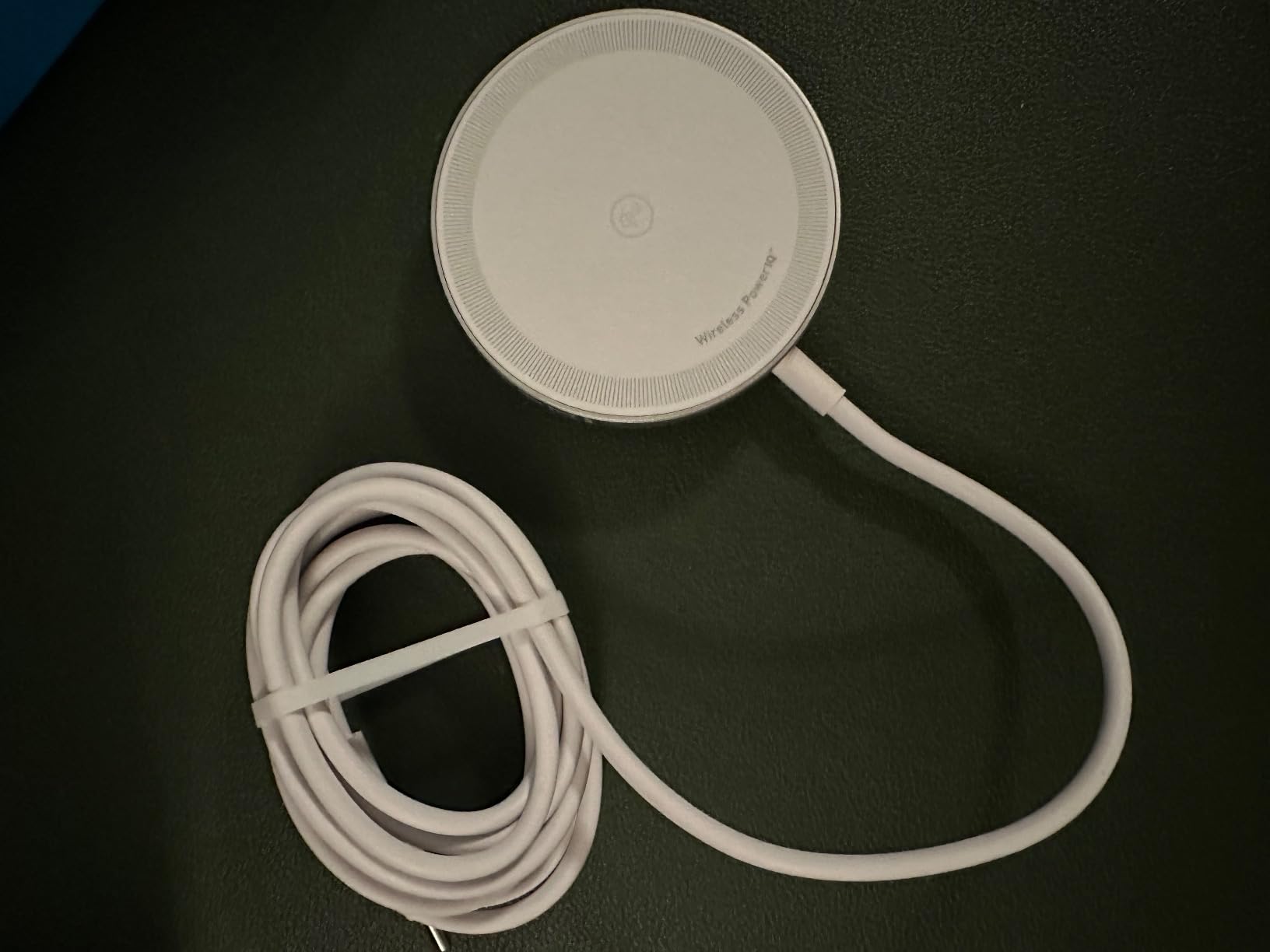

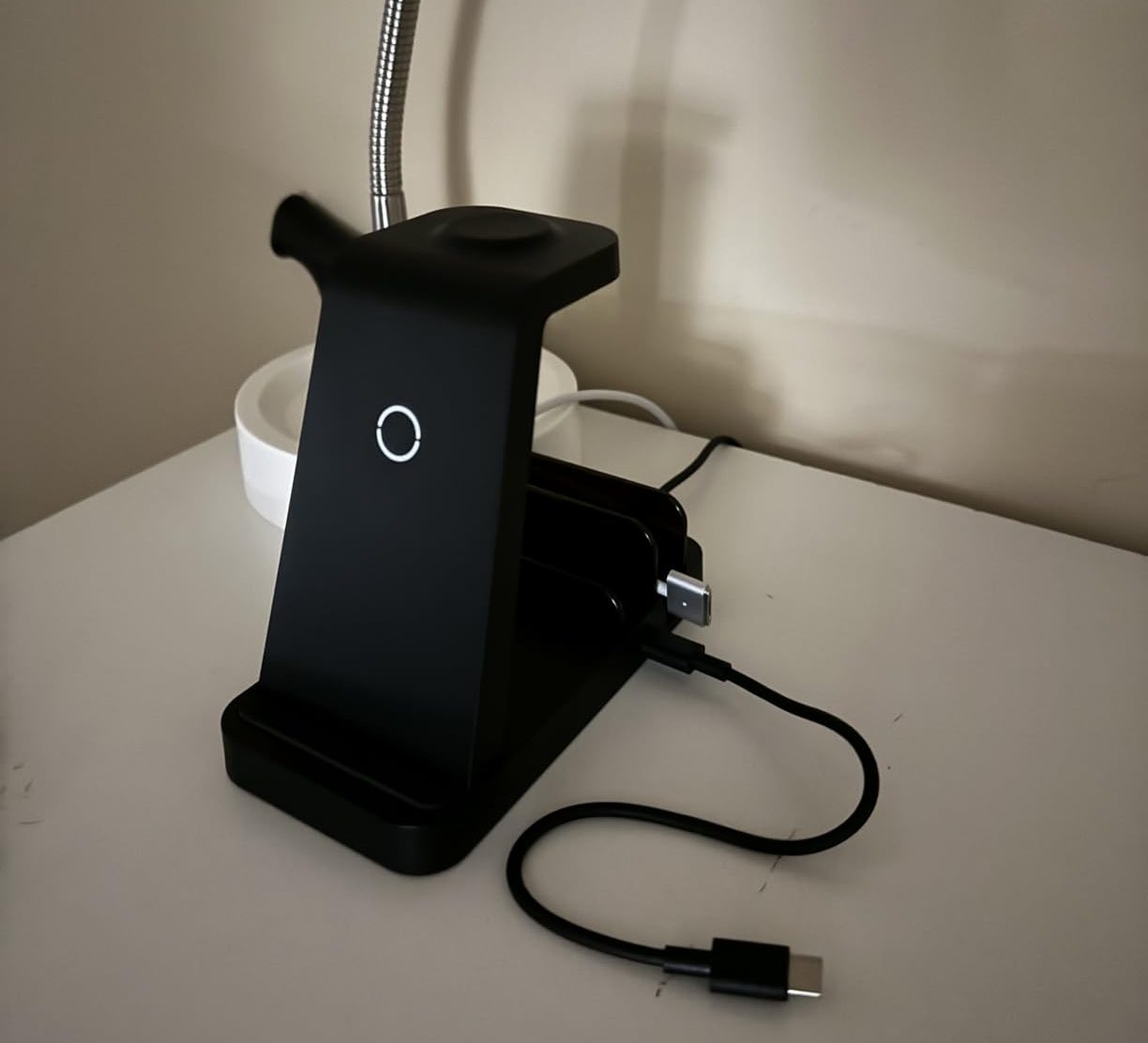
The charging stand became the place where devices went to sleep, not just where they powered up. For families deeply embedded in the Apple ecosystem—multiple iPhones, several pairs of AirPods, a few Apple Watches—bedtime used to mean distributing devices to various rooms and outlets. Kids charged phones in bedrooms. Parents charged watches on nightstands. AirPods charged wherever someone last remembered to plug them in.
Five-in-one charging stands consolidate this ritual into a single location. The stand occupies one spot, often in a common area like a kitchen counter or entryway table, and all family devices charge there overnight. This creates a predictable routine: before bed, everyone brings their devices to the stand. In the morning, everyone retrieves them.

The behavioral implications are subtle but significant. Centralizing charging moves devices out of bedrooms, which naturally supports digital wellness boundaries that parents often struggle to enforce. When the iPhone charges in the kitchen instead of on the nightstand, late-night scrolling becomes less automatic. The friction of retrieving the phone from another room is often enough to break the habit.
But five devices means five cables or charging surfaces, and not all family members have the same charging priorities. Someone might need their phone charged urgently for an early morning departure, but all five spots are occupied. The shared infrastructure that solves one problem—outlet scarcity—creates another: priority conflicts when everyone needs charging simultaneously.
The stand design matters. Vertical charging keeps devices upright and visible, which means Face ID unlocking works naturally and incoming notifications are noticeable. Flat pads obscure the screen, requiring you to pick up the device to see anything. For families who use their iPhones as kitchen timers or quick reference devices while cooking, the orientation makes the charging stand double as a display stand.
What’s revealing is how this reflects Apple’s ecosystem thinking. The devices are designed to work together, and charging infrastructure has evolved to reflect that integration. You don’t just charge an iPhone—you charge an iPhone, an Apple Watch, and AirPods, because that’s what many users carry daily.
Previously listed at $39.99, current listings hover around $24.17. The aggressive pricing reflects market saturation in multi-device Apple charging stands, with numerous manufacturers offering similar configurations and competing primarily on cost.
"Note: Readers like you help support The Apple Tech. We may receive a affiliate commission when you purchase products mentioned on our website."