Household technology used to consolidate around a single ecosystem. Everyone had iPhones, or everyone had Android devices. Chargers could be generic because the cables were universal, or highly specific because everyone used the same proprietary standard. Either way, the infrastructure matched the devices.
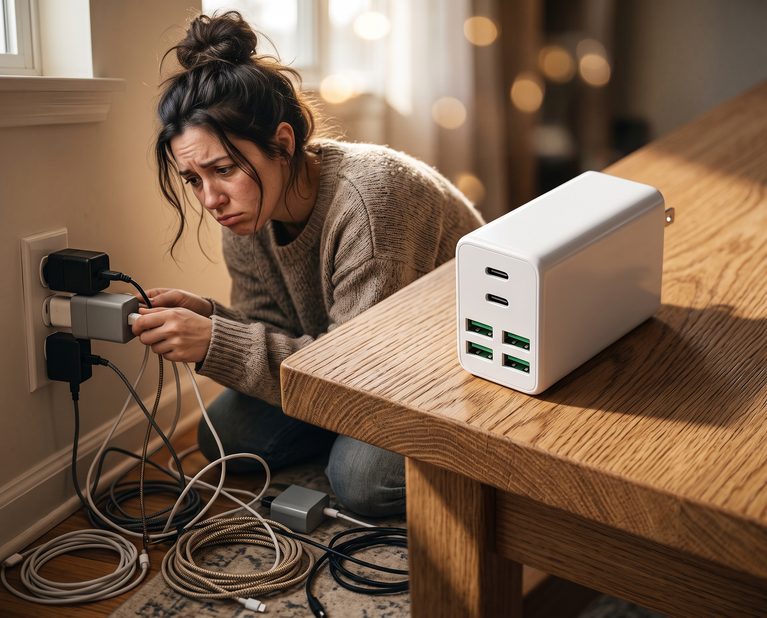
That pattern has eroded. Multi-platform households are now common enough that accessory manufacturers treat them as the primary use case rather than an edge scenario. A charger with both USB-C ports assumes that at least two different device types will need power simultaneously, and that those devices might belong to different ecosystems entirely.
The shift is clearest in homes where parents use iPhones but their children prefer Samsung or Google devices, or where couples maintain different brand loyalties for reasons that have calcified over years of use. The charger becomes neutral territory—a shared resource that doesn’t favor one platform over another, even as the people using it remain committed to their respective choices.
This creates a different kind of charging negotiation than what existed in single-ecosystem homes. Instead of “whose turn is it to charge,” the question becomes “which port works with which device,” especially when older cables and newer standards overlap. The cognitive load is minor but persistent, a small reminder that the household’s technology stack is no longer uniform.
The charger has become a small monument to the idea that device loyalty no longer runs uniformly through entire households. It’s also a hedge against future changes. Someone with an iPhone today might switch to Android next year, or vice versa. The dual-port design accommodates that possibility without requiring new hardware.
What’s notable is how unremarkable this has become. A decade ago, a household where iPhone and Samsung devices coexisted was noteworthy enough that people would comment on it. Now it’s the default assumption built into product design. The charger doesn’t care what you use, and increasingly, neither does anyone else.
The evolution suggests that ecosystem lock-in, while still powerful at the individual level, has weakened at the household level. People share living spaces with others who made different choices, and the accessories have adapted faster than the platforms themselves. Previously listed at $22, current versions hover near $17.
"Note: Readers like you help support The Apple Tech. We may receive a affiliate commission when you purchase products mentioned on our website."