
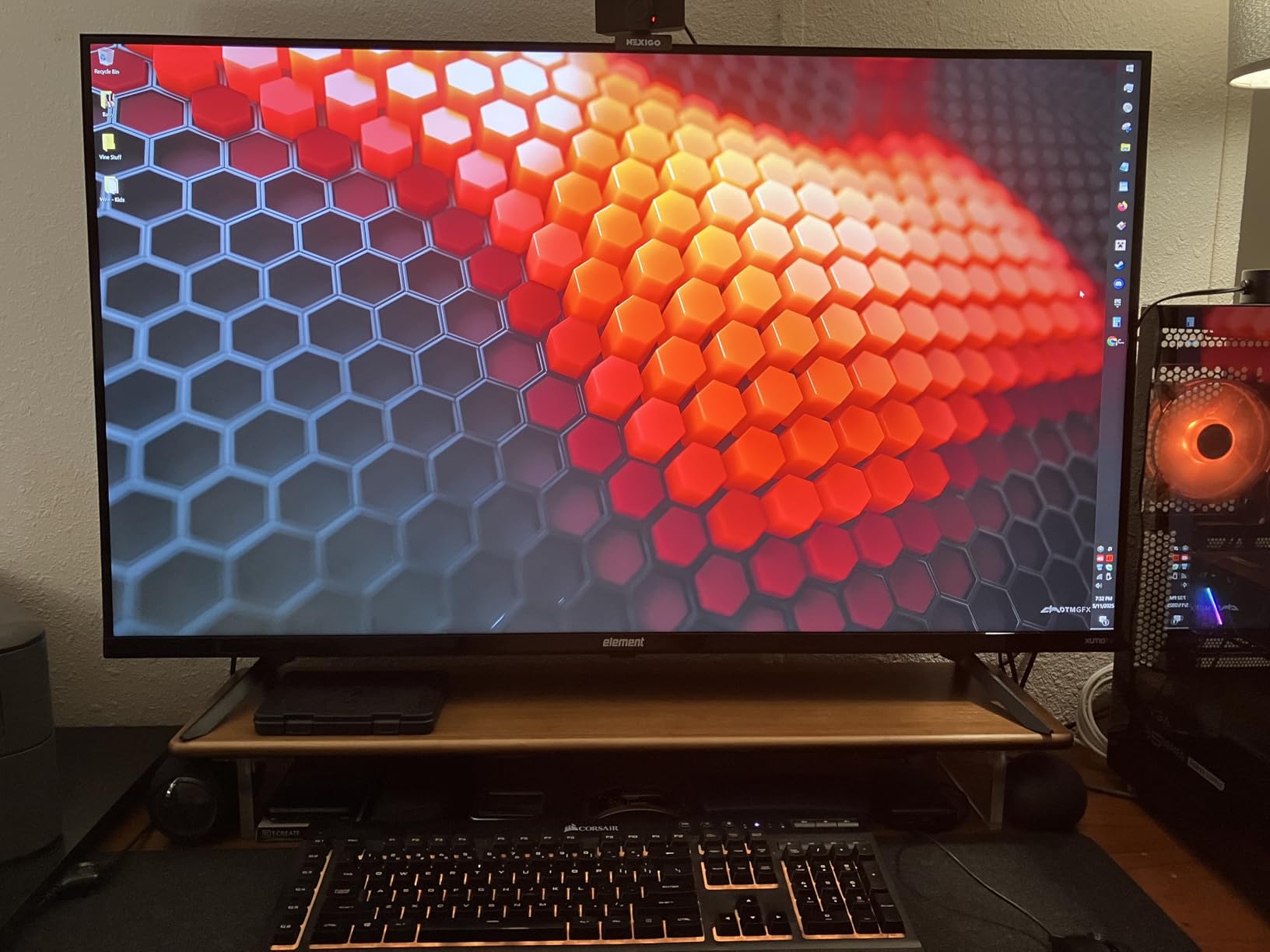
Elevating a display to eye level is straightforward ergonomics. The solution—a riser that creates storage underneath while lifting the screen—has been around for decades. What’s changed is that these functional objects now arrive with features that many Mac users never asked for, bundled together because manufacturers assume certain workspace improvements travel as a package.
RGB lighting is the most visible example. It’s become nearly impossible to find monitor stands with premium materials and solid construction that don’t also include programmable color LEDs. The feature set suggests a user who wants both better posture and a desk that glows like a gaming rig, even though those preferences don’t necessarily overlap.
For MacBook and iMac owners who’ve cultivated minimalist setups—clean lines, neutral colors, no visible cables—the RGB option creates a small dilemma. The stand solves a real problem, raising the display and organizing desk clutter. But it introduces a visual element that conflicts with the aesthetic they’ve been building. Some simply don’t turn the lights on. Others do, tentatively, and find themselves adjusting to an office that looks different than they’d imagined.
The desk becomes a compromise between what works physically and what feels tonally consistent with how someone wants their workspace to be perceived. The bamboo construction might align with a natural, understated Mac setup, but the acrylic legs and RGB backlighting pull it toward a different design vocabulary—one more associated with gaming peripherals than productivity tools.
This friction is particularly acute in hybrid work environments where the home office appears on video calls. The MacBook owner who carefully chose accessories to project professionalism now has a desktop that can cycle through rainbow gradients. Whether to embrace that capability or suppress it becomes another small decision in a workspace full of them.
What the accessory market reveals is a blending of design traditions that Mac users may not have chosen deliberately but encounter anyway. The gaming industry’s influence on desktop ergonomics has grown so pervasive that even products aimed at general productivity users carry its aesthetic markers. The RGB feature isn’t always unwelcome, but it’s rarely neutral.
The long-term question is whether Mac users will gradually accept these hybrid designs as a new standard or whether demand for truly minimal workspace accessories will push manufacturers to offer versions without the lighting. For now, many are simply living with desks that don’t quite match the ecosystem they’ve built around them. Previously listed at $82, current versions hover near $72.
"Note: Readers like you help support The Apple Tech. We may receive a affiliate commission when you purchase products mentioned on our website."