
The nightly routine of charging an iPhone, Apple Watch, and AirPods has created demand for hardware that acknowledges all three exist simultaneously and need power in the same location.
Three devices, three different charging needs, and a single surface attempting to accommodate them all without requiring three separate cables or outlets. This has become the default configuration for many Apple ecosystem users: iPhone on one pad, Apple Watch on another section, AirPods on a third spot. The charging station isn’t solving a technical problem so much as an organizational one. The devices could charge separately, but keeping them together in a predictable arrangement reduces the morning scramble when it’s time to leave.
The ritual itself has solidified over the past few years. Users come home, empty their pockets or bags, and place devices on the charging surface in roughly the same spots each time. The repetition creates muscle memory. The iPhone goes here. The watch goes there. AirPods find their corner. It’s a small domestic choreography that happens without conscious thought, the kind of habit that only becomes visible when disrupted—when traveling, when the charging station is moved, when someone else uses the space.
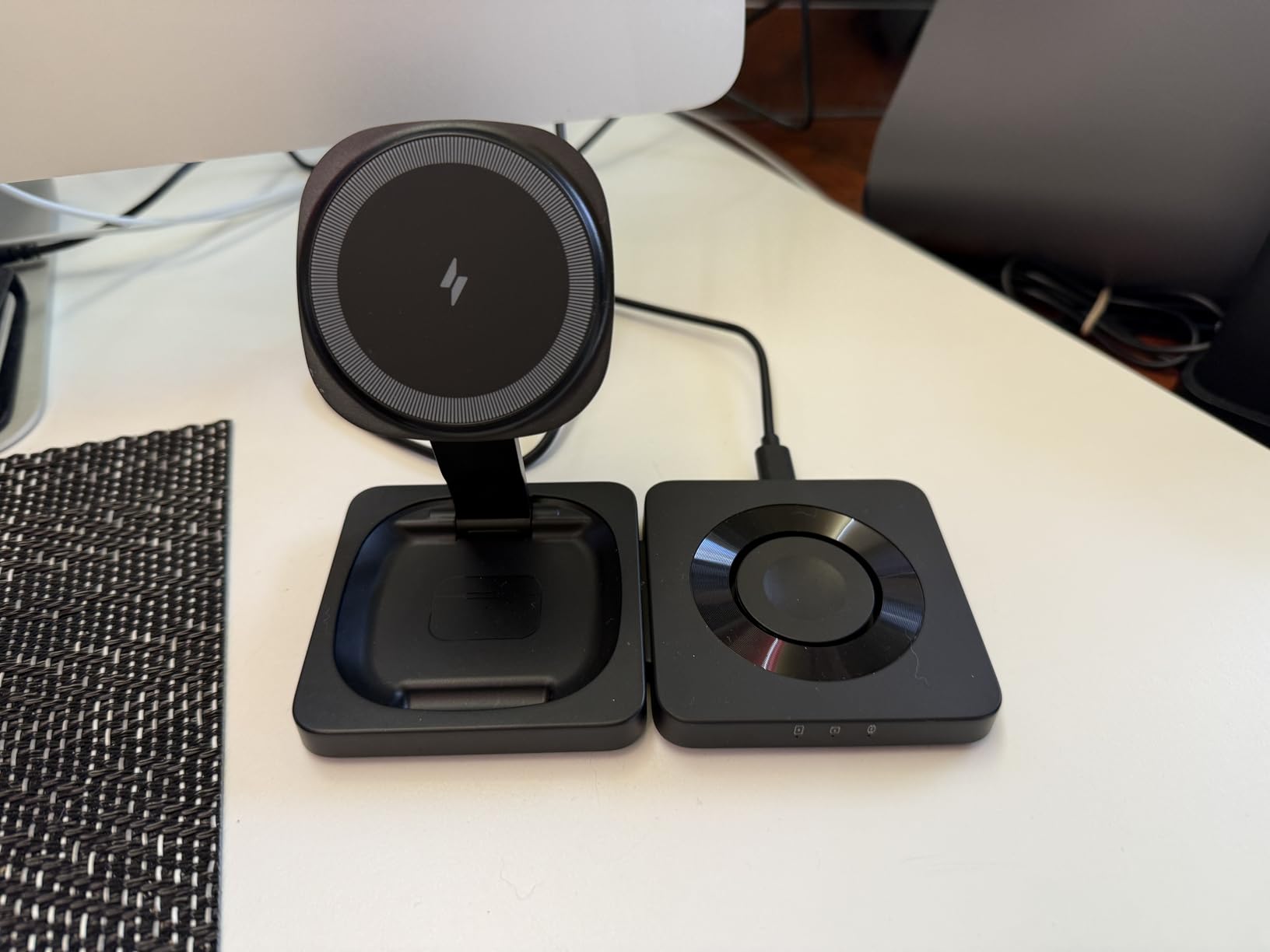
Apple sells the MagSafe Duo, which handles iPhone and Apple Watch but leaves AirPods to find their own power source. Third-party alternatives emerged to fill the gap, offering three-device configurations that mirror how users actually live with Apple hardware. These aren’t Apple-designed solutions, but they’re responding to Apple-created behavior. The ecosystem produced the need; the accessory market provided the answer.
Foldability addresses a secondary concern: these charging stations take up desk or nightstand space, and not everyone wants that footprint to be permanent. The ability to collapse the unit into something pocketable makes it travel-viable, which matters for users who maintain the same charging ritual in hotel rooms or while visiting family. The devices stay together. The routine remains consistent. The only thing that changes is location.
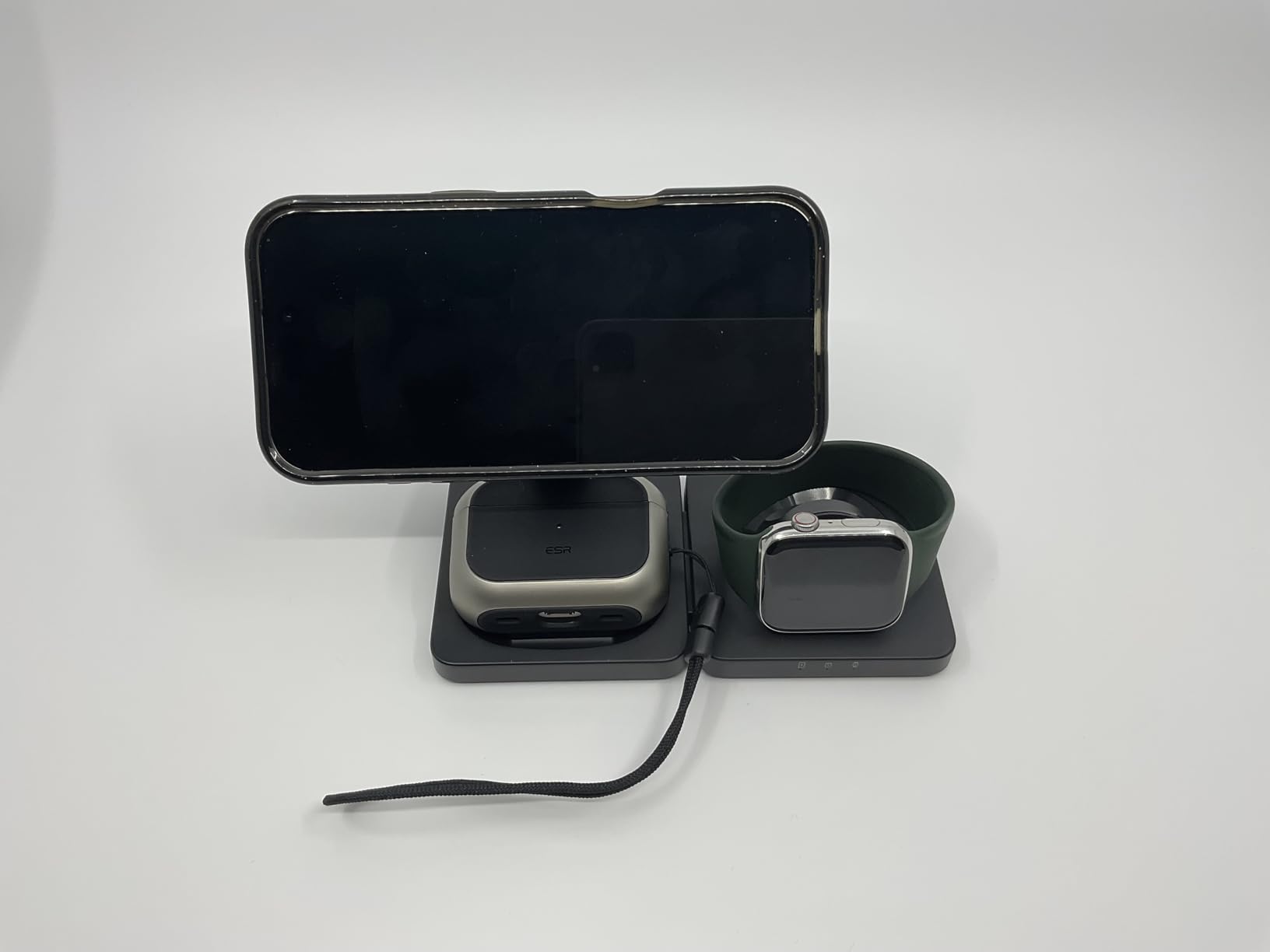
The magnetic alignment means devices don’t need precision placement. The iPhone snaps into position. The Apple Watch settles onto its charging puck. The margin for error is wide enough that placing devices in dim lighting—the typical nightstand scenario—doesn’t require careful aim. This small detail matters more than it seems. Fumbling with cables in the dark is annoying. Dropping a device onto a magnetic surface that pulls it into correct alignment is not.
What the charging station doesn’t solve is the underlying complexity of maintaining multiple Apple devices that all require daily power. It consolidates the charging, but it doesn’t reduce the number of devices that need charging. Users who carry an iPhone, Apple Watch, and AirPods are managing three battery lives simultaneously, each with different depletion rates and usage patterns. The charging surface is organizational infrastructure for a problem that only exists because the ecosystem has proliferated into multiple wearables and accessories.
The pricing on three-in-one magnetic charging solutions has dropped substantially as the category matured. Previously listed at $49.99, current listings hover around $14.99(CODE F4E357WL) for foldable configurations supporting 15W fast charging for recent iPhone models alongside Apple Watch and AirPods compatibility. The reduction suggests aggressive competition in a market that’s become saturated with similar solutions, all responding to the same behavioral pattern Apple’s ecosystem created but didn’t fully solve.
"Note: Readers like you help support The Apple Tech. We may receive a affiliate commission when you purchase products mentioned on our website."