
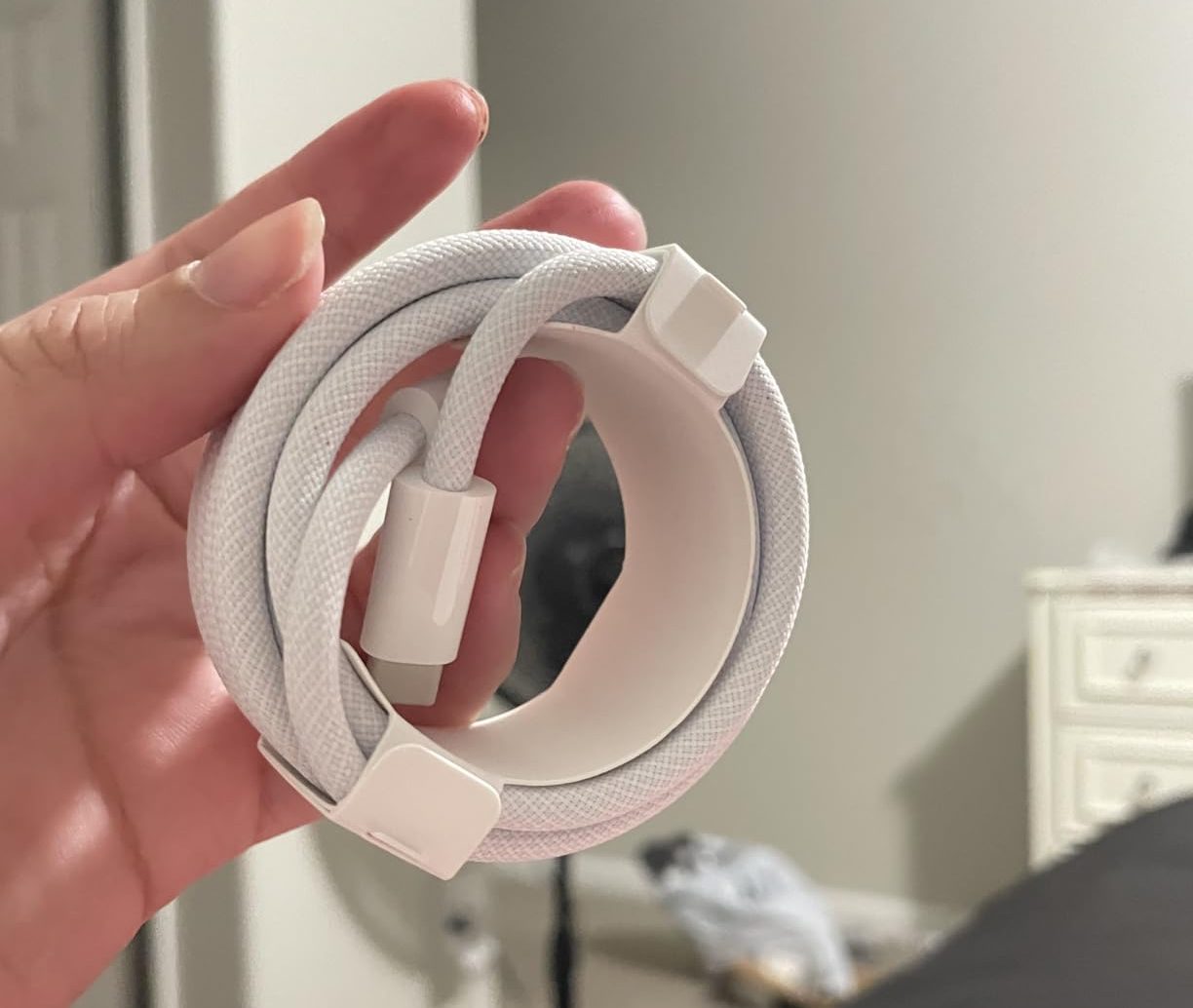
Cable replacement has become a recurring line item in household tech budgets. The shift to woven materials represents less about aesthetics than about exhaustion with frayed lightning predecessors.
There’s a graveyard of cables in most Apple users’ homes. Frayed Lightning cables with exposed copper. USB-C cords that charge intermittently depending on angle. The failure point is never the port—it’s always the first two inches where cable meets connector.
Woven cables entered the market as a premium material choice, but their adoption tells a different story. Users weren’t seeking luxury. They were seeking an end to the cycle of replacement every eight months. The braided sheath isn’t about tactile pleasure. It’s about structural integrity during the violence of daily use.
What makes this particularly relevant for Apple ecosystem users is the cable-length calculation. Two meters sounds excessive until you map actual use cases: charging an iPhone on a nightstand while the outlet sits behind the bed frame, using an iPad at a kitchen island while the adapter plugs in near the floor, keeping a MacBook powered during a couch work session when the nearest outlet is across the room.
The 240W rating creates an interesting psychological buffer. Most users will never approach that threshold—an iPhone tops out around 27W, a MacBook Air at 67W. But knowing the cable can handle extreme loads provides assurance that it won’t become the weak link in an otherwise expensive charging ecosystem.
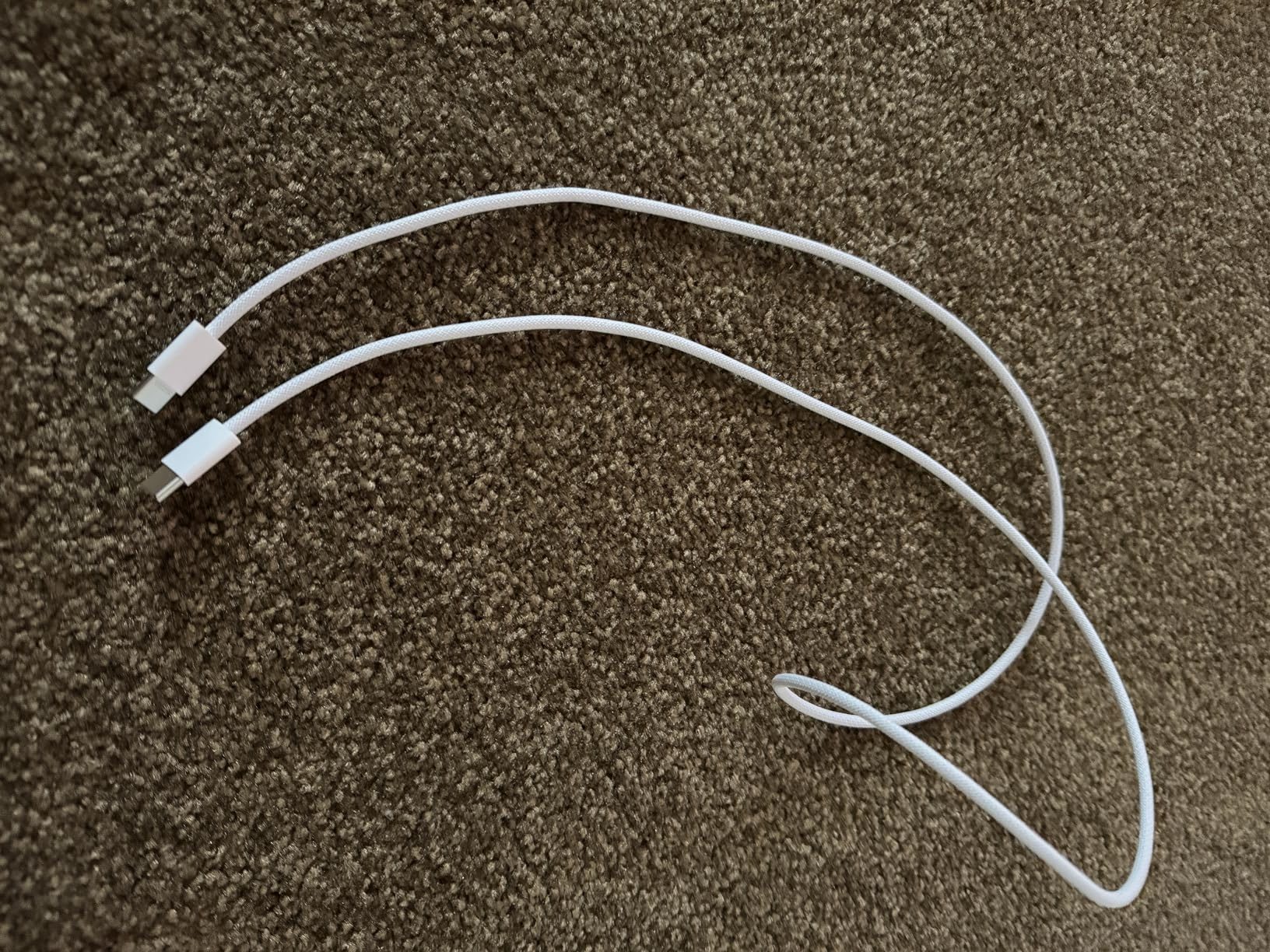
Cable management is where theory meets practice. Velcro ties and cable organizers proliferate on Amazon, yet most people simply wrap cables around their hand and toss them in a drawer. Woven materials tolerate this abuse better than rubber or PVC. The longevity isn’t measured in technical specifications but in how many times you can yank it free from under a couch cushion without inducing failure.
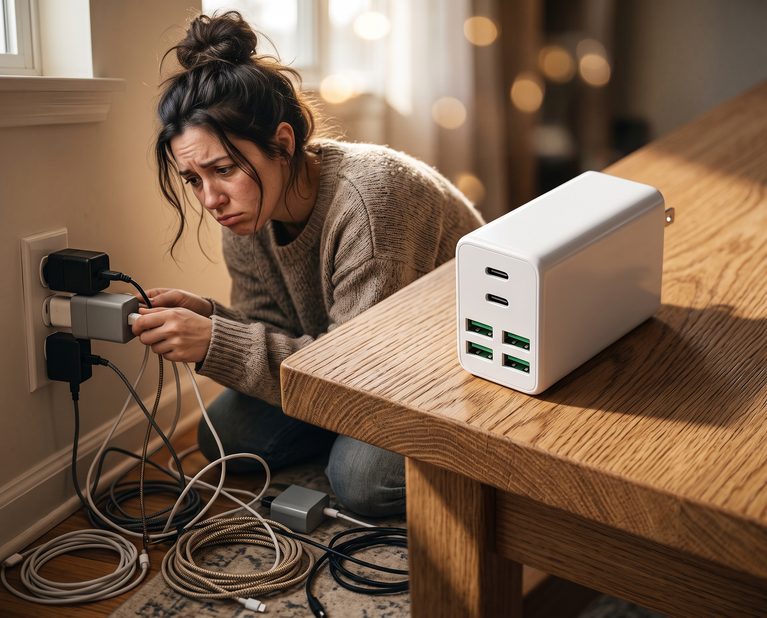
Color coding is unintentional infrastructure. If every cable in a household is white, identifying which belongs to which device requires tracing from device to outlet. Some users resort to nail polish or tape markers. Others simply accept the chaos. A midnight phone charge becomes an archaeological dig through identical cables.
What’s revealing is how rarely cable quality factors into device purchase decisions. Apple includes a cable with most products, but that cable’s lifespan rarely matches the device’s. The ecosystem assumes replacement cables, yet positions them as afterthought accessories rather than essential maintenance. Previously listed at $29, current listings hover around $18.
"Note: Readers like you help support The Apple Tech. We may receive a affiliate commission when you purchase products mentioned on our website."