

The pattern emerged in living room arrangements first. People who once reserved projection for movie nights or special events began using it for regular TV watching. The projector stayed on a shelf within reach instead of returning to a closet. The setup time dropped from ten minutes to under one. The threshold for casual use disappeared.
What changed wasn’t image quality or brightness. Portable projectors have offered acceptable performance in controlled lighting for several years. What changed was confidence that setup and teardown wouldn’t consume more time than the content being watched. The friction of preparation became low enough that spontaneous use felt reasonable.
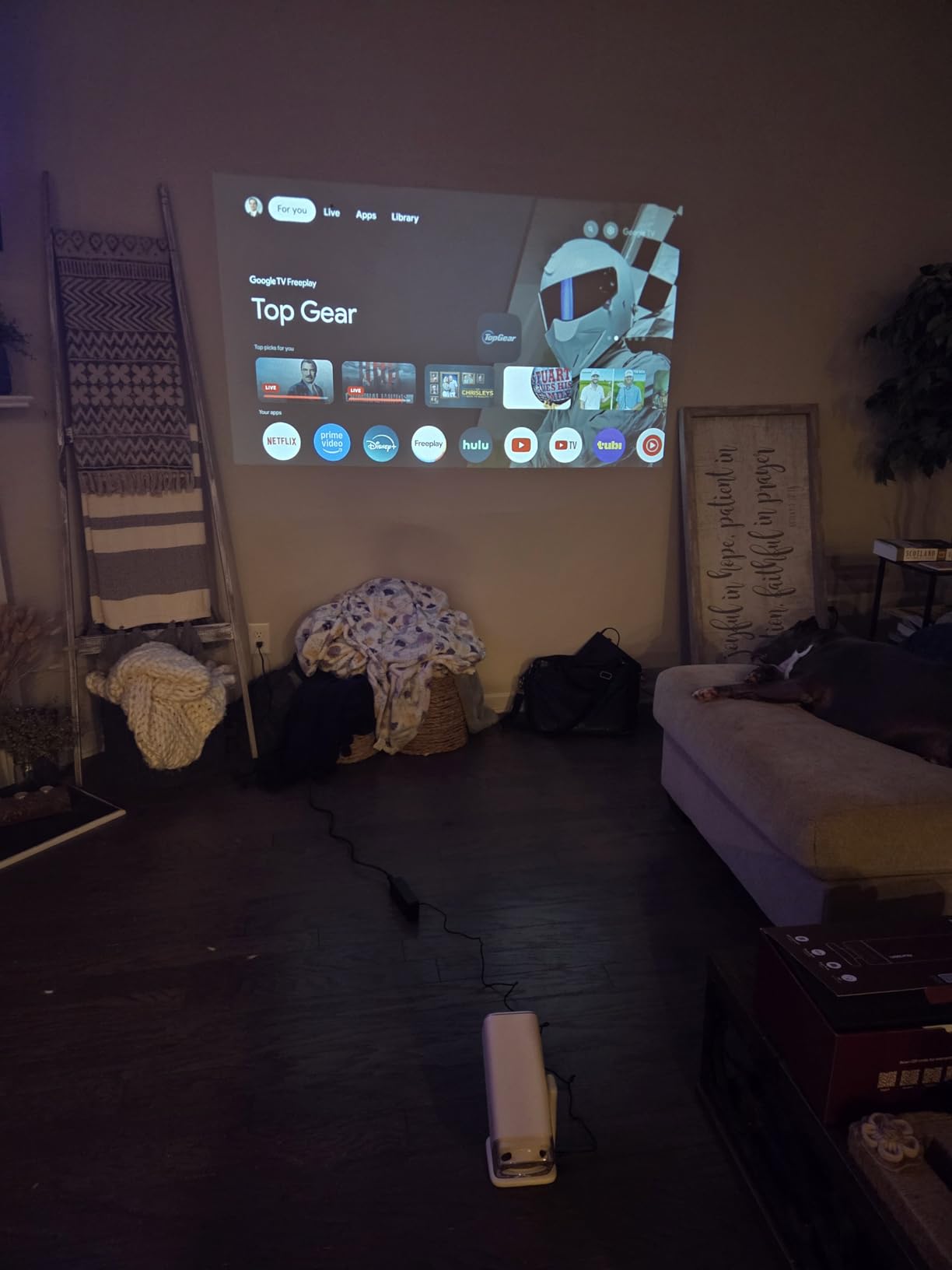
The behavior shows up in multi-room usage differently. Households with bedrooms, patios, or basements that lack fixed screens now move a single projector between spaces rather than installing multiple TVs. The screen location became temporary and intentional rather than permanent and default. Viewing shifted from room-bound to activity-bound.
Apple ecosystem integration surfaces through AirPlay and content libraries. Someone watching content stored in iCloud or accessed through Apple TV app expects projection to work as seamlessly as casting to a television. When it does, the projector becomes interchangeable with other display options. When it doesn’t, the friction registers sharply because the expectation exists.
The tension that remains is about ambient light control. Someone projecting onto a wall in a sunlit room still gets washed-out images. That limitation hasn’t changed. What changed is willingness to accept it as a tradeoff rather than a dealbreaker. The use case shifted from “perfect cinema experience” to “good enough for casual viewing.”
SIMILAR
iPhone and MacBook users are compensating for a port problem Apple created
iPhone users are eliminating the tangled cable from every car charging session
iPhone users are transforming nightstands into silent charging infrastructure
What surfaced instead is a new approach to furniture and space planning. People who once arranged rooms around television placement now arrange them around flexible viewing. The couch doesn’t need to face a specific wall anymore. The projector moves to wherever people happen to be sitting.
Travel and temporary housing scenarios reflect a different dimension of the shift. Someone staying in an Airbnb or temporary apartment now packs a projector the way they might pack headphones. The expectation became “I can recreate my viewing setup anywhere” rather than “I’ll adapt to whatever screen exists there.”
Previously listed around $300, current pricing for portable smart projectors with wireless connectivity and integrated stands now appears closer to $210.
"Note: Readers like you help support The Apple Tech. We may receive a affiliate commission when you purchase products mentioned on our website."