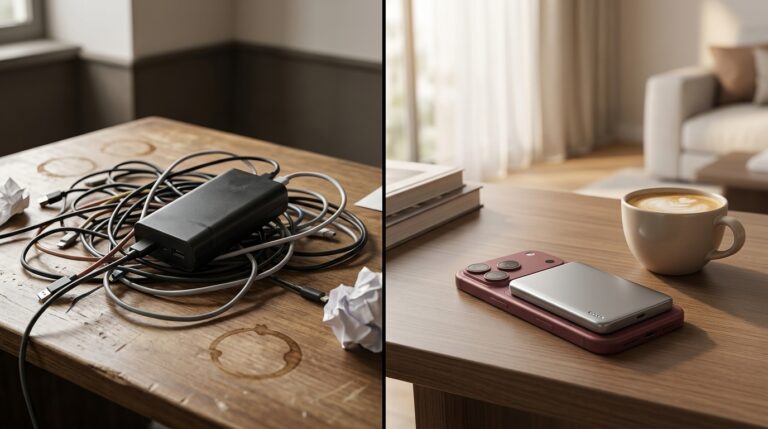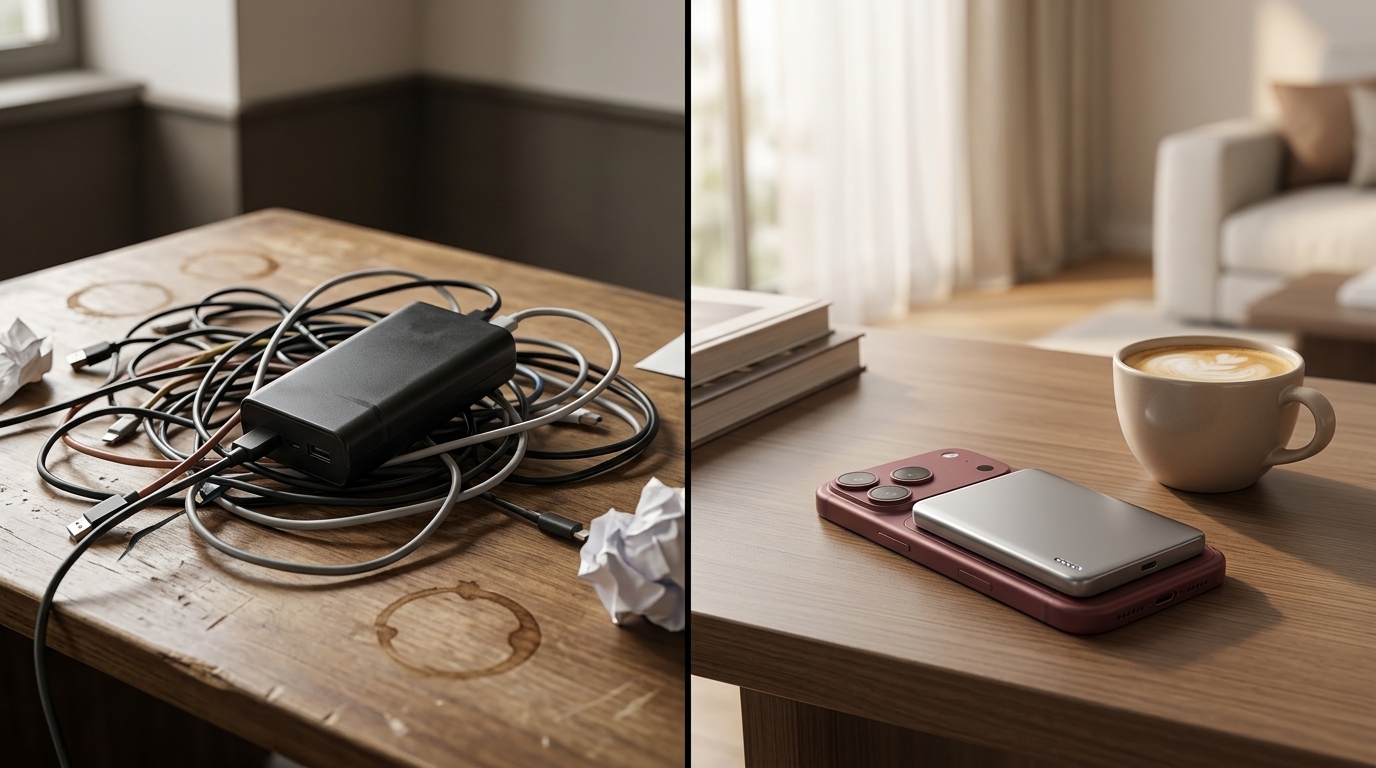

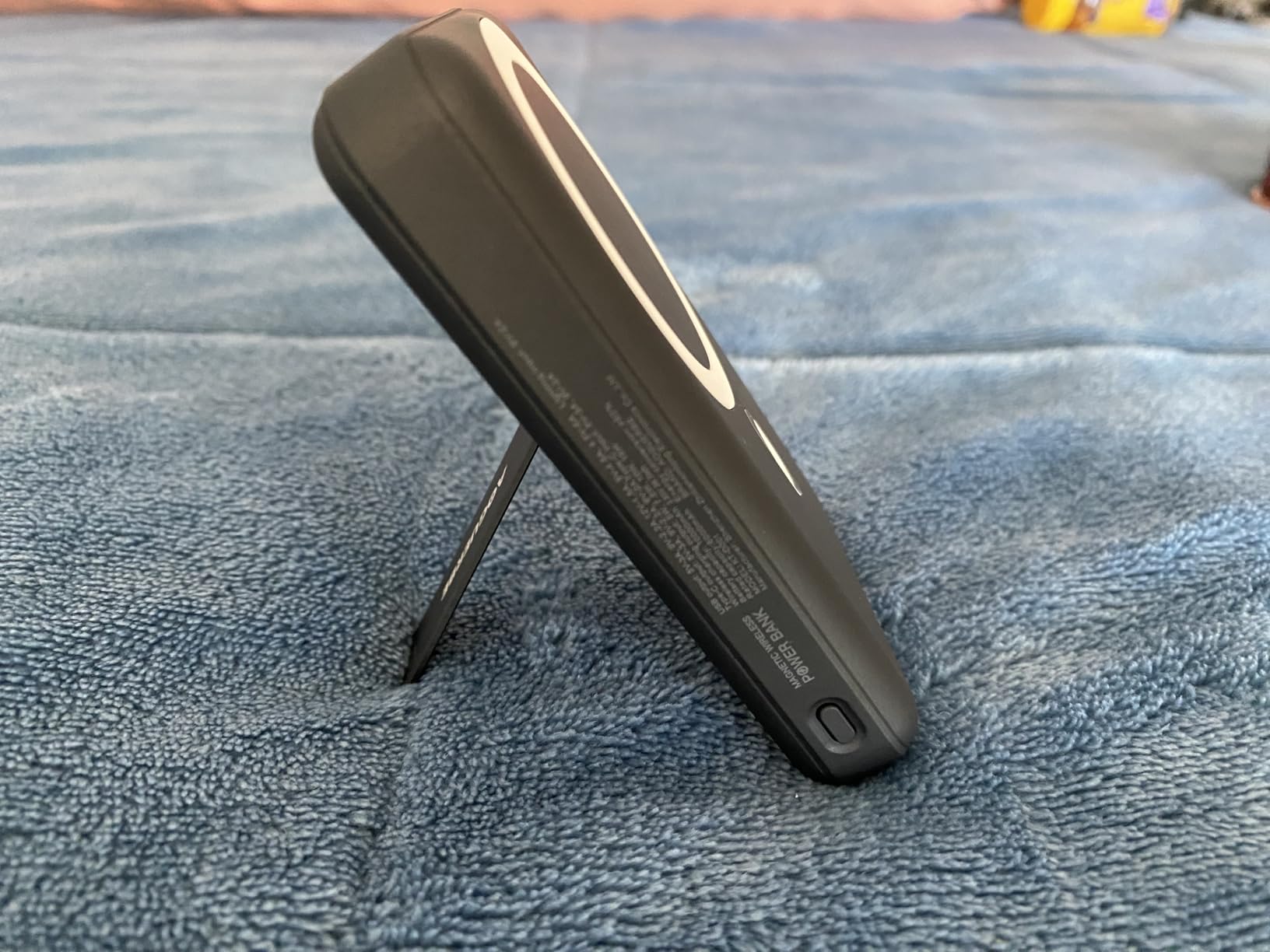
MagSafe introduced magnetic charging as a nightstand convenience—snap the puck on, set the phone down, wake up to a full battery. But a subset of users discovered a different application entirely: the desk-mounted iPhone, propped at an angle, charging wirelessly, functioning as a persistent second screen throughout the workday.
The behavior emerged gradually. Remote work made the iPhone more essential as a communication tether—Slack pings, iMessages from colleagues, FaceTime calls that needed to happen without fumbling for the phone buried under notebooks. But reaching for the phone meant interrupting flow. Unlocking it meant context-switching. The friction was small but cumulative, repeated dozens of times across an eight-hour stretch.
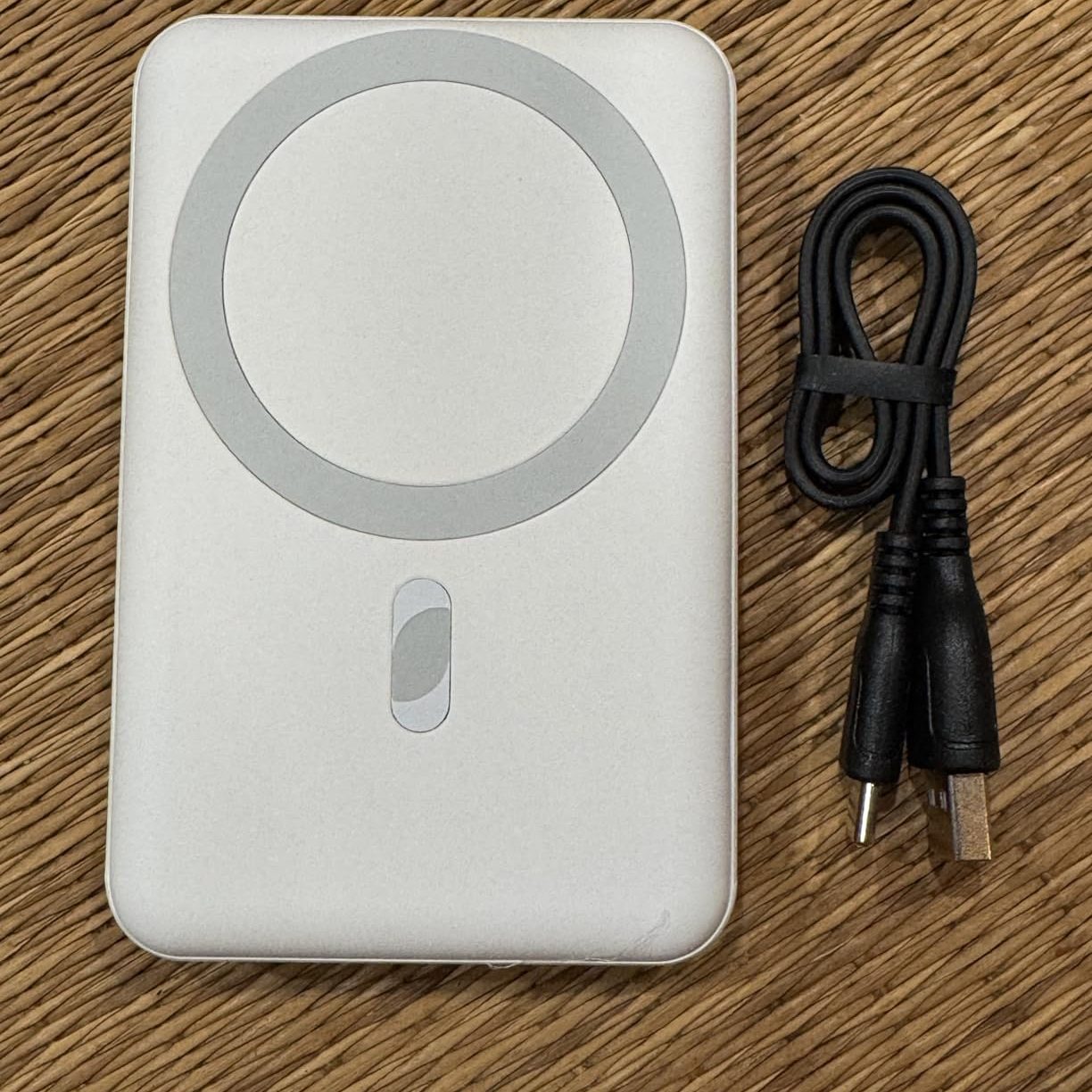
The solution was to stop reaching entirely. Mount the phone on a MagSafe stand, angle it toward your line of sight, and let it exist as ambient infrastructure. Notifications appear. You glance, decide if they’re urgent, and return to the laptop without breaking posture. A call comes in—you tap the screen, the conversation happens hands-free, and you keep typing.
What makes this setup notable is how it transforms the charging ritual. The phone isn’t charging because it’s idle—it’s charging because it’s in constant use. The stand keeps it at the perfect angle for Face ID to unlock on a glance. The MagSafe connection ensures it never dies mid-task. And the LED display on the power bank itself becomes a secondary data point: not just the phone’s battery, but the backup battery’s reserves, visible in peripheral vision without requiring conscious attention.
SIMILAR
iPhone and MacBook users are compensating for a port problem Apple created
iPhone users are eliminating the tangled cable from every car charging session
iPhone users are transforming nightstands into silent charging infrastructure
This is a fundamentally different relationship with charging than Apple designed for. MagSafe was meant to eliminate cables, not create a docking station. But the docking station is what emerged—a semi-permanent fixture on desks where the iPhone lives during work hours, not in a pocket or face-down on a table, but upright, active, and always within glanceable range.
The ergonomic shift is subtle but real. Instead of hunching over the phone or craning your neck to check it on a flat surface, it meets you at eye level. The posture improvement is incidental, but for users who spend hours at a desk, incidental improvements compound. The phone becomes less of a handheld object and more of a peripheral display—useful, but not primary.
What’s interesting is how this mirrors the broader trajectory of Apple’s ecosystem: devices that were designed for mobility increasingly find their most sustained use in stationary contexts. The iPhone was built to be carried, but for knowledge workers, it spends eight hours a day propped on a desk, magnetically attached to a power source, functioning as a notification center that happens to also make calls.
Previously listed at $39.99, current listings hover around $24.69. That pricing reflects the accessory’s dual role—not just a power bank for on-the-go charging, but a desk stand for all-day, hands-free use.
The phone stops being something you pick up forty times an hour and becomes something that sits at eye level, charging and visible, demanding attention only when it matters. It’s a small behavioral shift, but for the subset of iPhone users who’ve adopted it, it’s become the default way the phone exists during work hours—not idle, not off, but present and ready without being intrusive.
"Note: Readers like you help support The Apple Tech. We may receive a affiliate commission when you purchase products mentioned on our website."