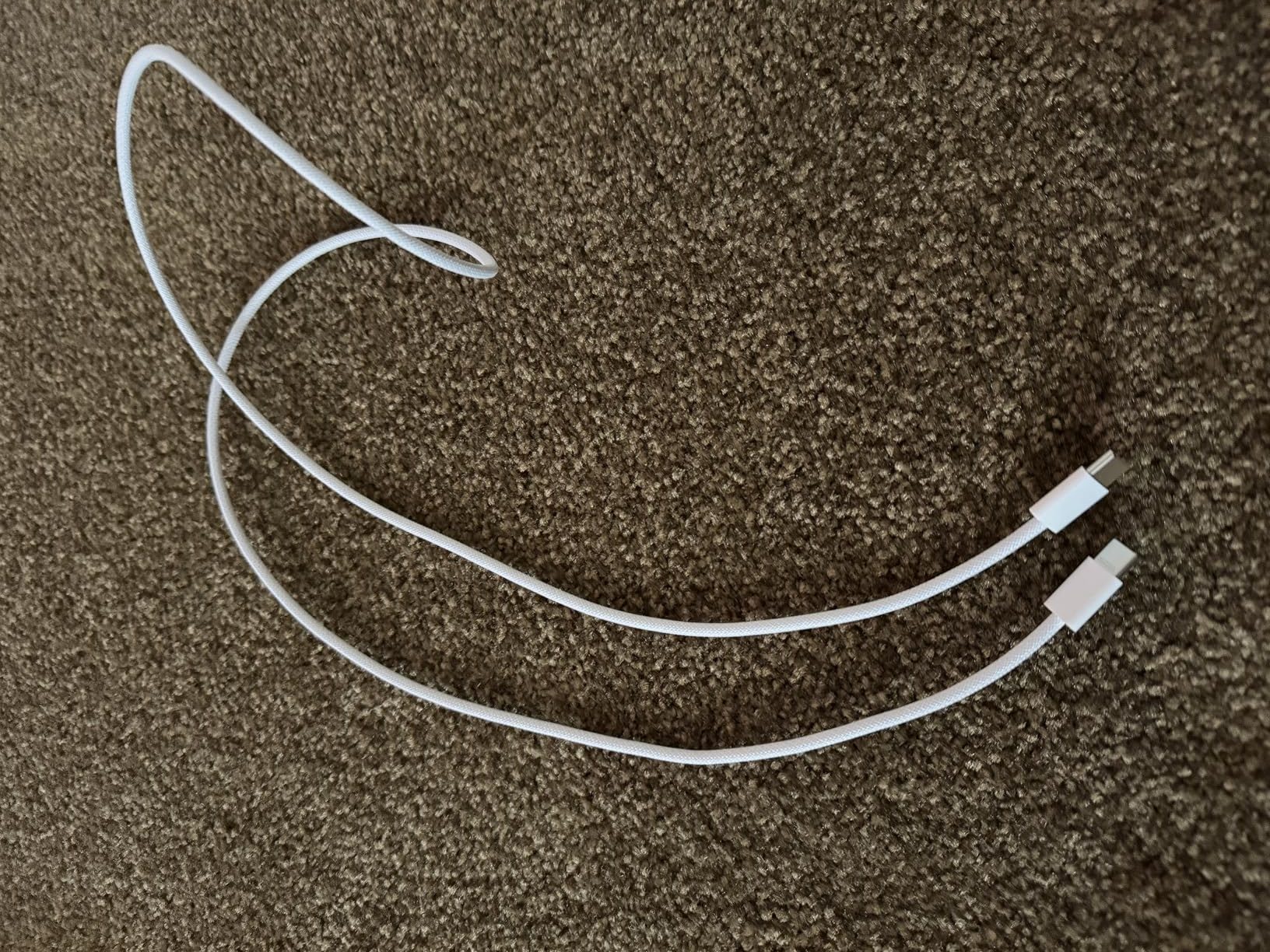
The one-meter cable has become a spatial constraint as much as a technical one. Device charging now dictates furniture arrangement in ways that were irrelevant during the Lightning era.
One meter translates to roughly 3.3 feet, which sounds adequate until you trace the actual path from wall outlet to bedside table. Baseboards add six inches. Furniture depth adds another foot. Suddenly the phone needs to rest on the floor or the nightstand needs to migrate eight inches closer to the wall.
This spatial math has become a recurring frustration for iPhone users who upgraded to USB-C. Lightning cables shipped in various lengths over the years, but USB-C standardization created unexpected rigidity. A one-meter cable assumes a certain proximity between power source and device that doesn’t match how people actually arrange their living spaces.
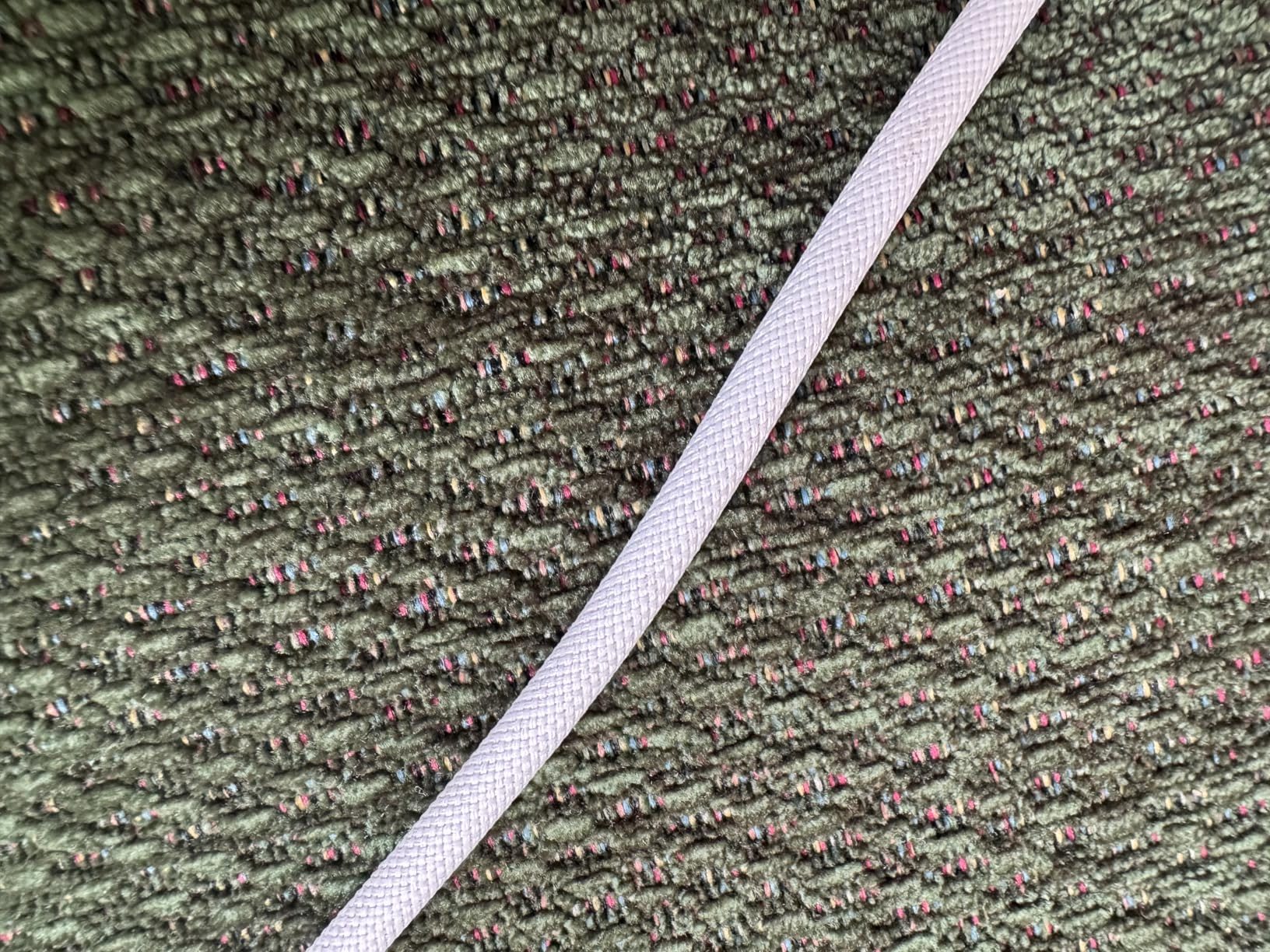
The woven material signals durability, but it also introduces stiffness. Rubber-coated cables could stretch slightly, drape more flexibly around corners. Woven cables maintain their shape, which means the geometry is less forgiving. What you see coiled in the package is roughly what you get in practice—no hidden slack, no give.
Bedroom charging setups reveal the most telling adaptations. Some users leave their iPhone on the floor overnight, cable fully extended. Others invest in outlet extenders or power strips to bridge the gap. A few rearrange furniture entirely, shifting beds or nightstands to accommodate the fixed radius. None of these solutions feel elegant.
The fast-charging capability matters less than expected in overnight scenarios. Whether the phone reaches full charge in ninety minutes or three hours is irrelevant when it’s plugged in for eight. The wattage rating becomes academic. What matters is whether you can comfortably reach the device from bed without the cable pulling taut.
Kitchen counters present a different geometry problem. Outlets typically sit near the backsplash, but phone use happens at the island or breakfast bar. One meter doesn’t span that distance. The result is either a phone trapped near the wall or a trailing cable across the counter that gets caught under cutting boards and coffee mugs.
What’s notable is how rarely this friction gets discussed in ecosystem migration guides. Apple’s shift to USB-C emphasized universality and speed, but the practical reality for many users has been a subtle regression in spatial flexibility. The cable itself is durable, well-made, neutral in every technical sense. But it assumes a world where devices and outlets exist in closer proximity than they actually do. Previously listed at $19.99, current listings hover around $10.99.
"Note: Readers like you help support The Apple Tech. We may receive a affiliate commission when you purchase products mentioned on our website."