
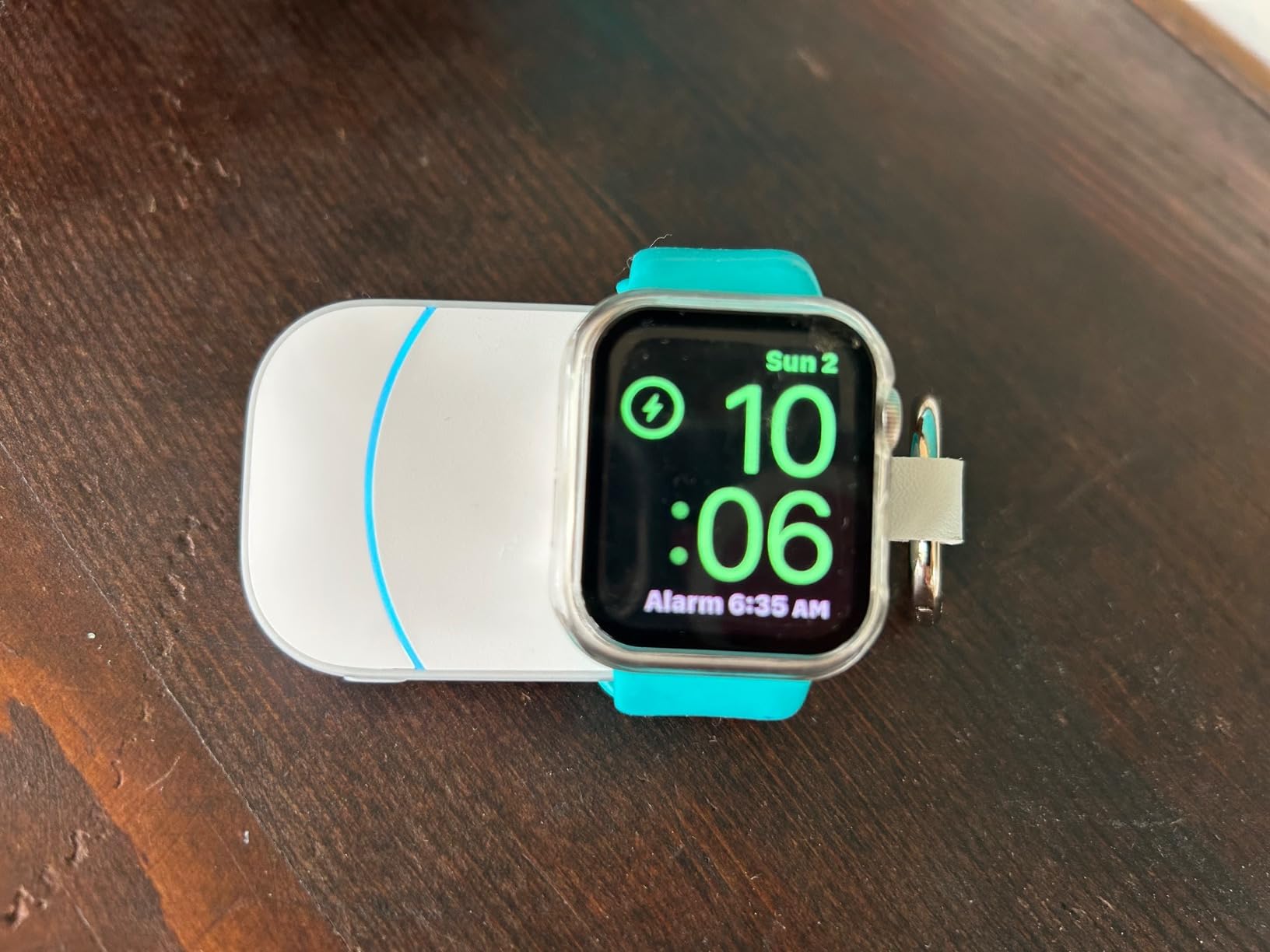
The Apple Watch battery lasts about a day, which means nightly charging is non-negotiable for most users. The charging puck is small and portable, but it requires a power source—either a USB port or a wall outlet.
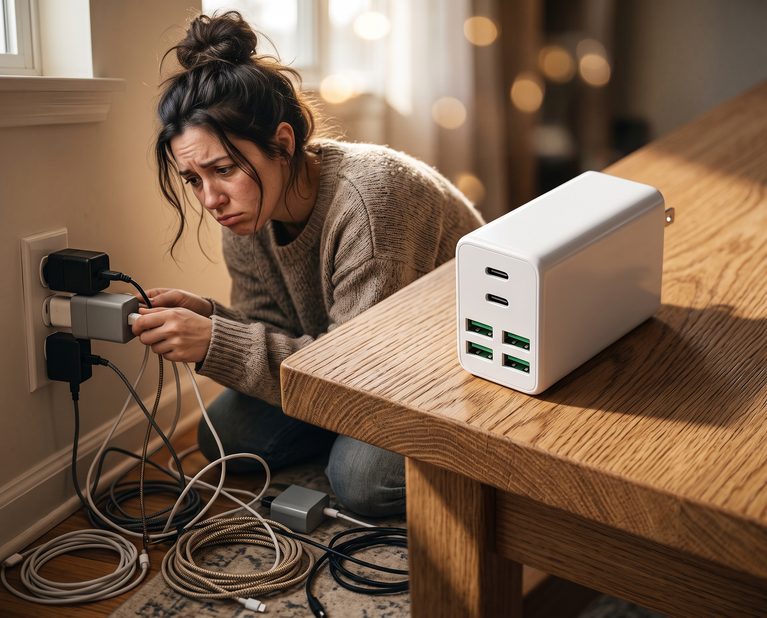
This creates friction in situations where power isn’t easily accessible. Camping trips. Hotel rooms with distant outlets. Bedrooms where the nearest outlet is across the room. The watch needs to charge, but the charging location might not be convenient.
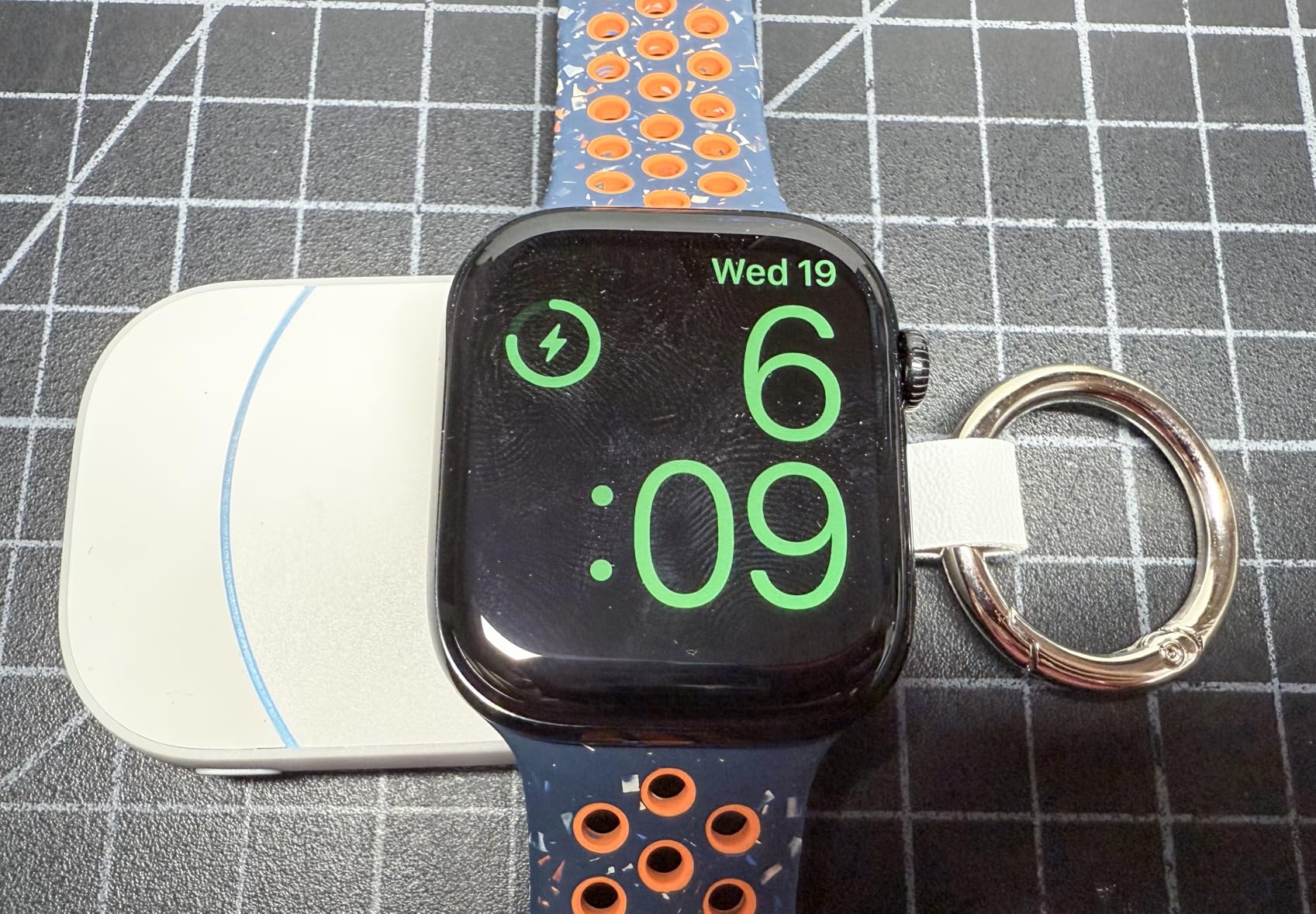
Portable battery packs designed specifically for the Apple Watch solve this by integrating the charging puck into a small, rechargeable unit. You charge the battery pack periodically, then use it to charge the watch wherever you are. No outlet required in the moment.
What’s interesting is that these aren’t primarily marketed as emergency backup devices. They’re positioned as everyday convenience tools—a way to charge your Apple Watch on a nightstand that’s nowhere near a plug, or in a car during a long drive, or in a backpack during a multi-day trip.
This suggests that the Apple Watch’s charging requirements don’t align well with how people actually move through space. The watch is designed to be worn constantly, tracking activity and health metrics around the clock. But charging it requires stationary access to power, which interrupts that continuity.
Some Apple Watch owners adjust their routines around this. They charge during showers or meals—times when they’re not wearing the watch anyway. But that only works if those moments happen near an outlet, which isn’t always the case.
Portable charging packs create more flexibility, but they also mean carrying another device that itself needs periodic charging. It’s a battery for a battery—a second-order solution to a first-order problem that Apple hasn’t fully addressed with the watch’s built-in power management.
Previously listed at $19.99, some compact options now sit near $13.58, though the price isn’t the constraint—it’s the realization that the Apple Watch’s daily charging requirement imposes a spatial limitation that many users only notice when they’re away from their usual routines, at which point they start looking for ways to untether charging from fixed outlets.
"Note: Readers like you help support The Apple Tech. We may receive a affiliate commission when you purchase products mentioned on our website."