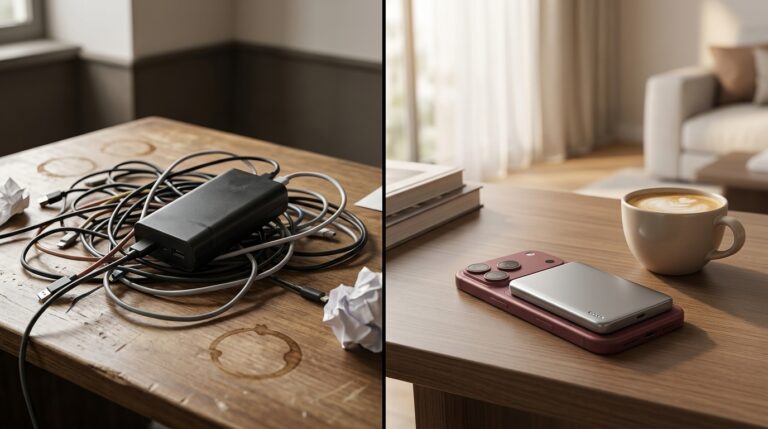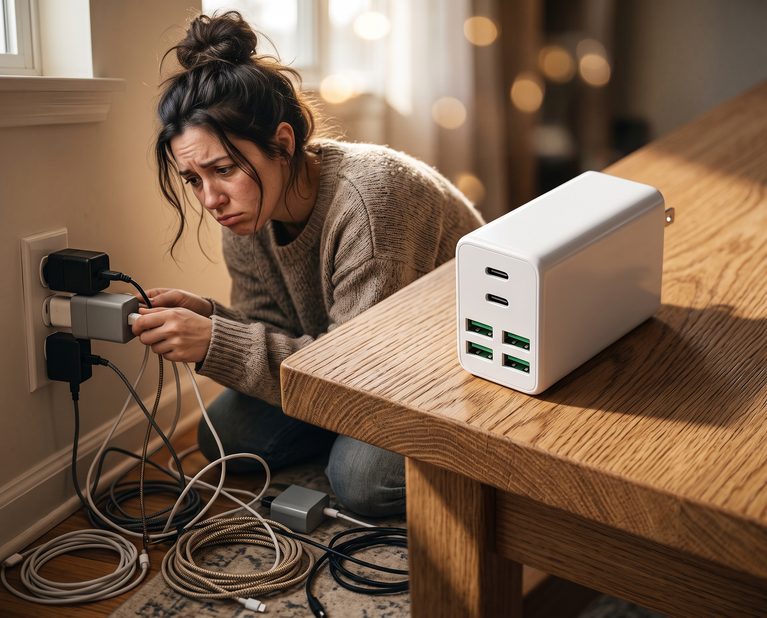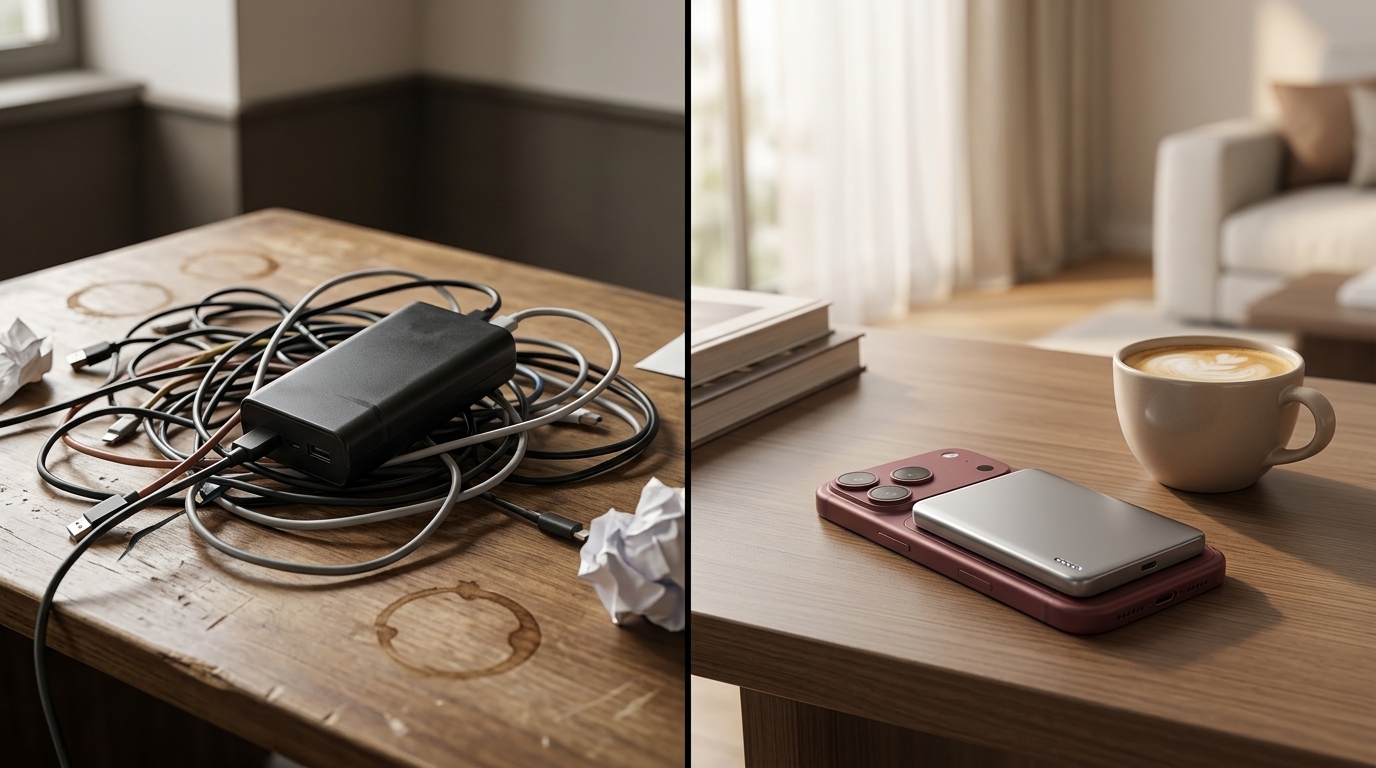


The rise of dedicated wireless chargers for a single wearable signals a quiet breakdown in the promise of universal USB-C consolidation. What was supposed to simplify device logistics has instead created new categories of travel essentials.
The theory behind USB-C standardization was elegant: fewer cables, fewer chargers, fewer decisions about what to pack. But the Apple Watch operates outside that framework. Its wireless charging puck can’t be replaced by a standard cable, and its battery life—while improved across recent generations—still falters under heavy health tracking, especially sleep monitoring.
For users who’ve adopted overnight wearing as routine, the calculus of travel has changed. You can’t simply throw a USB-C cable in your bag and assume coverage. The Watch requires its own power delivery system, and that system needs to be small enough to justify the space it occupies in a carry-on or hotel nightstand.

Portable chargers designed exclusively for the Apple Watch have become common not because they solve a new problem, but because they address an old one that USB-C was supposed to eliminate. These devices are magnetic, palm-sized, and hold enough charge for multiple full cycles. They’re also an admission that the ecosystem’s consolidation narrative has limits.
The behavioral shift is most visible among people who use the Watch for sleep tracking. Once you commit to wearing the device overnight, you lose the natural charging window most people default to. The Watch needs power at some point during the day, and that point is often unpredictable—during a commute, between meetings, or while sitting at a desk. A portable charger becomes less of a backup and more of a primary power source.
SIMILAR
How iPhone owners navigate the reality that gaming peripherals treat Apple devices as secondary platforms
How iPad Pro photographers created workarounds for a fundamental file transfer limitation Apple never quite solved
How iPhone users negotiate the nightly ritual of charging five devices from a single nightstand footprint
What’s notable is how quickly this became normalized. Two years ago, carrying a separate power bank for a wearable would have seemed excessive. Now it’s treated as basic preparedness, the same way iPhone users carry Lightning or USB-C cables without question.
The design of these chargers has also evolved to match Apple’s aesthetic language. Compact form factors, matte finishes, magnetic alignment—they’re built to feel like official accessories even when they’re not. The best ones disappear into a bag or pocket, surfacing only when needed.
Battery capacity in these units typically lands around 2,500mAh, enough for roughly three full Apple Watch charges. That translates to nearly a week of autonomy for most users, assuming moderate daily drain. It’s not infinite, but it’s enough to eliminate the low-battery notification as a travel concern.
Pricing for portable Apple Watch chargers has compressed significantly. Models that debuted near $20 have migrated toward the $10 range, with current listings appearing as low as $9.99(CODE GJDNNUD8 ) during promotional windows. The commodification suggests the category has matured past early-adopter pricing into everyday accessory territory.
"Note: Readers like you help support The Apple Tech. We may receive a affiliate commission when you purchase products mentioned on our website."