

Apple Pencil is engineered excellence—pressure sensitivity across 4096 levels, tilt detection for shading, pixel-perfect precision, and seamless pairing that happens the moment it magnetically attaches to the iPad’s edge. It’s also $129, and for users uncertain whether they’ll actually use handwriting regularly, that price creates a commitment barrier steep enough to delay or prevent adoption entirely.
The budget stylus occupies the space Apple left open. It doesn’t do everything Apple Pencil does—no pressure sensitivity across the full range, no double-tap gesture switching, no wireless charging. But it registers touch, it supports palm rejection well enough that your hand doesn’t create phantom marks, and it costs less than ten dollars. For students testing whether handwritten notes improve retention, or professionals experimenting with annotating PDFs, or anyone curious about digital writing without certainty they’ll sustain the habit, the math is simple: try the cheap one first.
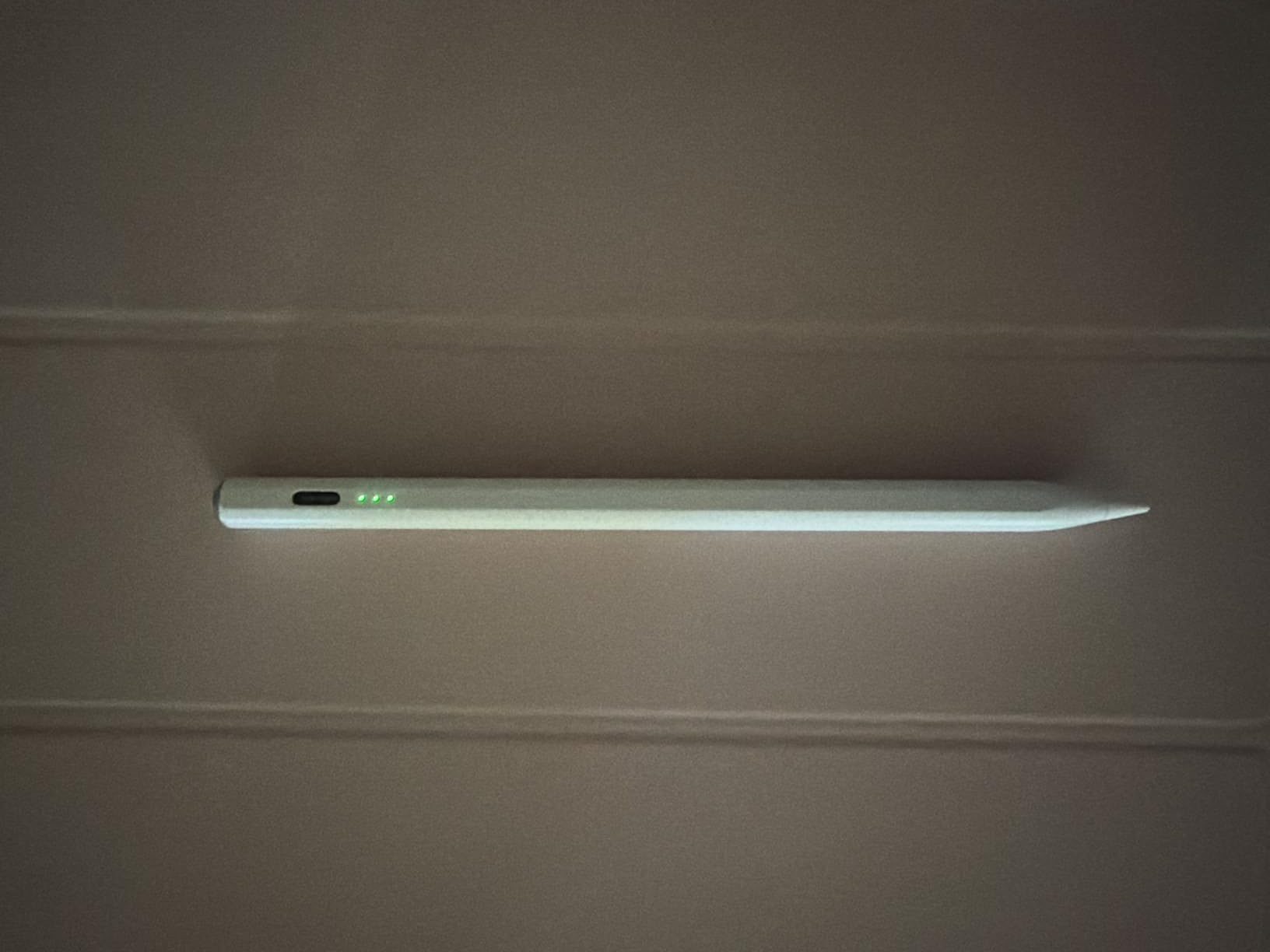
What’s interesting is how many users never upgrade. They buy the budget stylus, use it for months or years, and discover it’s sufficient. Not ideal—the tip wears down faster, the lack of pressure sensitivity limits artistic use, and the charging via USB-C cable instead of magnetic attachment adds friction—but sufficient. The gap between “good enough” and “Apple Pencil quality” turns out to be narrower than Apple’s pricing suggests, at least for the subset of users whose primary use case is basic note-taking or document annotation.
This behavior reveals a tension in how Apple positions the iPad. The device straddles consumer and professional use—casual media consumption and serious creative work. Apple Pencil targets the professional tier, priced and engineered for artists, designers, and power users who need precision. But many iPad owners bought the device for simpler reasons: reading, browsing, occasional note-taking. They don’t need pro-level input, yet Apple offers no mid-tier stylus option. The gap gets filled by third parties who recognize that most handwriting doesn’t require 4096 pressure levels.
SIMILAR
iPhone and MacBook users are compensating for a port problem Apple created
iPhone users are eliminating the tangled cable from every car charging session
iPhone users are transforming nightstands into silent charging infrastructure
The tilt sensitivity in budget styluses is particularly telling. It’s a feature that mimics Apple Pencil’s capability—angling the stylus creates thicker or thinner lines, enabling basic shading. It’s not as refined, but it’s present, and its inclusion signals that even budget manufacturers understand users expect some level of natural writing feel. The floor for acceptable digital writing has risen, even as Apple Pencil remains the ceiling.
Palm rejection works through software optimization, not hardware, which means budget styluses can achieve reasonable performance without Apple’s proprietary tech. The iPad’s screen learns to ignore your resting hand and register only the stylus tip. It’s not flawless—occasionally a palm touch sneaks through, leaving an unwanted mark—but it’s functional enough that users adapt, learning to angle their hand slightly or rest it more deliberately.
The fast charging—13 minutes to full battery—addresses one of the major friction points with digital writing tools: dead styluses mid-note. Apple Pencil charges magnetically on the iPad, which is elegant but slow for active users burning through battery during long study sessions or meetings. A quick USB-C top-up between classes or calls keeps the budget stylus operational without planning ahead, which matters for users who forget to charge things overnight.
Previously listed at $15.99, current listings hover around $9.98. That pricing reflects the stylus’s role as an on-ramp to digital handwriting—cheap enough to justify impulse buying, functional enough that many users never feel compelled to upgrade.
The stylus becomes a trial run for handwriting, a low-stakes test of whether digital note-taking will stick before investing in Apple’s $129 version of the same behavior. For some, it’s a temporary solution that eventually gives way to Apple Pencil once the habit solidifies. But for many others, it’s permanent—proof that the ecosystem’s premium input tier isn’t necessary for the way they actually use their iPad, and that Apple’s pricing assumes a level of commitment not every user is ready to make.
"Note: Readers like you help support The Apple Tech. We may receive a affiliate commission when you purchase products mentioned on our website."