iPhone users who rely on Maps or other navigation apps while driving share a common improvisation. The phone sits in a cup holder, propped at an angle that allows occasional glances at upcoming turns. Or it rests against the dashboard, wedged between surfaces in a semi-stable position. The setup works until it doesn’t—a sudden stop, a sharp turn, or simply the vibration of highway driving gradually shifts the phone out of view.
The response is always the same: one hand leaves the wheel at a stoplight to reposition the device. Adjust the angle. Prop it more securely. Check that the screen is visible from the driver’s seat without leaning. This happens multiple times during most drives, a small repeated gesture that iPhone users perform without considering alternatives.
What’s notable is how long this behavior persisted as the accepted solution. The iPhone provides excellent turn-by-turn navigation, and the app itself works flawlessly. The friction exists entirely in the physical positioning of the device—keeping it visible, stable, and within glanceable range without blocking essential dashboard elements or airbag deployment zones.
The workaround functioned well enough that it became the default approach—until a sharp turn sent the phone sliding, or a bumpy road required mid-drive repositioning with one hand still on the wheel. Users adapted by developing muscle memory for where the phone would likely shift and pre-emptively adjusting before it became a visibility problem.
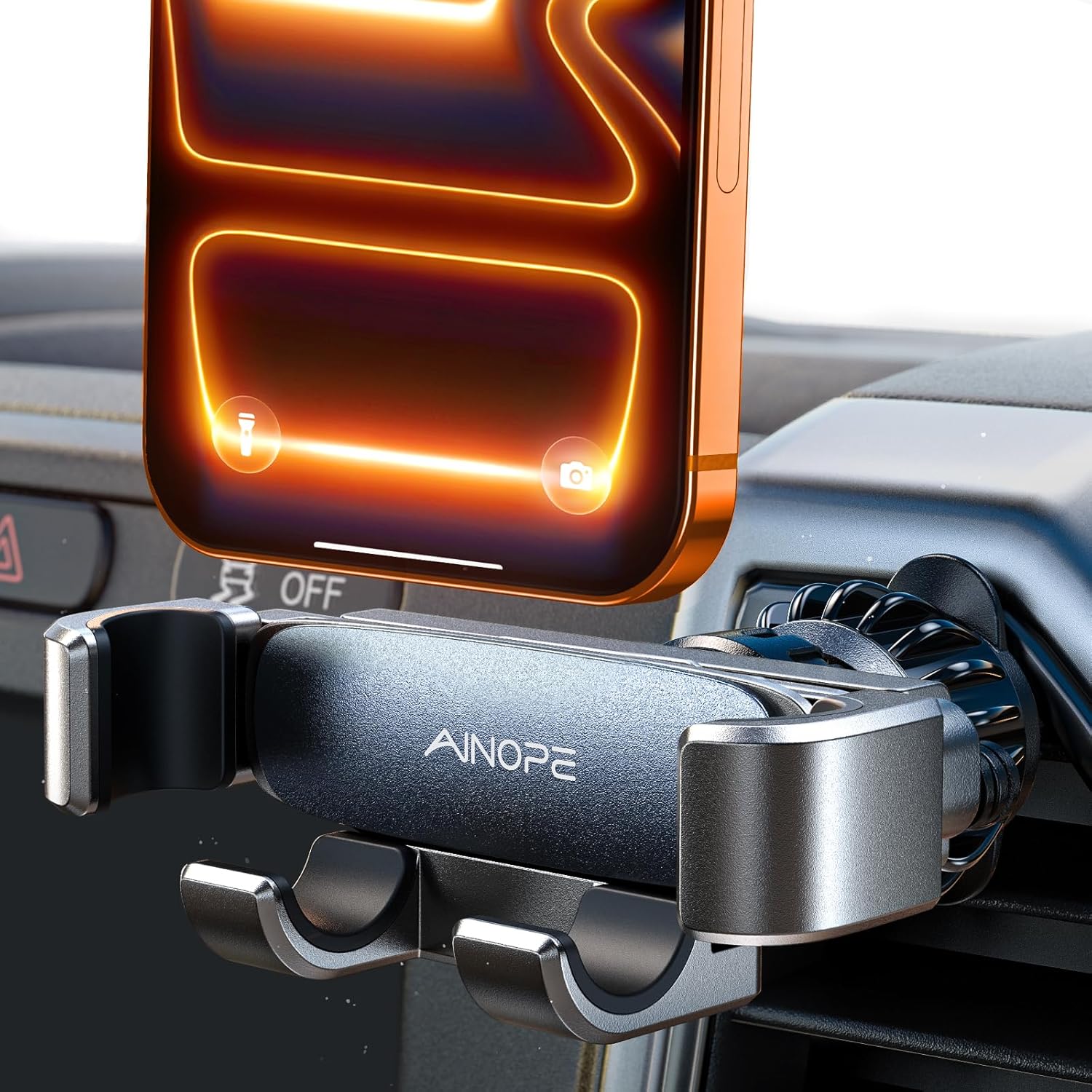
Air vent mounting systems address this by clipping directly into existing car infrastructure without requiring adhesive or dashboard modification. The phone slots into a holder that grips from the sides, and the entire assembly attaches to the vent slats. For iPhone users accustomed to MagSafe accessories that snap into place without fiddling, the mounting gesture feels familiar—position the phone, feel it lock, done.
The behavior change is immediate but understated. Users stop repositioning at stoplights. They stop checking whether the phone has shifted during the drive. They stop thinking about whether the cup holder is empty enough to accommodate the device. The iPhone simply remains where it was placed, at the angle it was set, throughout the trip.
The shift happens without fanfare. Users don’t describe it as upgrading their car setup. They just stop performing the small, repeated adjustments that had become part of the driving routine. Navigation works the way it always has—the difference is that the phone stays visible without intervention.
Listings for air vent iPhone mounts currently reflect a reduction of roughly 22 percent compared with earlier availability.
"Note: Readers like you help support The Apple Tech. We may receive a affiliate commission when you purchase products mentioned on our website."