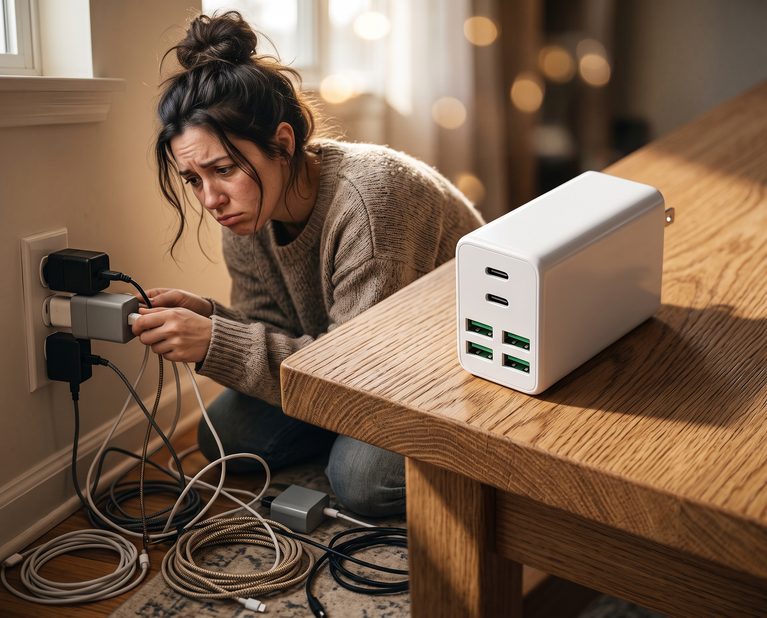
iPhone users who move through their day away from home—commuters, students, remote workers rotating between locations—share a habit that predates the specific device model they’re carrying. Before leaving, they check battery percentage. If it’s below a certain threshold, they grab a charging cable. If it’s marginal, they make mental notes about where outlets might be accessible later. The habit is so ingrained that many users perform it without conscious thought.
This behavior emerged gradually as iPhones became essential for more than communication. Navigation depends on continuous GPS and screen usage. Mobile payment requires the device to remain powered through checkout. Work communication doesn’t pause during transit. The phone needs to last through unpredictable usage patterns across environments that may or may not offer convenient charging access.
The adaptation was so gradual that most users stopped recognizing it as a constraint—they simply knew which coffee shops had accessible outlets and which commute routes allowed for charging. Carrying a cable became standard, though using it meant finding a power source and remaining stationary long enough for meaningful charge to accumulate. The workflow worked, but it introduced micro-decisions throughout the day about when and where to charge.
What’s notable is how this friction shaped movement patterns. Users gravitated toward spaces where charging was straightforward. They avoided activities that might drain the battery without offering recovery opportunities. The iPhone’s utility created its own set of invisible boundaries around daily routines.
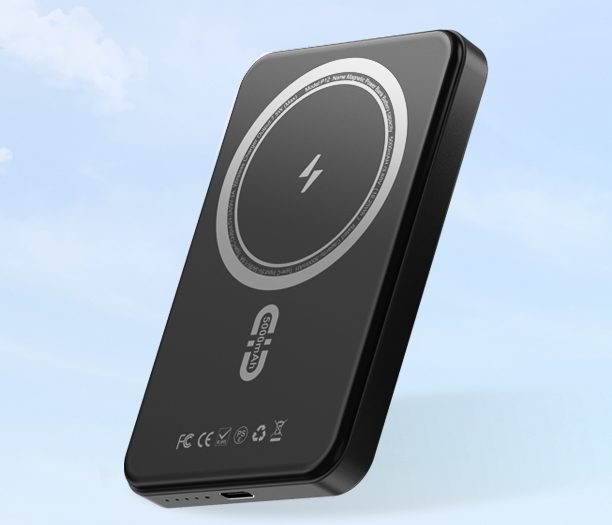
Magnetic battery packs that attach directly to the iPhone’s back eliminate the outlet dependency without requiring cables. They’re thin enough to remain attached during normal use, which means charging happens continuously rather than during dedicated stationary periods. For users accustomed to the MagSafe ecosystem—wireless charging pads, magnetic wallets, snap-on accessories—this feels like a natural extension of existing habits.
The behavior shift is quiet. Users stop checking battery percentage before leaving home. They stop mapping their day around outlet locations. They stop declining activities because charging might become complicated. The iPhone simply remains usable throughout extended periods away from fixed power sources.
The change doesn’t announce itself. Users don’t describe it as solving a problem—they just stop performing the small calculations that had become part of navigating daily movement. The device works the way they assumed it should, without requiring environmental accommodation.
Listings for slim magnetic battery packs designed for recent iPhone models currently reflect a reduction of roughly 20 percent compared with earlier availability.
"Note: Readers like you help support The Apple Tech. We may receive a affiliate commission when you purchase products mentioned on our website."