The iPhone Pro Max has always been large, but each generation pushes that boundary further. The 6.9-inch display offers more screen real estate for content, productivity, and multitasking, which is exactly why people buy it. But that size comes with physical consequences that don’t emerge until daily use begins. The phone is harder to hold one-handed. It’s heavier in pockets. Extended use causes hand fatigue in ways smaller iPhones don’t.
Ring holders started as novelty accessories—something people added to cheap phone cases for extra grip security. They looked awkward and felt like compromises. But as phones grew larger and heavier, the functional need became harder to ignore. A ring on the back of a Pro Max provides leverage that changes how the phone can be held. It distributes weight differently, enables more secure one-handed use, and reduces the constant low-level anxiety about dropping an expensive device.
Cases with integrated rings eliminate the aesthetic problem that adhesive ring holders create. When the ring is part of the case design rather than an afterthought stuck onto the back, it looks intentional instead of improvised. The translucent matte finish lets the iPhone’s color show through while the ring sits flush when not in use. It’s a solution that doesn’t announce itself as a workaround, which matters to people who care about how their devices look.
Magnetic stands add utility beyond just grip. The ring doubles as a kickstand, and because it rotates 360 degrees, the iPhone can be propped at any angle. Horizontal for video, tilted for video calls, upright for following recipes or reading articles. The Pro Max’s large screen becomes more usable when it’s not held constantly, but casual propping against objects is unreliable. A built-in stand that’s always available means the phone gets used differently—more often set down and viewed rather than gripped and held.
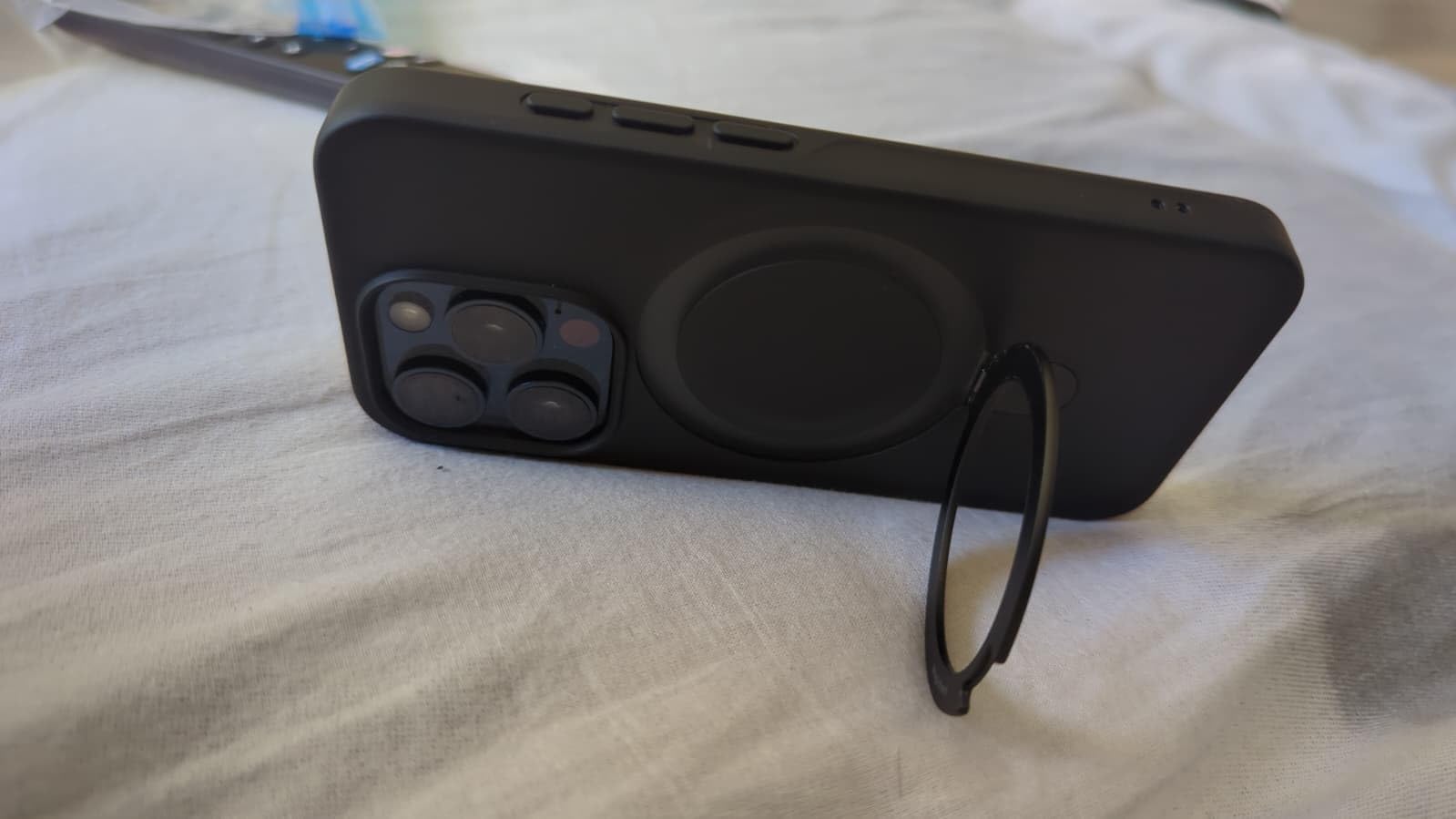
MagSafe compatibility extends the magnetic ring’s function to the broader ecosystem of accessories. Car mounts, desk chargers, wall mounts, and battery packs all work with MagSafe. A case that integrates this magnetically means the Pro Max can attach to those accessories without requiring additional adapters or modifications. That interoperability is valuable, but only if the case itself doesn’t interfere with the magnetic connection—something that varies widely across third-party options.
Drop protection has become non-negotiable for phones this expensive. The Pro Max costs over a thousand dollars, and repair costs reflect that premium. A cracked screen or damaged frame can run hundreds of dollars to fix. Military-grade protection sounds like marketing hyperbole, but the underlying engineering—reinforced corners, raised bezels, shock-absorbing materials—does reduce damage from typical drops. People who’ve paid for repairs once tend to prioritize protection more aggressively on their next case purchase.
The Pro Max occupies a strange position in Apple’s lineup. It’s the most capable iPhone, with the best camera system, longest battery life, and largest display. But it’s also the least comfortable to use physically. Cases with ring holders don’t solve that tension entirely, but they make it more manageable. The phone remains large, but it becomes easier to hold, prop up, and carry without constant worry about dropping it.
The current listing shows $35 at the time of publishing. View current listing. Price at time of publishing. Subject to change.
"Note: Readers like you help support The Apple Tech. We may receive a affiliate commission when you purchase products mentioned on our website."