
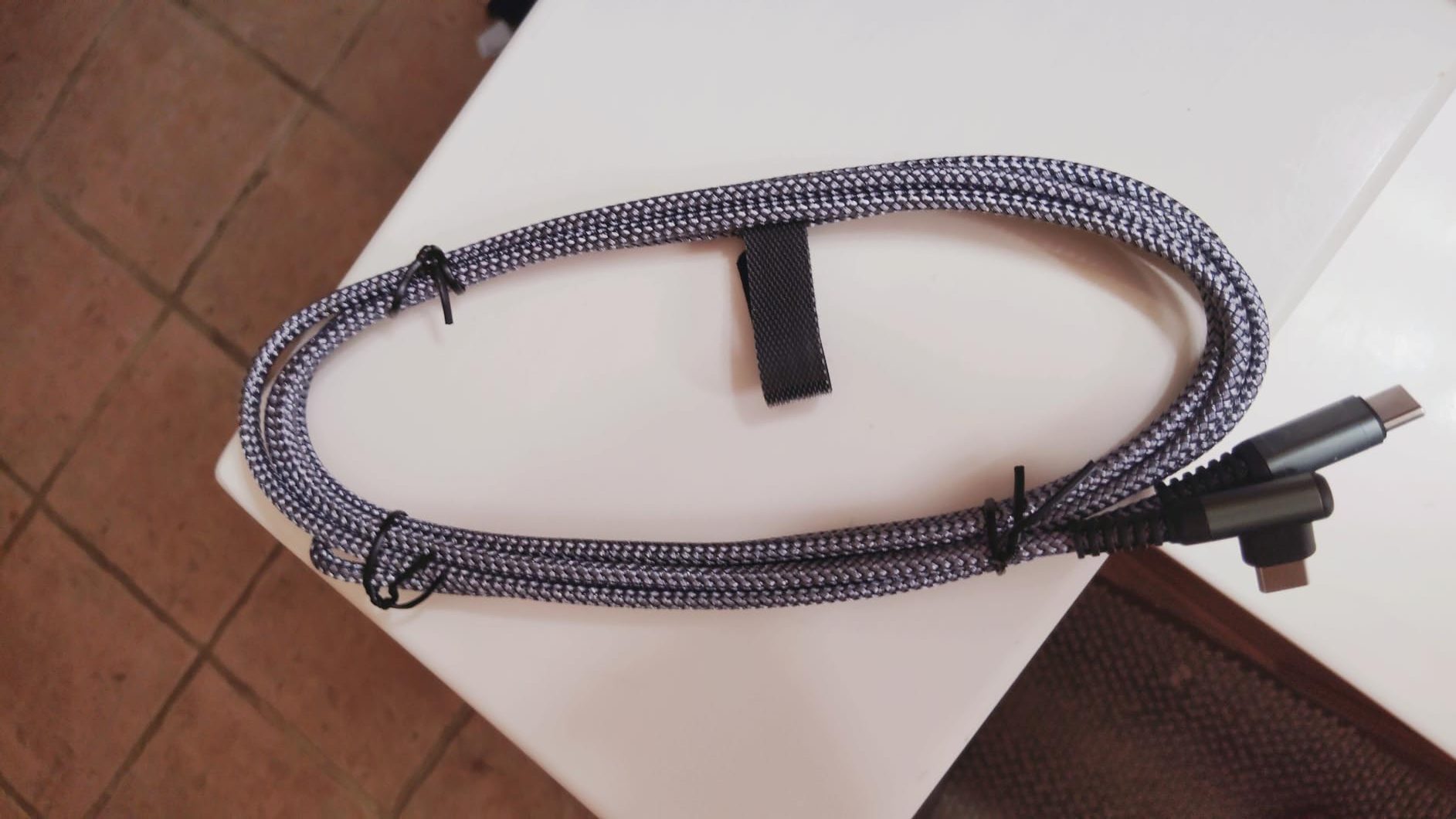
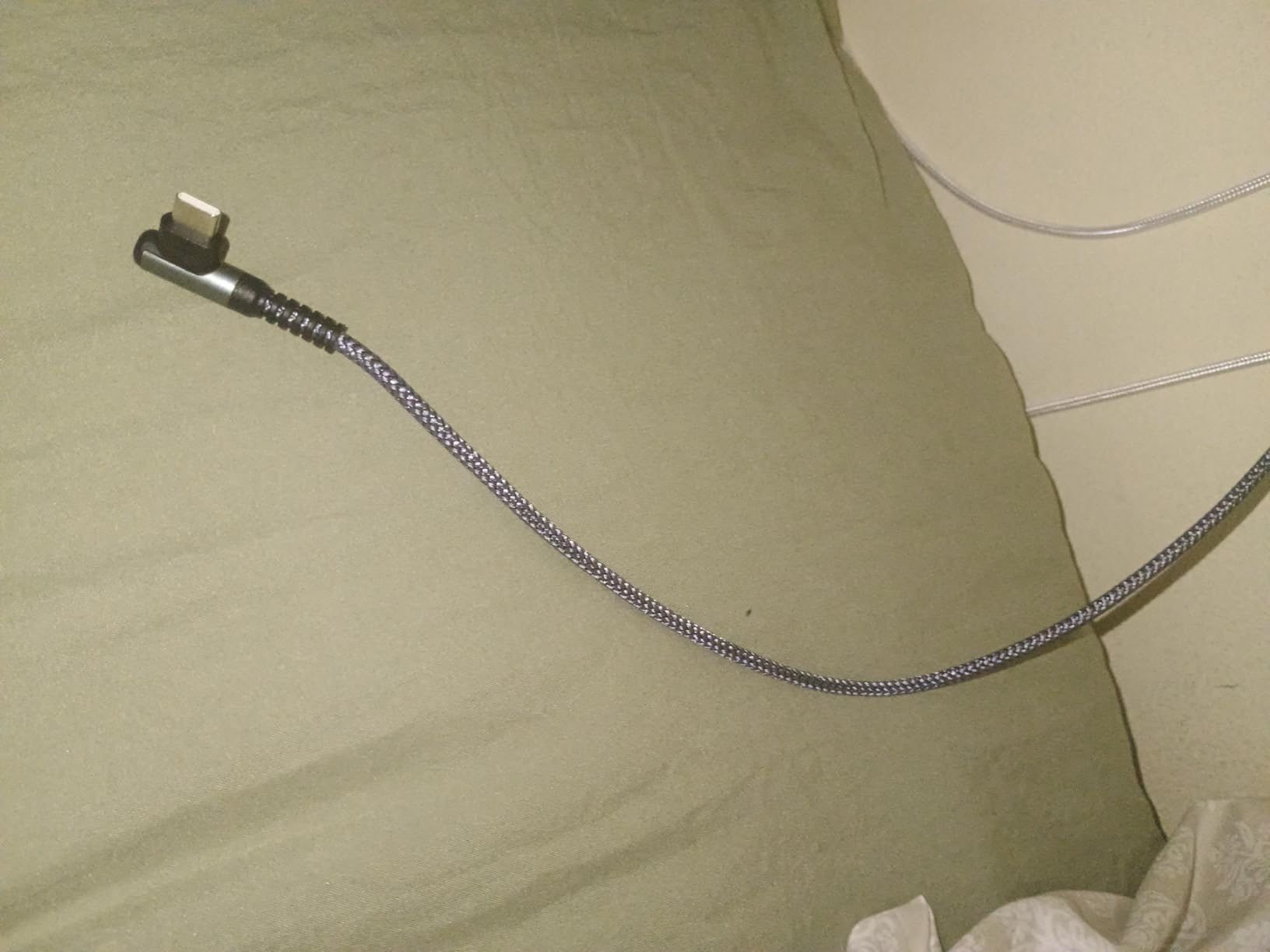
Charging cables fail in predictable ways. They fray at the base, where repeated bending stresses the connection point. They stick out awkwardly from the device, making it uncomfortable to hold while plugged in. They refuse to fit behind furniture pushed flush against walls. The right-angle USB-C cable addressed all three issues with a single geometric adjustment: a ninety-degree bend at the connector. The change was subtle enough that most people didn’t notice it until they used one.
iPhone 15 and 16 users, newly transitioned to USB-C, encountered the right-angle cable as an unexpected refinement. For years, Lightning cables had conditioned people to expect the cable to protrude straight out from the bottom of the phone. That worked when the phone was lying flat on a table, but it created awkward hand positioning during use. The right-angle connector flattened that profile. The cable ran parallel to the phone instead of perpendicular to it, which meant the phone could rest more naturally in the hand while charging.
iPad users noticed a different benefit. Tablets spend a lot of time propped against things—couch cushions, backpacks, the edge of a bed. A straight cable forced the iPad to lean forward slightly to accommodate the protruding connector. The right-angle version eliminated that lean. The tablet could sit flush against a surface while charging, which sounds minor until you realize how often that small adjustment prevented the device from tipping over.
Samsung Galaxy users had been navigating USB-C cables for years before the iPhone ecosystem adopted the standard, but the right-angle design wasn’t universal. Most cables still shipped with straight connectors, which meant the ergonomic improvement only materialized for people who specifically sought it out. That selectivity revealed something about how design improvements diffuse: slowly, through word of mouth and accidental discovery, rather than through deliberate marketing.
The braided nylon sleeve addressed the fraying problem but introduced a different tactile quality. The cable felt stiffer than the standard rubber-coated versions, which made it less prone to tangling but also less flexible in tight routing situations. Behind desks, under car seats, threaded through bags—the braided cable held its shape, which was sometimes an advantage and sometimes an obstacle. It depended entirely on the space.
The two-pack format changed the calculus of cable ownership. One cable could live permanently behind the nightstand, threaded through the gap between the bed and the wall. The other could stay in a bag or a car. That redundancy reduced the daily shuffling of cables from room to room, which had been a low-level annoyance for anyone with more devices than cables. The right-angle design made that redundancy more valuable because the cable could occupy spaces where a straight connector wouldn’t fit.
Previously listed at ten dollars for the two-pack, these braided right-angle cables now appear at similar price points across multiple brands. The cost reflects commodification—the right-angle connector is no longer a specialty feature, it’s a standard option. The cable didn’t solve a new problem—it solved an old one that people had stopped noticing. That’s a different kind of innovation, quieter and more incremental, but no less effective at changing daily routines.
"Note: Readers like you help support The Apple Tech. We may receive a affiliate commission when you purchase products mentioned on our website."