As mobile work extends beyond traditional offices and reliable outlets, the distinction between planned power access and contingency backup has collapsed into a single daily consideration.
The cafe runs out of available outlets by ten in the morning. The library’s outlets are all occupied or inconveniently located behind furniture. The co-working space you drop into for a few hours charges extra for desk access. Your iPhone is at 43 percent, the MacBook at 61 percent, and you have three hours of work left before you can get home. This is when portable power stops being theoretical.
The calculus has shifted. A decade ago, backup batteries were camping gear or emergency supplies—things you stored in a garage and hoped you’d never need. Now they’re work tools, as routine as the laptop bag or the phone charger. The reason is simple: work has decentralized faster than power access has adapted. Coffee shops were never designed to support six people running laptops for eight hours. Parks don’t have outlets. Cars have limited charging capacity. The infrastructure assumes you’ll be somewhere with power, but increasingly, you’re not.
An 88-watt-hour battery can keep an iPhone running for days or a MacBook Air alive for several hours of active use. The math depends on what you’re doing—video calls drain faster than writing—but the principle holds. You’re buying time. Time to finish the project. Time to get to the next outlet. Time to avoid the cascading failures that happen when devices die mid-task and work gets lost or delayed.
Apple’s ecosystem makes this dependency more acute. The iPhone isn’t just a phone—it’s the two-factor authentication device for everything else. If it dies, you can’t log into accounts on the MacBook. If the MacBook dies, you can’t finish the work that’s due in an hour. The devices are interdependent, which means losing power to one affects the utility of the others. A backup battery doesn’t just keep devices charged—it keeps the entire workflow intact.
Solar charging remains optional for most people, but it shifts the mental model. Instead of a battery that depletes and eventually runs out, you have a system that can theoretically sustain itself if you’re somewhere with sunlight. This matters less in cities than in rural areas, less during winter than summer, but the optionality itself is valuable. The battery stops being something you keep in a closet for emergencies and becomes something that sits on the desk, within arm’s reach, charged and ready.
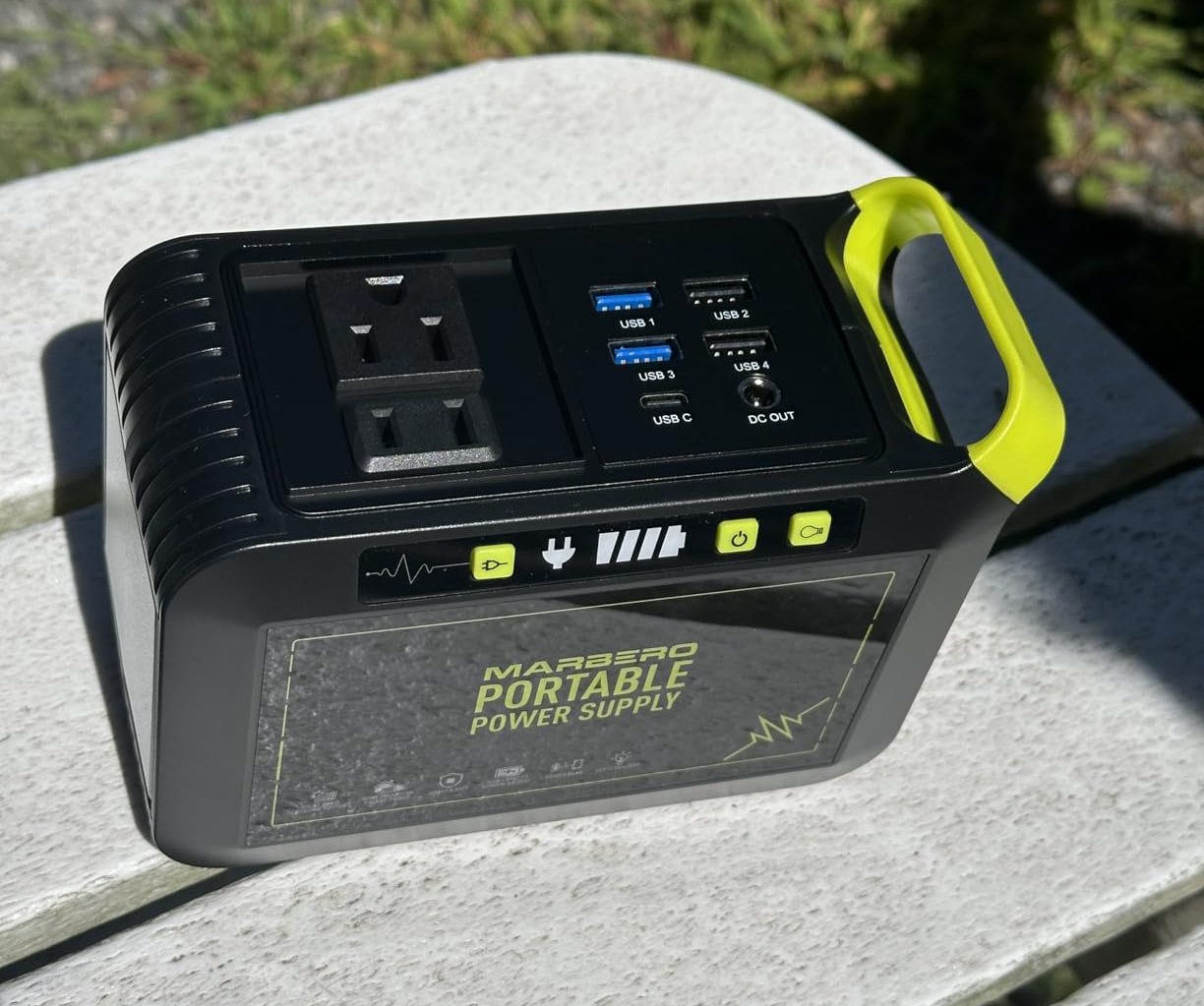
The size and weight matter because portability determines whether the battery actually gets used. A ten-pound power station might have more capacity, but if it’s too bulky to throw in a backpack, it stays home. An 88-watt-hour unit occupies a middle space—light enough to carry, substantial enough to matter. It’s not solving multi-day power outages, but it’s addressing the more common problem of running out of battery in the middle of a workday with nowhere to plug in.
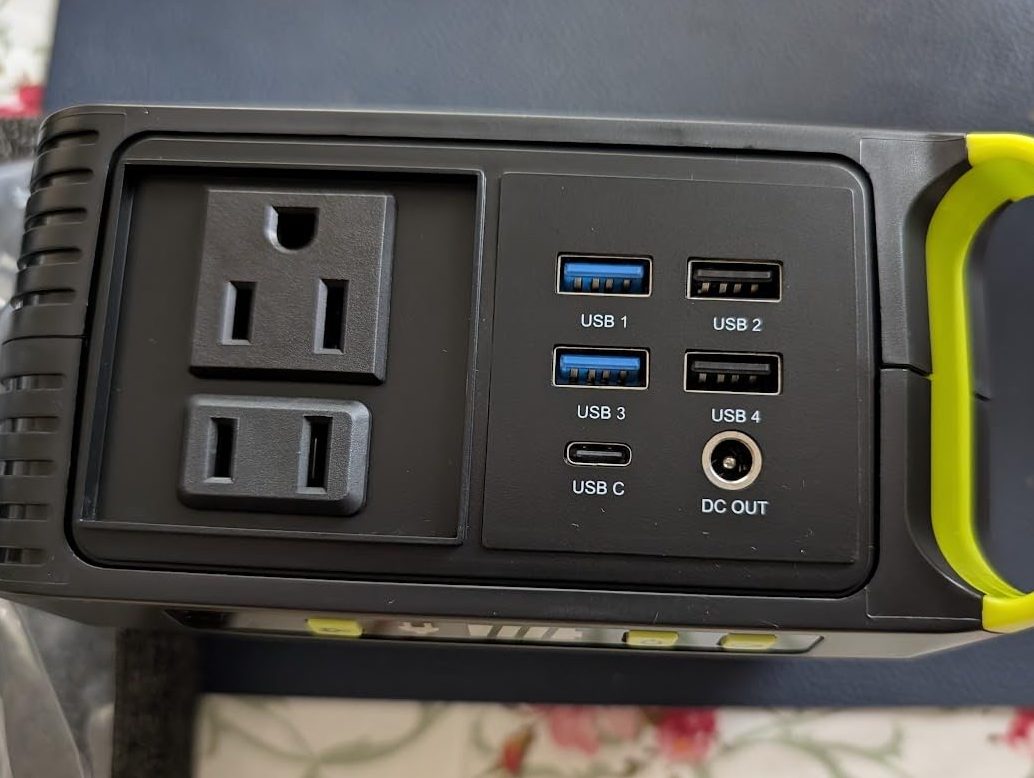
There’s also a psychological component. Having backup power reduces the ambient anxiety about battery percentage. You stop checking the iPhone’s charge every twenty minutes. You stop rationing the MacBook’s brightness to squeeze out another half hour. The battery doesn’t change how long the devices last, but it changes how you use them. Previously listed at $110, current listings hover around $58 (CODE MABEM82DS) for compact models that prioritize USB and AC output. The shift from emergency gear to daily infrastructure reflects a broader adaptation—Apple’s mobile ecosystem has made work possible anywhere, but that anywhere still needs power, and the outlets haven’t kept up.
"Note: Readers like you help support The Apple Tech. We may receive a affiliate commission when you purchase products mentioned on our website."