

The shift to USB-C across smartphones has intensified the challenge of keeping multiple devices charged during car travel, exposing infrastructure limitations in vehicles designed for simpler power needs.
The morning commute used to involve one charging cable. The iPhone plugged into the car’s USB port or a 12-volt adapter, and that was sufficient. Now the passenger has a phone that needs charging. The kids in the back have tablets. Someone’s wireless earbuds case is at fifteen percent. The car becomes a mobile charging station, except the infrastructure was designed for one or two devices, not the four or five that now require power simultaneously.
Cable management in vehicles presents a specific set of constraints. Cables dangle, get tangled under seats, fall into the gap between the seat and the center console, or stretch taut when someone in the back seat needs to use their device while it charges. The car isn’t designed for cable organization the way a desk might be. There are no cable trays, no clips, no routing channels. The cables exist in whatever configuration they settle into after being plugged in.
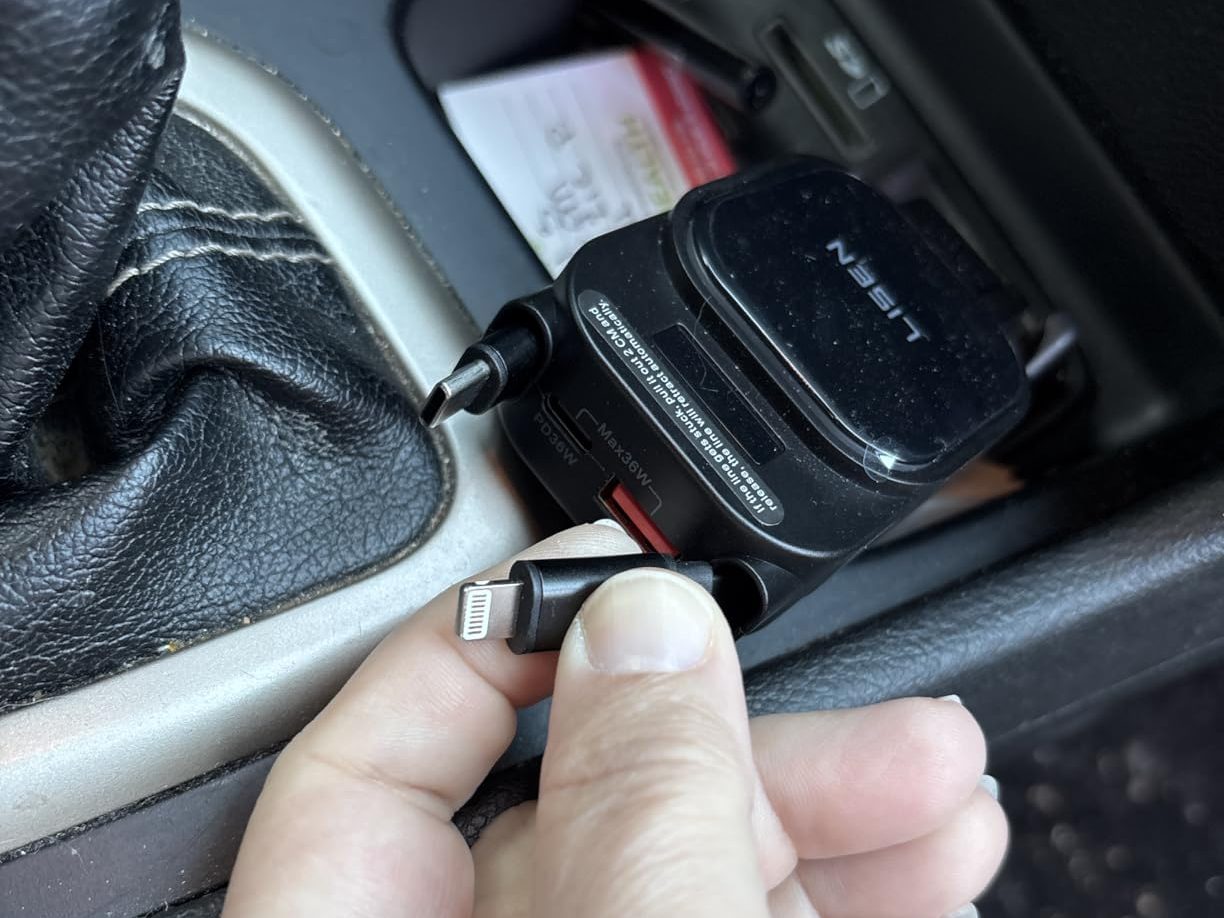
Retractable cables address this by eliminating slack. The cable extends to the device, stops at the required length, and retracts when disconnected. This prevents the accumulation of loose cable in the car’s interior, which reduces clutter but introduces a new constraint—the cable can only extend so far. If someone in the back seat needs to charge their device and use it simultaneously, the cable might not reach comfortably. The solution to one problem creates another.
USB-C unification across iPhones and Android devices has simplified compatibility but intensified competition for ports. The same cable can charge an iPhone, a Samsung phone, an iPad, and a MacBook, which should make things easier. What it actually does is create a situation where every device is compatible with every port, but there still aren’t enough ports for everything that needs charging. The universal standard means you’re no longer hunting for the right cable type, just for an available port.
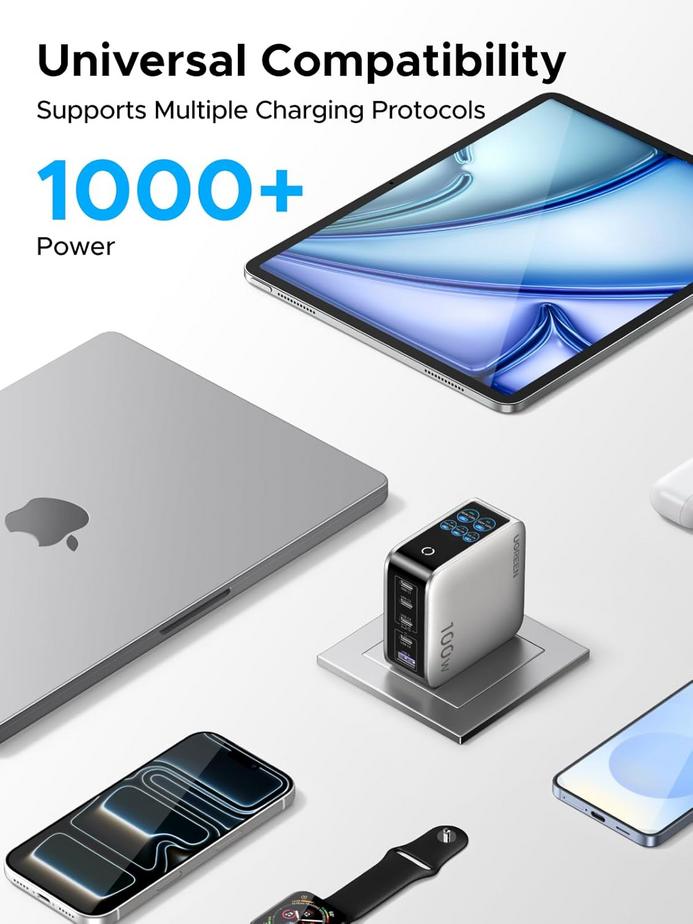
Power distribution becomes critical when multiple devices charge simultaneously from a single car adapter. A 96-watt adapter can theoretically fast-charge several devices at once, but the wattage gets divided. The iPhone might charge at full speed when it’s the only device connected, but plug in three more devices and everyone charges more slowly. This isn’t immediately obvious—the devices show they’re charging, but the time to full charge extends significantly.
The cigarette lighter port, a remnant of automotive history that stopped being used for cigarettes decades ago, has become the primary power source for device charging in older vehicles. Newer cars include dedicated USB ports, but they’re often USB-A, not USB-C, which means they’re already outdated for current iPhones. The car’s built-in charging infrastructure lags years behind the devices people bring into it, creating a persistent need for aftermarket adapters that bridge the gap.
Family road trips amplify these tensions. Everyone brings devices. Everyone needs charging. The car has two USB ports in the front and none in the back. Someone’s device dies during a long stretch without charging, which means they can’t navigate, can’t answer messages, can’t occupy themselves during the drive. The expectation that devices will stay charged runs into the reality that car power infrastructure wasn’t designed for this level of simultaneous demand.
Previously listed at $20, current listings hover around $14 for multi-device car adapters with retractable cables. The pricing reflects the shift from viewing car charging as a simple accessory—one cable, one device—to recognizing it as a logistical challenge that requires deliberate infrastructure. The iPhone’s battery life hasn’t collapsed, but usage has intensified, and the car has become another location where keeping devices powered requires planning, hardware, and constant negotiation over who charges first.
"Note: Readers like you help support The Apple Tech. We may receive a affiliate commission when you purchase products mentioned on our website."