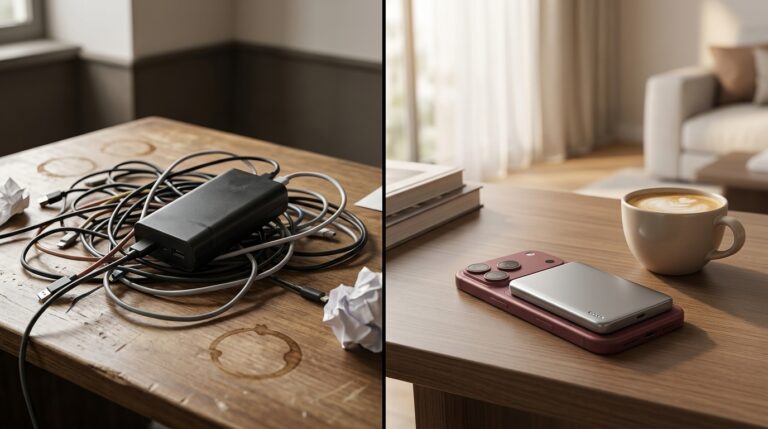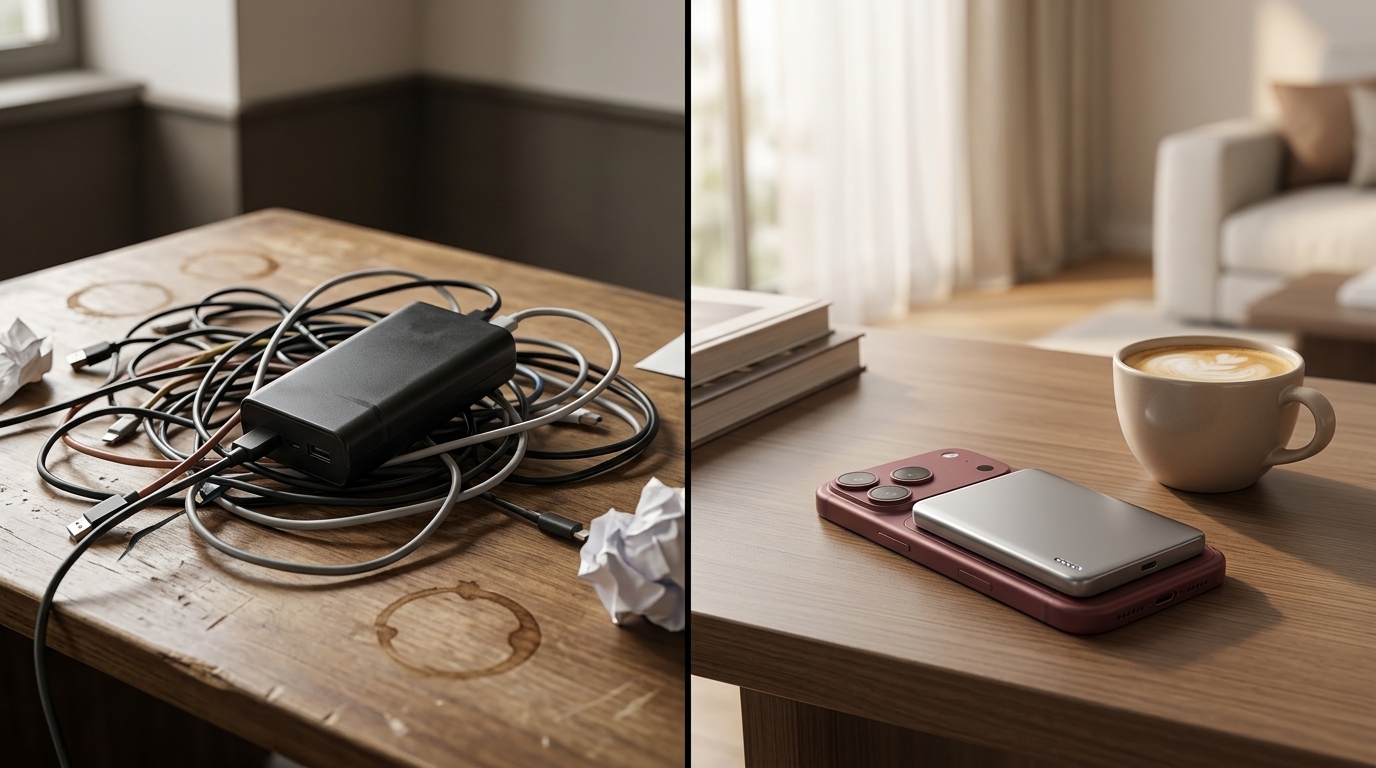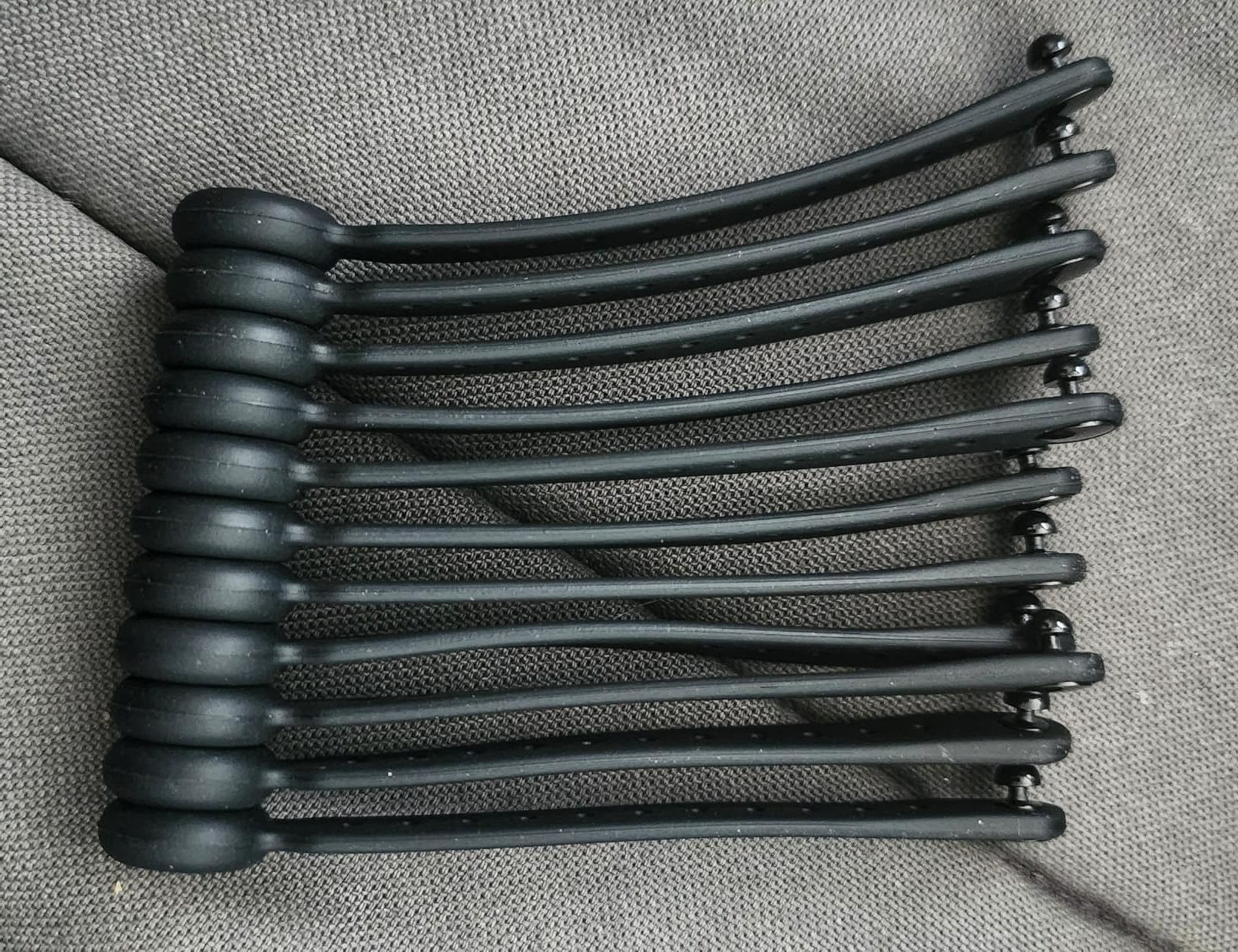
A shift in how people manage cables around their devices reveals something about the Apple ecosystem’s relationship with physical clutter. The solution isn’t about storage—it’s about keeping things within reach.
Walk into any workspace where someone uses multiple Apple devices, and you’ll notice something: cables everywhere, but not messily. They’re coiled, secured, somehow tamed without being tucked away completely. This isn’t about aesthetics in the traditional sense. It’s about solving a problem that emerges when you own an iPhone, iPad, Apple Watch, and AirPods simultaneously.
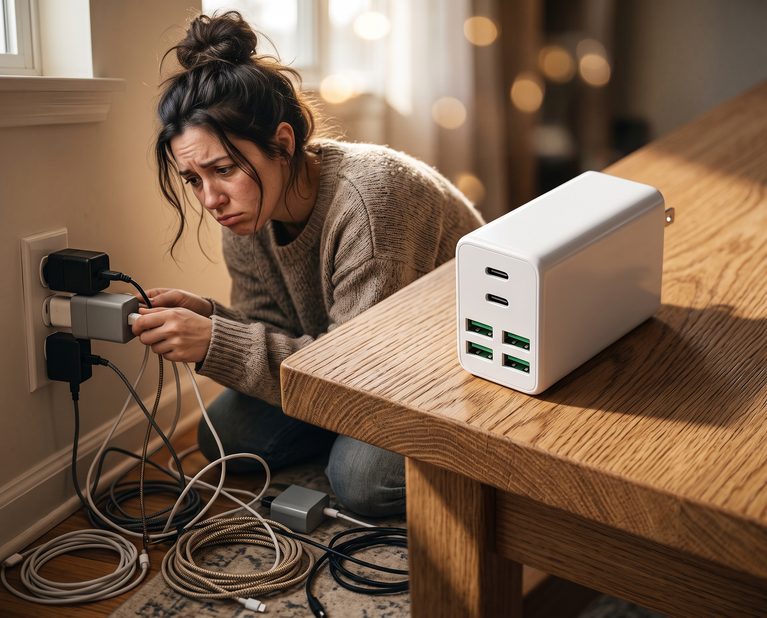
The friction point is specific. You need the Lightning cable for your older iPad, USB-C for your MacBook, and another cable for your iPhone depending on which generation you own. They can’t all live in a drawer because you use them constantly. But letting them sprawl creates its own chaos—tangled nests that waste time and breed low-grade frustration.
What’s emerged is a kind of micro-organization habit. People started using small, reusable fasteners that hold each cable in its own coiled loop. These aren’t zip ties that get thrown away. They’re magnetic or buckled, designed to be opened and closed repeatedly throughout the day. The cable stays organized but immediately accessible.
This behavior reflects something deeper about how the Apple ecosystem has changed daily routines. Charging used to be a once-a-day ritual. Now it’s constant negotiation. Your iPhone needs a top-up before lunch. Your iPad drains during a video call. Your AirPods case sits on your desk waiting for its turn. The cables can’t be stored—they have to be staged.
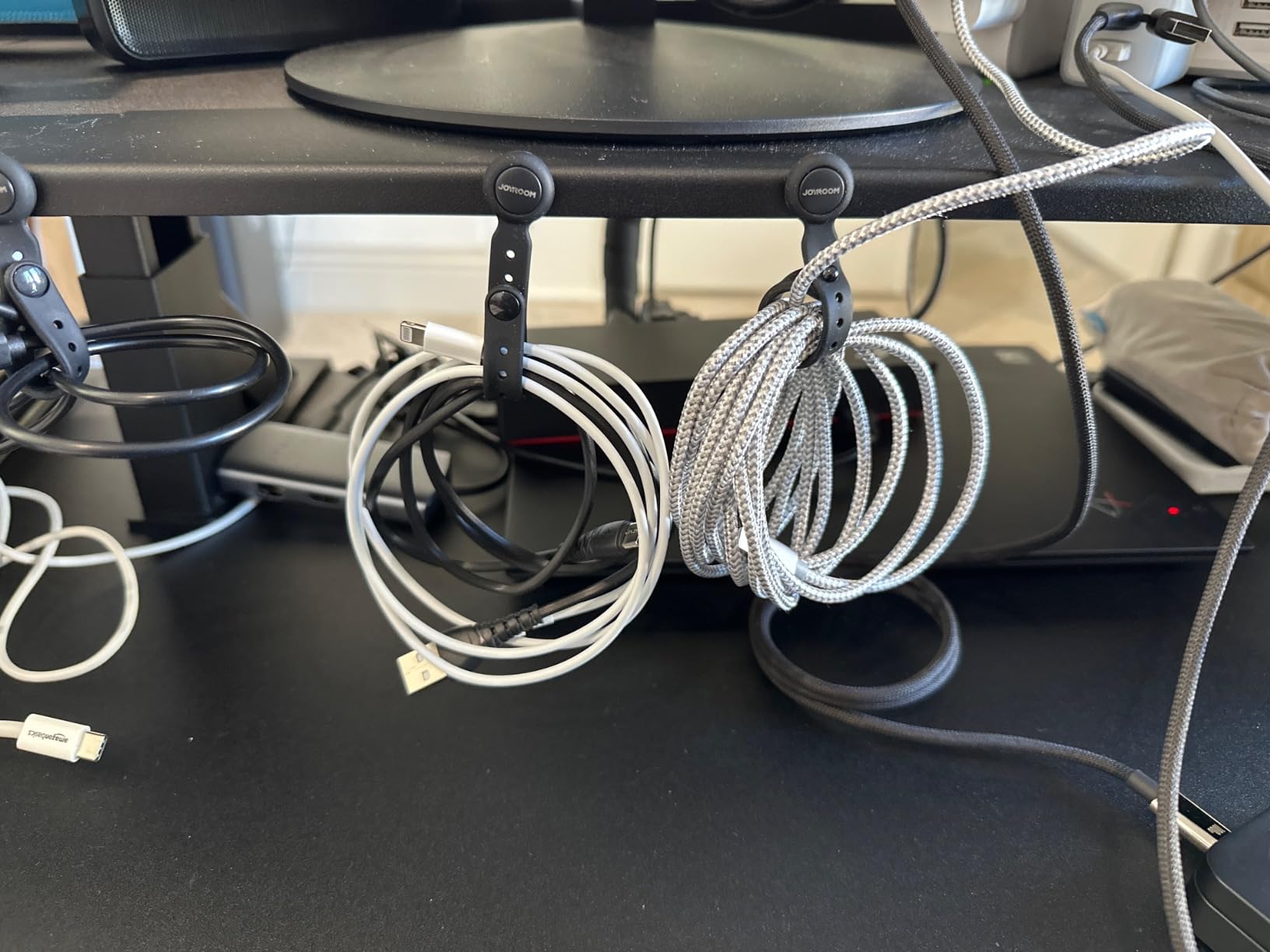
The interesting part is how invisible this shift has been. No one announced they were changing their cable management strategy. It just happened gradually as device ownership multiplied. One cable became three, then five. Leaving them loose stopped working. Hiding them in drawers created new friction.
So people adapted. They started treating cables like tools that need to be organized without being put away. A small magnetic loop keeps the Lightning cable ready on the desk edge. Another holds the USB-C cable near the MacBook. It’s not about tidiness for its own sake—it’s about reducing the cognitive load of managing multiple charging routines.
This kind of quiet behavioral adaptation happens constantly inside the Apple ecosystem, usually without much acknowledgment. People develop workarounds for friction points that Apple’s industrial design doesn’t fully address. The result is a home or workspace that looks organized but is actually optimized for constant device rotation.
Previously listed at $16.99, current listings for magnetic cable organizers hover around $4.99(CODE G3K8K9Q6).
"Note: Readers like you help support The Apple Tech. We may receive a affiliate commission when you purchase products mentioned on our website."