
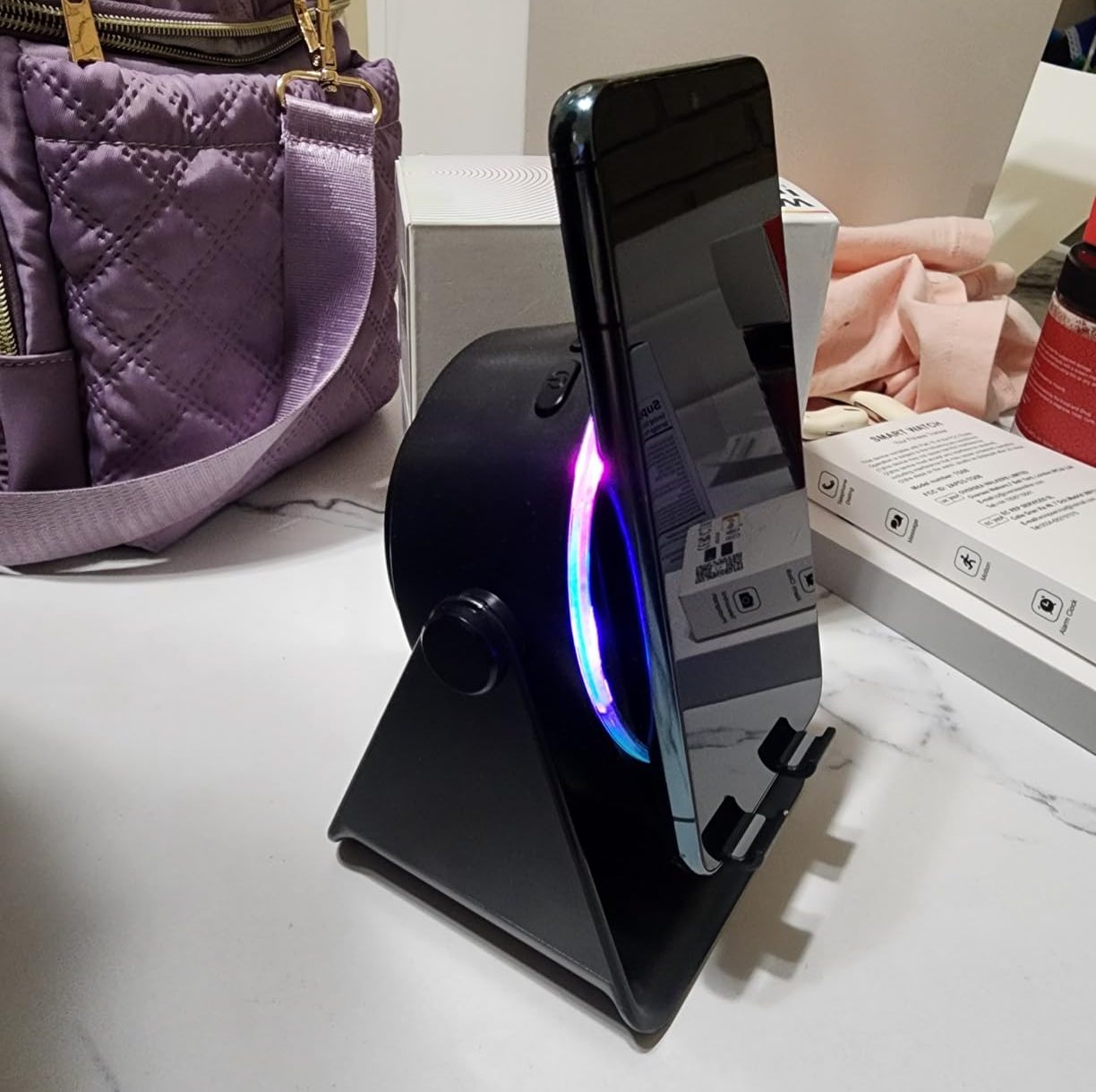
iPhones used to spend most of their time face-down on desks, picked up only when notifications arrived. That behavior shifted as video calls and messaging made constant screen visibility feel necessary. The phone became something to display rather than something to check.
Stands emerged to address neck strain from looking down at flat surfaces, but they also changed how people relate to their devices throughout the day. An iPhone propped at eye level occupies more psychological space than one lying flat. It demands attention even when idle, creating a sense of presence that wasn’t there before.
Speaker amplification through physical contact—induction rather than Bluetooth pairing—removes a small but persistent point of friction. Connecting to Bluetooth speakers means navigating iOS settings, selecting the right device from a list, and hoping the connection holds. Placing a phone on a surface that automatically amplifies sound eliminates those steps entirely.
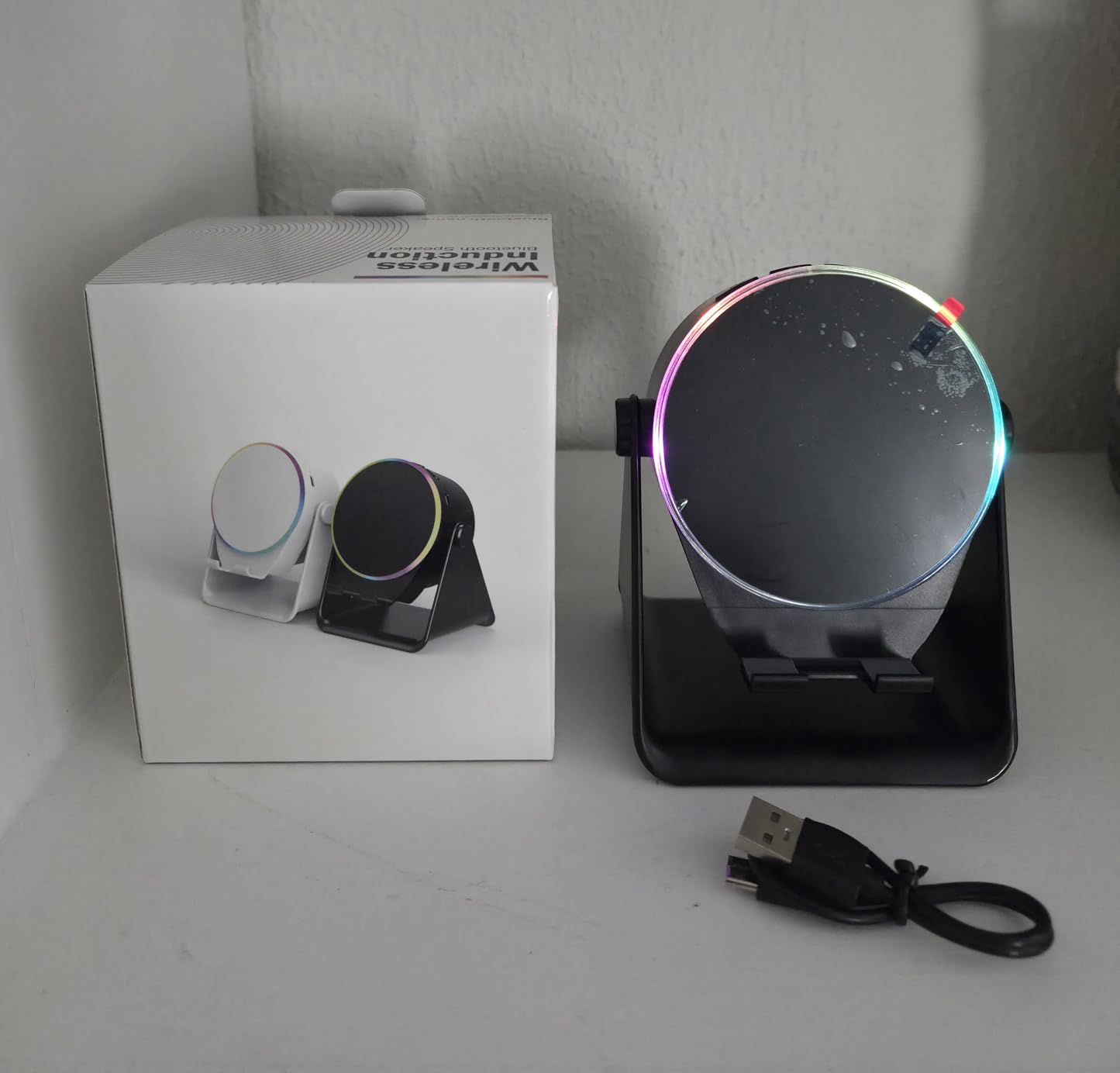
The rotation feature reflects how people actually use phones at desks. Video calls require portrait orientation. Watching content prefers landscape. Checking messages works best in portrait again. Manually adjusting a phone dozens of times per day adds up to enough irritation that a mechanism handling it automatically feels significant.
Ambient lighting introduced a new dimension to desk presence. iPhones don’t emit decorative light—their screens glow with functional purpose. Adding colored light transforms the device from a tool into an object that contributes to room atmosphere. The phone stops being purely utilitarian and becomes part of the environment itself.
SIMILAR
Why iPhone users are carrying standalone noise machines instead of relying on sleep apps
Apple Watch charging became a bedside ritual, here's why the placement matters more than expected
iPhone users are quietly giving up the cable and most dont realize why it happened so gradually over time
This shift toward stationary phone use creates tension with iOS design assumptions. Apple optimizes for portability and pocket storage, but remote work patterns favor devices that stay in one place for hours. The phone that moves seamlessly between contexts now spends most of its time in a single context that wasn’t the primary design focus.
Charging integration matters because phones positioned vertically on stands drain battery faster than those lying flat with screens off. If the stand doesn’t charge while amplifying, it introduces new friction—remembering to move the phone to a charger before battery depletion becomes disruptive.
Previously listed around $22, current listings for multi-function phone stands with induction amplification and ambient lighting now appear at similar price points, indicating steady interest in accessories that reframe iPhone desk presence.
"Note: Readers like you help support The Apple Tech. We may receive a affiliate commission when you purchase products mentioned on our website."