
Apple’s MFi certification—Made for iPhone/iPad—appeared on thousands of accessories, but most people couldn’t explain what it actually verified. The certification meant the accessory met Apple’s technical standards and had been tested for compatibility. In practical terms, it meant the cable was less likely to trigger a “This accessory is not supported” error or damage the device. For users, it was a trust signal more than a technical specification.
The six-foot cable length addressed a behavioral reality. Nightstands weren’t always positioned near outlets. A three-foot cable forced people to move the nightstand, use an extension cord, or charge the phone somewhere else. A six-foot cable spanned the distance between an outlet and a bed in most bedroom configurations. The length wasn’t excessive—it was calibrated to common spatial arrangements.

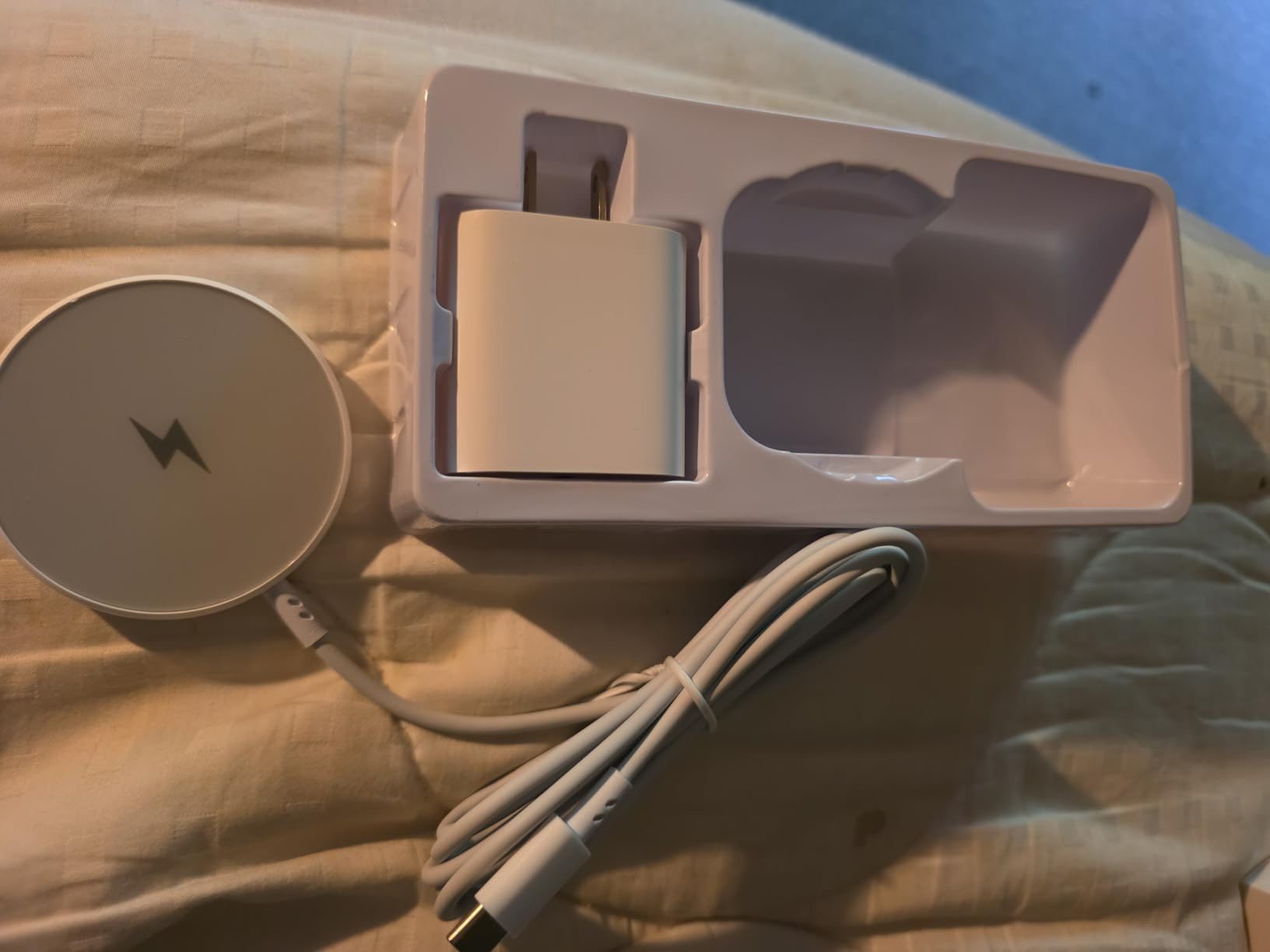
Magnetic alignment simplified nighttime charging. In the dark, fumbling to plug in a Lightning cable or position a phone on a wireless pad was annoying. A magnetic charger let the phone snap into place with minimal precision. The ease encouraged people to charge more consistently, reducing the frequency of waking up to a dead phone because the cable had slipped off during the night.
The combined wireless pad and USB-C wall adapter meant the package included everything needed to charge. Earlier MagSafe-compatible chargers often required buying a separate power adapter that could deliver sufficient wattage. Bundling the adapter removed a decision point and ensured the charger worked at full speed out of the box. It also meant one less thing to research or purchase separately.
SIMILAR
iPhone and MacBook users are compensating for a port problem Apple created
iPhone users are eliminating the tangled cable from every car charging session
iPhone users are transforming nightstands into silent charging infrastructure
Fast charging capability mattered for specific scenarios. Most people charged overnight, when speed was irrelevant. But for mid-day top-ups—before leaving for an event, during a lunch break—fast charging meant meaningful battery recovery in fifteen or twenty minutes. The cable enabled both slow overnight charging and quick emergency charging, covering different use patterns.
Compatibility across multiple iPhone generations reflected how people actually upgraded. A household might have an iPhone 12, an iPhone 15, and an iPhone 17 in use simultaneously. A charger that worked with all of them meant fewer specialized cables and less confusion about which charger belonged to which device. The cable became shared infrastructure rather than device-specific.
Pricing for MFi-certified accessories typically ran higher than non-certified alternatives, reflecting the licensing cost and testing requirements. Previously listed at $30.99, current listings hover around $20.98. That premium was acceptable to people who valued the reassurance of certification, but it also made non-certified cables tempting for users who didn’t understand the difference or didn’t think it mattered.
The certification’s real function was psychological. It didn’t guarantee the cable would never fail, but it made failure feel less likely. People chose certified cables not because they understood the technical standards but because the label suggested Apple had endorsed the product. The cable might be identical to a non-certified version, but the certification made it feel safer, more legitimate, more worth trusting with an expensive device.
"Note: Readers like you help support The Apple Tech. We may receive a affiliate commission when you purchase products mentioned on our website."