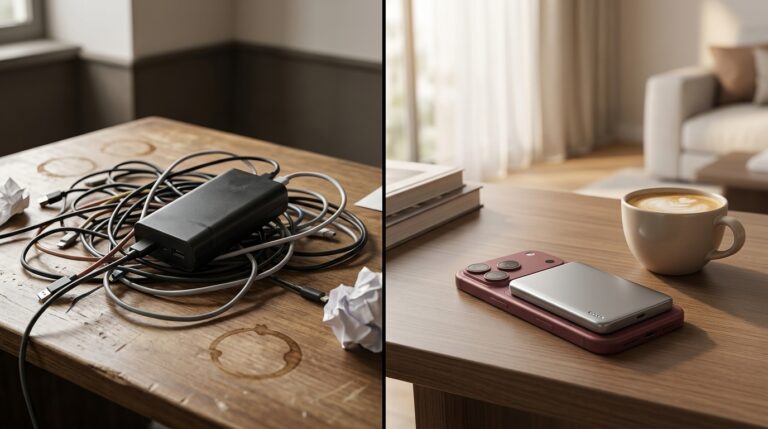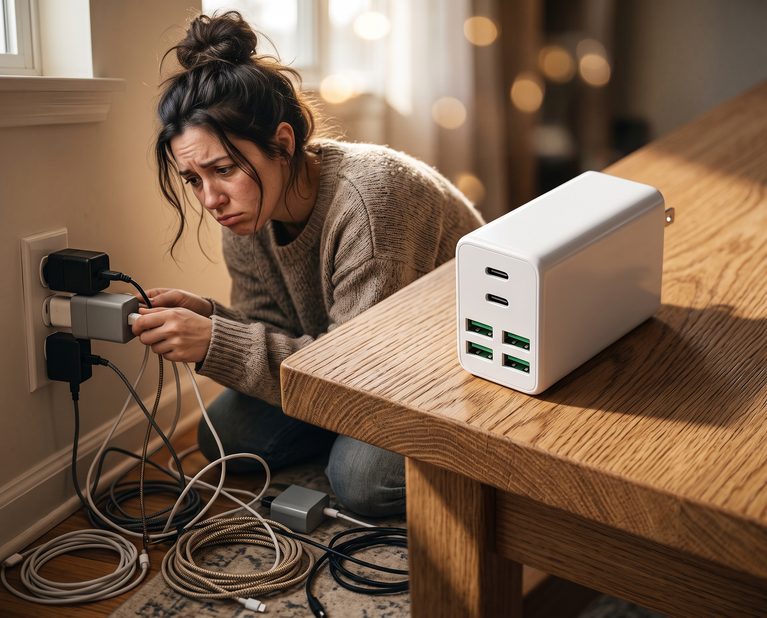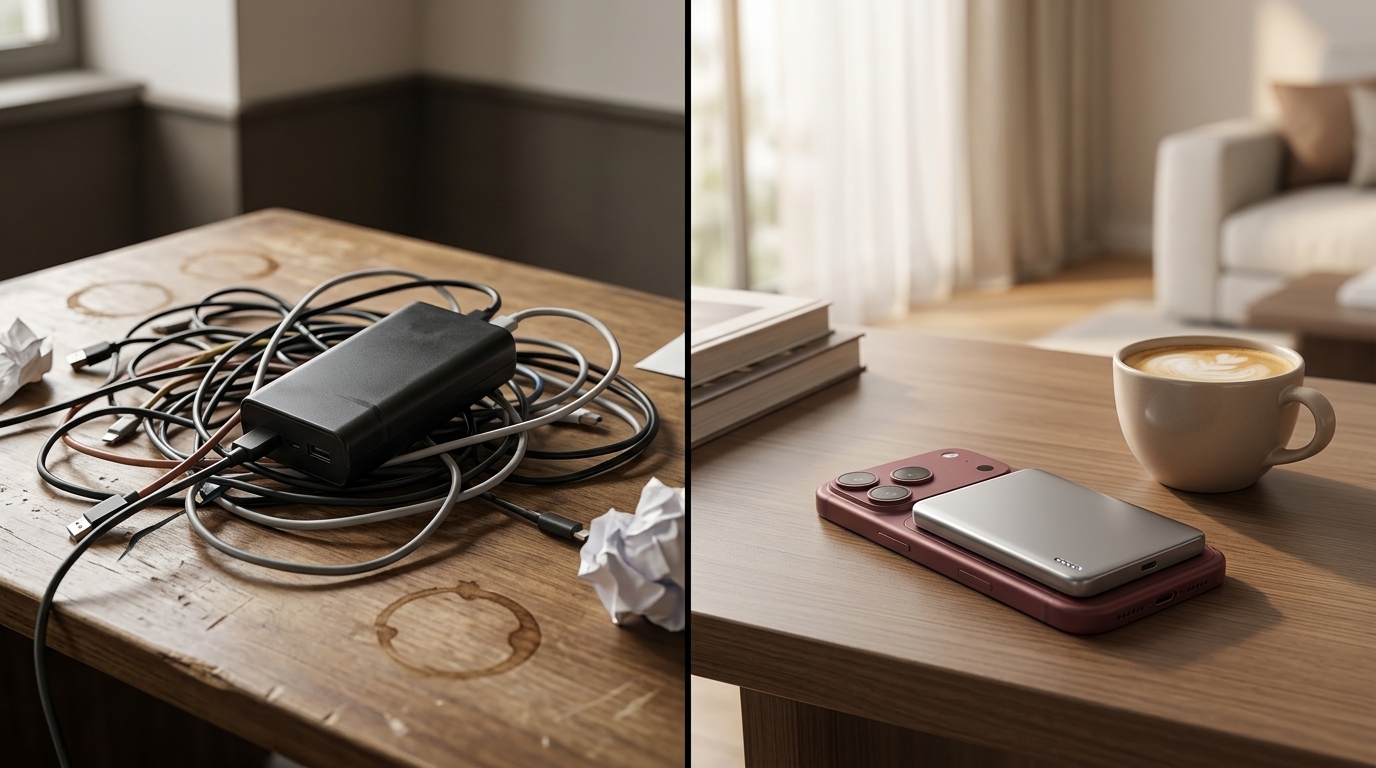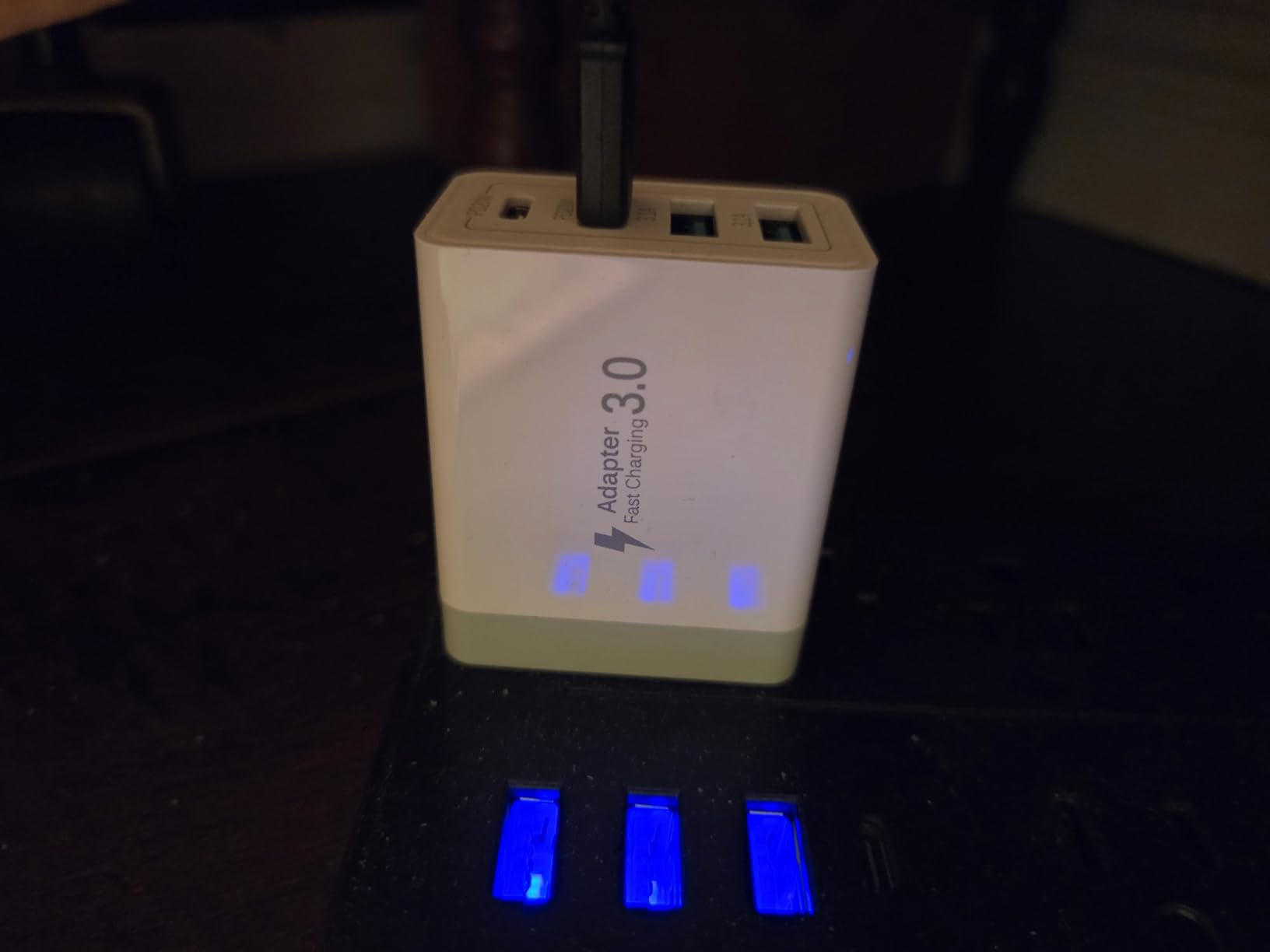
Charging used to be a one-to-one transaction. One device, one cable, one outlet. But as households accumulated iPhones, iPads, Apple Watches, and AirPods, the math changed. Multi-port adapters emerged as a solution, consolidating power delivery into a single footprint. What wasn’t anticipated was how this would transform the outlet itself into contested infrastructure.
The appeal of a four-port block is obvious: fewer adapters cluttering the wall, fewer cables snaking across counters, and the ability to charge a phone and a tablet simultaneously without hunting for a second outlet. But the adapter introduces a new variable—port allocation. Fast charging typically happens through USB-C Power Delivery, while older USB-A ports handle slower speeds. The user has to decide which device gets priority, and that decision shifts depending on time of day and urgency.

In shared spaces, the multi-port block becomes a silent negotiation. A kitchen counter with one adapter means family members are implicitly competing for access. Someone’s phone gets bumped to make room for a laptop. A tablet charges overnight, occupying a slot that could’ve gone to wireless earbuds. The physical act of plugging in becomes a small act of prioritization, repeated daily, often unconsciously.
The blocks themselves are compact, but they’re not invisible. A four-port adapter with cables radiating outward creates its own geometry. It occupies more than just the outlet—it claims the surrounding airspace. In tight corners or behind furniture, this can mean cables bending at awkward angles or the block itself partially blocking adjacent outlets. What was supposed to simplify the charging process instead introduces new friction around placement and access.
SIMILAR
iPhone and MacBook users are compensating for a port problem Apple created
iPhone users are eliminating the tangled cable from every car charging session
iPhone users are transforming nightstands into silent charging infrastructure
Heat dissipation is another quiet concern. Charging multiple devices simultaneously generates warmth, and while modern adapters include thermal management, the user experience is occasionally tactile—a warm adapter isn’t broken, but it’s noticeable. Over months of use, some blocks retain that warmth even when idle, a low-level reminder that power conversion is always happening, even when it’s not visible.
Previously listed at $9.99, current listings hover around $7.98, placing these adapters in the budget tier of iPhone ecosystem accessories. The low price point reflects commoditization—multi-port charging is no longer a premium feature but an expected baseline for anyone managing more than one device.
The broader pattern is that charging infrastructure has become a design problem. It’s not enough for the adapter to deliver power. It has to fit the outlet, accommodate the cables, coexist with other plugs, and survive the repeated insertion and removal of multiple connectors. The outlet, once a simple endpoint, is now a hub—and hubs, by definition, are where complexity gathers.
"Note: Readers like you help support The Apple Tech. We may receive a affiliate commission when you purchase products mentioned on our website."