
MagSafe charging was introduced as elegant and effortless—snap the phone to a magnetic puck, walk away, return to a full battery. But elegance has a cost, and in this case, the cost is heat. Wireless charging generates more thermal energy than wired charging, and when you stack a high-capacity power bank against the back of an iPhone pulling 25 watts, the device gets hot enough that iOS steps in.
The throttling is invisible at first. You snap the MagSafe bank onto the phone, the charging animation appears, and everything seems fine. But twenty minutes in, the phone is noticeably warm. Forty minutes in, it’s uncomfortable to hold. And at some point—usually around 60% battery—the charging speed drops precipitously. Not because the power bank ran out of juice, but because the iPhone decided it was getting too hot and dialed back the wattage to protect itself.
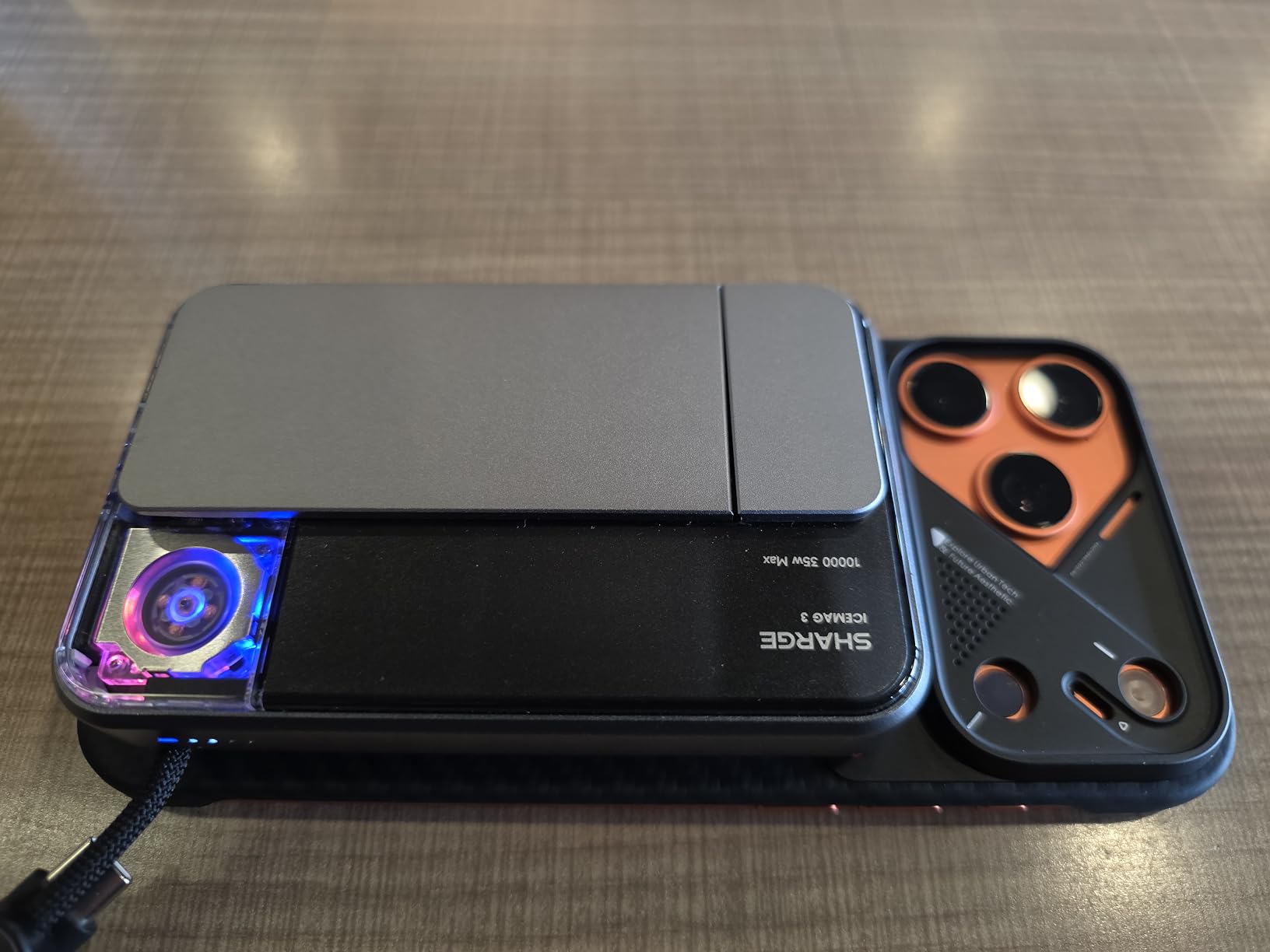
This behavior isn’t a bug. It’s a feature. Apple prioritizes battery longevity over charging speed, and excessive heat degrades lithium-ion cells faster than almost anything else. But for users who bought into the promise of fast wireless charging, the throttling feels like a betrayal. The spec sheet said 25 watts. The real-world experience delivers 25 watts for ten minutes, then 15 watts, then 7.5 watts, stretching what should have been a forty-minute charge into a ninety-minute ordeal.
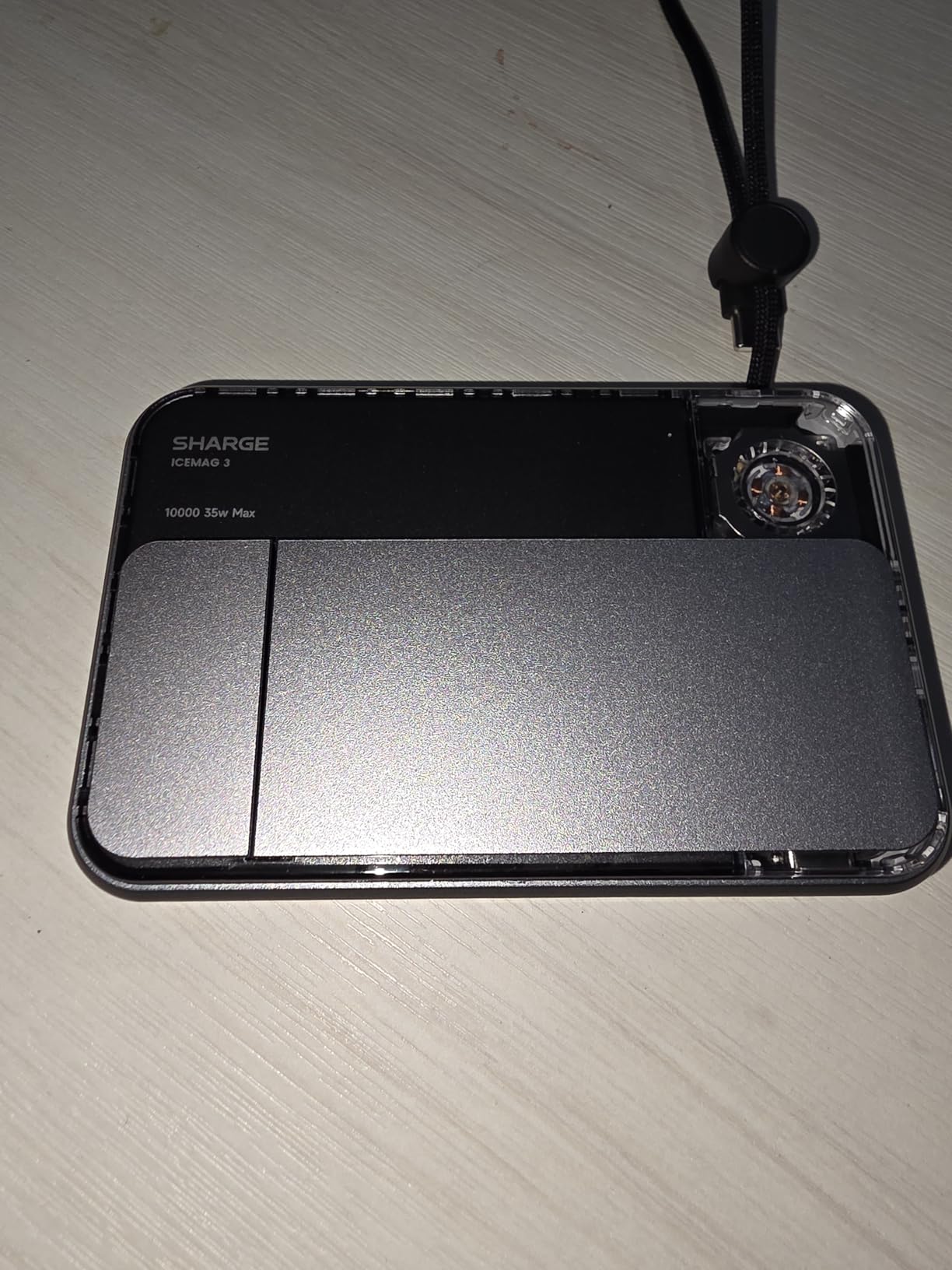
The solution, improbably, is active cooling. A power bank with a built-in fan that pulls heat away from the phone’s back glass, keeping temperatures low enough that iOS never triggers thermal throttling. It’s inelegant—fans make noise, they drain the power bank’s reserves, and they add bulk. But they work. The phone charges at full speed, sustained, without intervention.
SIMILAR
iPhone and MacBook users are compensating for a port problem Apple created
iPhone users are eliminating the tangled cable from every car charging session
iPhone users are transforming nightstands into silent charging infrastructure
What’s fascinating is how niche this solution feels, yet how widespread the problem is. Every iPhone user who relies on MagSafe charging has encountered thermal throttling, even if they didn’t recognize it as such. They just noticed the phone getting warm and the battery percentage climbing slower than expected. Most shrugged and accepted it as the price of wireless convenience. A smaller subset went looking for a fix and discovered that the fix involves reintroducing the one thing Apple spent decades eliminating from its devices: moving parts.
The cooling fan is a conceptual regression. Apple’s design ethos is silence, stillness, solid-state. A whirring fan attached to the back of an iPhone is everything the company has worked to avoid. Yet here it is, sold by third parties, adopted by users who’ve learned that Apple’s thermal management prioritizes the battery’s future over the user’s present need for speed.
The transparent casing with RGB lighting adds another layer of irony. Apple’s products are famously opaque—sealed, inscrutable, their internals hidden behind polished aluminum and glass. This accessory does the opposite, turning the charging process into a visible, audible spectacle. You can see the fan spinning. You can watch the LEDs shift colors as the battery fills. It’s performative in a way Apple would never endorse, yet it solves a problem Apple created.
Previously listed at $79, current listings hover around $67.90. That pricing reflects the accessory’s position as a premium solution to a problem most users don’t realize they have until they’re deep enough into the ecosystem to care about charging speed at scale.
The phone gets warm enough that iOS throttles performance to protect the battery, and suddenly the fast charging you paid for slows to a crawl because the device is managing heat, not power. The active cooling fan short-circuits that throttling, but it does so by reintroducing mechanical complexity into a system Apple designed to be entirely solid-state. The tension between speed and silence, between thermal efficiency and user experience, remains unresolved—and for now, the users willing to carry a fan-equipped power bank are the ones navigating that tension on Apple’s behalf.
"Note: Readers like you help support The Apple Tech. We may receive a affiliate commission when you purchase products mentioned on our website."