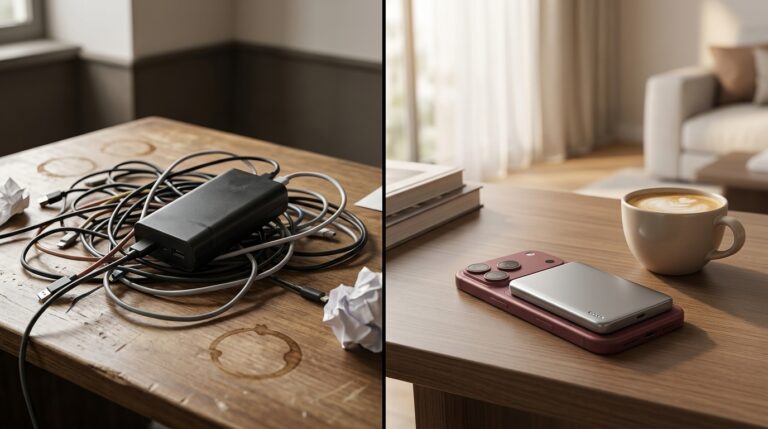
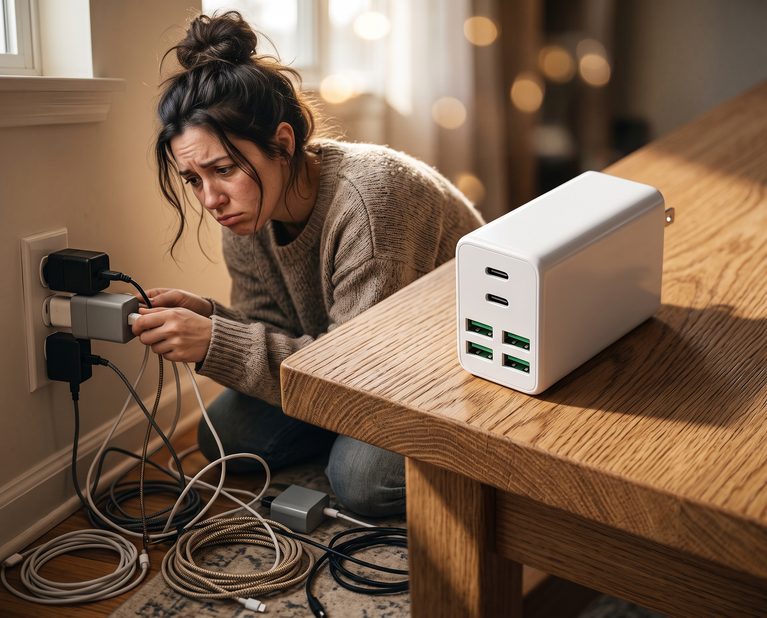
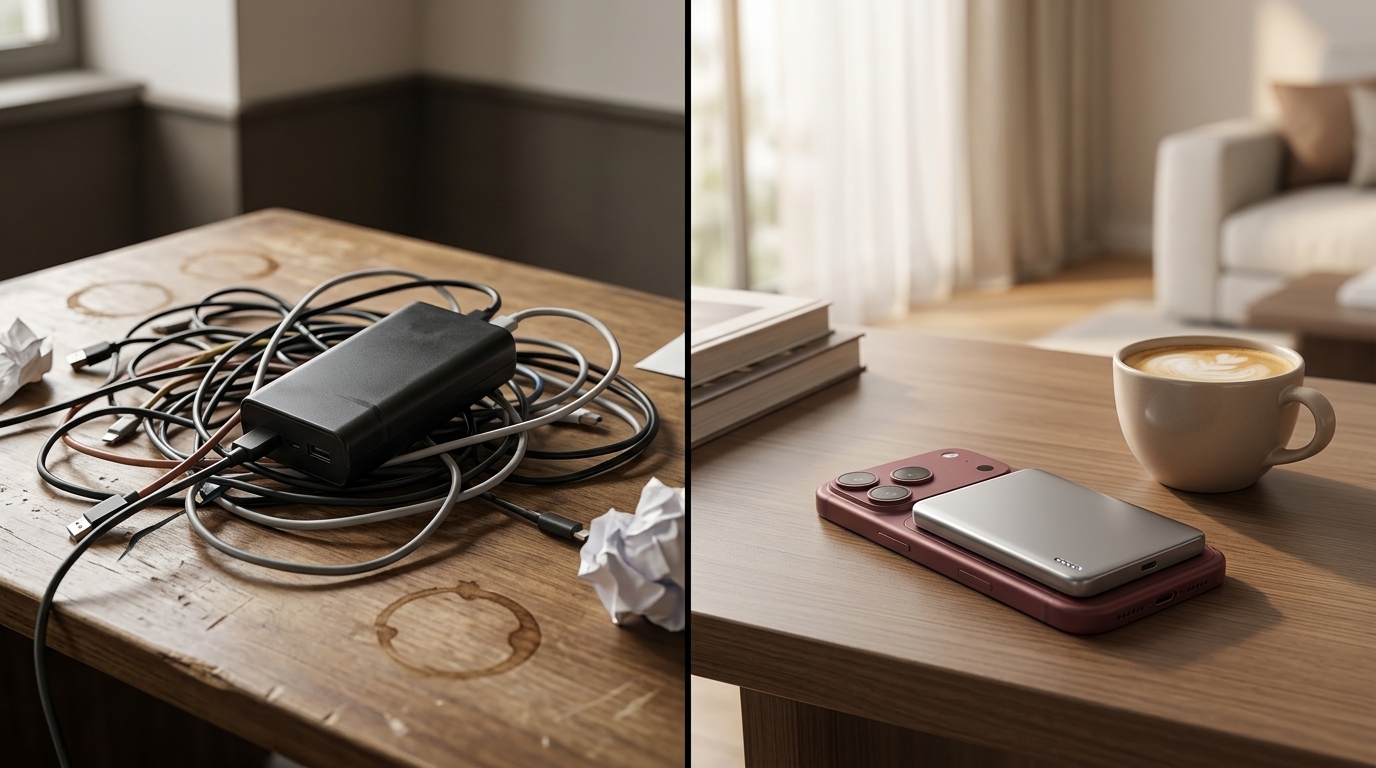
For years, Apple users charged their devices the way most people charge devices: haphazardly. The iPhone plugged into whatever cable was nearby. The Apple Watch on its proprietary puck, tucked behind a lamp. AirPods charging in their case, plugged into a different outlet entirely, sometimes in another room. Each device found power eventually, but the ritual was scattered, improvisational, prone to failure when a cable went missing or an outlet was already occupied.
The three-in-one stand consolidates that chaos into a single object. One footprint on the nightstand. One power cable running to the wall. Three designated spots where iPhone, Watch, and AirPods return every night in the same configuration, the same sequence, without negotiation. The stand becomes infrastructure, and infrastructure creates habits.
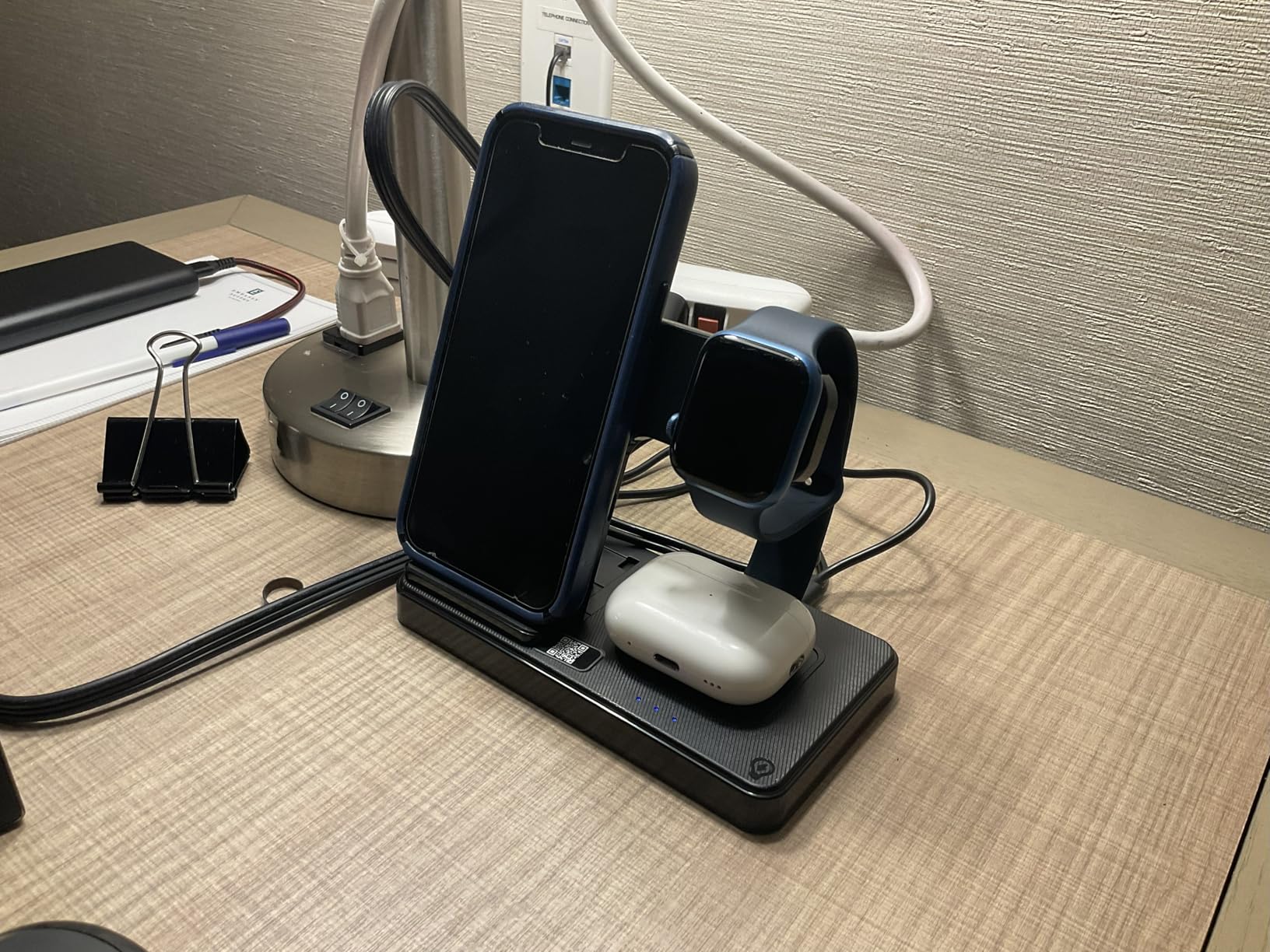
What’s notable is how quickly this setup stops feeling like a convenience and starts feeling like a necessity. The first few nights, it’s novel—everything charges in one place, how efficient. By the second week, it’s automatic. The devices return to their spots without conscious thought. The stand becomes the last stop before sleep, where iPhone, Watch, and AirPods converge in a sequence so routine it happens on muscle memory, no longer requiring conscious attention.
This behavior reveals something about how the Apple ecosystem actually functions in domestic spaces. The company designs each device to be independent—each with its own charging solution, its own cable, its own rhythm. But users don’t experience them as independent. They experience them as a constellation of devices that all need power at roughly the same time, in roughly the same place, and the friction of managing three separate charging rituals compounds nightly.
SIMILAR
iPhone and MacBook users are compensating for a port problem Apple created
iPhone users are eliminating the tangled cable from every car charging session
iPhone users are transforming nightstands into silent charging infrastructure
The stand solves this by creating a charging hierarchy. The iPhone sits highest, most visible, often in StandBy mode so it functions as a bedside clock. The Apple Watch sits to the side, angled for Nightstand Mode, ready to wake the wearer with a haptic tap. AirPods nestle at the base, their case open or closed depending on whether they need active charging or just a place to live overnight. Each device has a designated role, a fixed position, and the stand enforces that structure without requiring the user to think about it.
What’s lost in this consolidation is flexibility. The stand assumes all three devices exist and need charging every night. If you travel without the Watch, its charging puck sits empty, a reminder of absence. If you upgrade to a newer iPhone with different dimensions, the stand’s fit might be off, requiring a new case or a new stand entirely. The infrastructure that creates routine also creates dependency—mess with the setup, and the entire ritual collapses.
Apple has never sold a first-party three-in-one stand. The company offers individual charging solutions—MagSafe for iPhone, a puck for Watch, a case for AirPods—but it doesn’t consolidate them. That gap gets filled by third-party manufacturers who recognize that users don’t want three separate charging experiences; they want one predictable ritual that handles everything simultaneously.
The stand’s placement on the nightstand is telling. It’s not hidden in a drawer or tucked on a shelf. It’s front and center, the most prominent object within arm’s reach of the bed. That positioning reflects its role: not just a charging accessory, but the gravitational center of the bedroom’s nightly routine. Everything flows toward it. Nothing leaves without passing through it first.
Previously listed at $25.99, current listings hover around $16.13. That pricing reflects the stand’s status as foundational infrastructure—cheap enough to justify the experiment, essential enough that going back to scattered charging feels like a regression once the habit has formed.
The stand becomes the last stop before sleep, where iPhone, Watch, and AirPods converge in a sequence so routine it happens on muscle memory, no longer requiring conscious thought. It’s the opposite of Apple’s individualized charging vision, but it’s the reality of how users actually manage multiple devices in shared domestic spaces where nightstand real estate is finite and the mental overhead of remembering three separate charging rituals is one task too many at the end of a long day.
"Note: Readers like you help support The Apple Tech. We may receive a affiliate commission when you purchase products mentioned on our website."