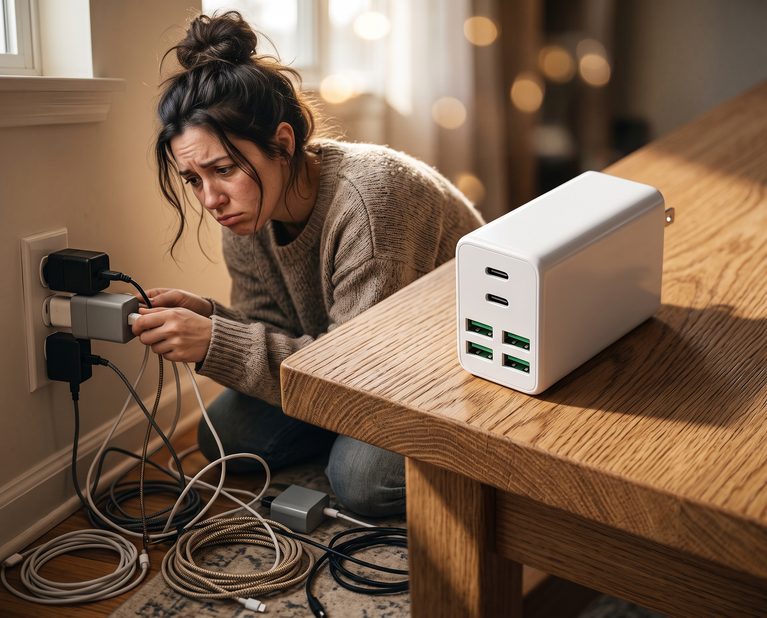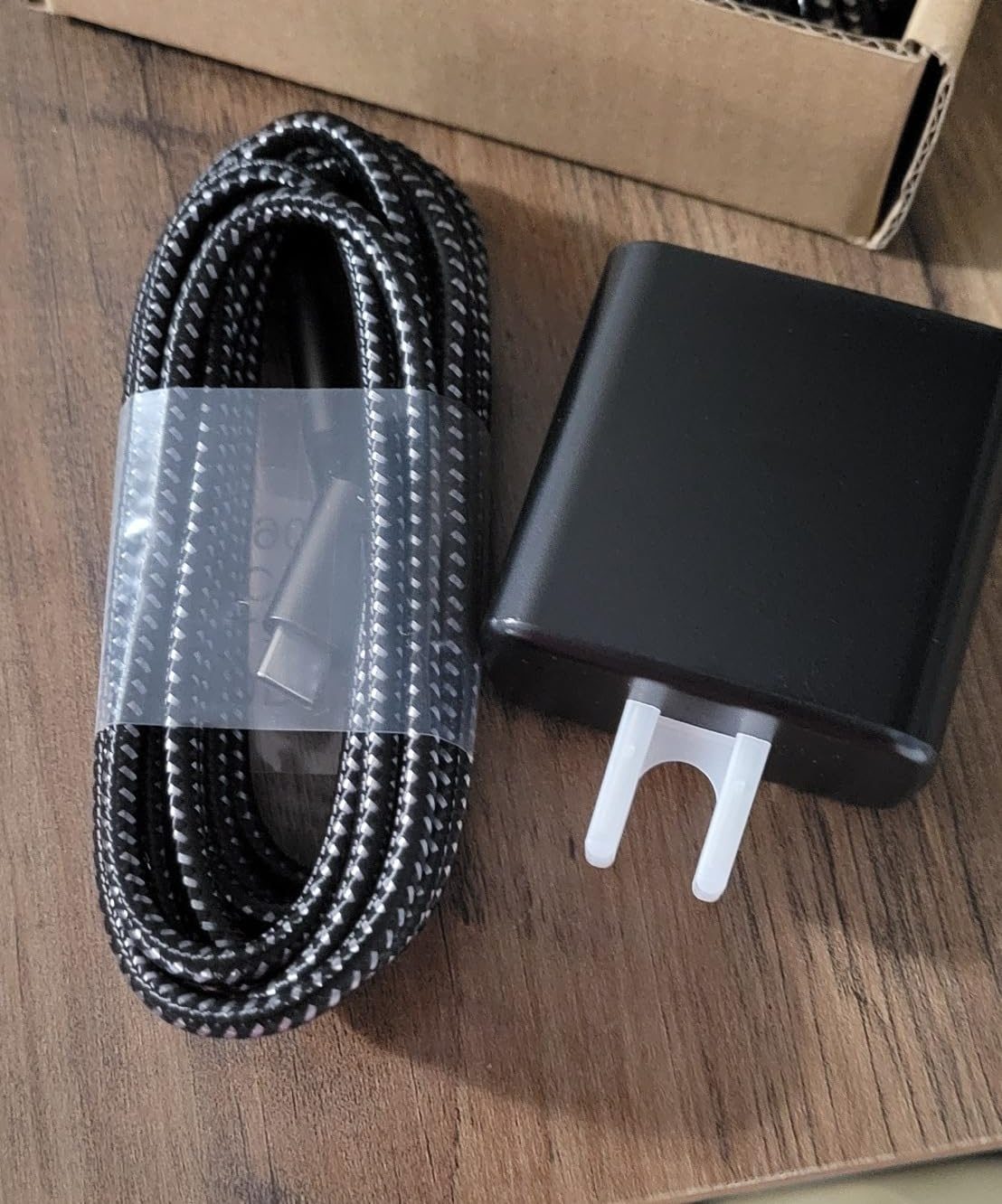
The 45-watt charging block has become standard issue for many Android users, particularly those with Samsung Galaxy devices. But its presence in the broader charging ecosystem is beginning to reshape expectations for all smartphone users, including those in the iPhone ecosystem who are upgrading to USB-C models.
What 45 watts delivers isn’t just faster charging. It compresses the downtime between use and readiness. A Galaxy S24 Ultra or S25 can go from fifteen percent to eighty percent in under thirty minutes. An iPad Pro with the right cable moves even faster. The result is a collapse of the waiting period that used to punctuate the day.
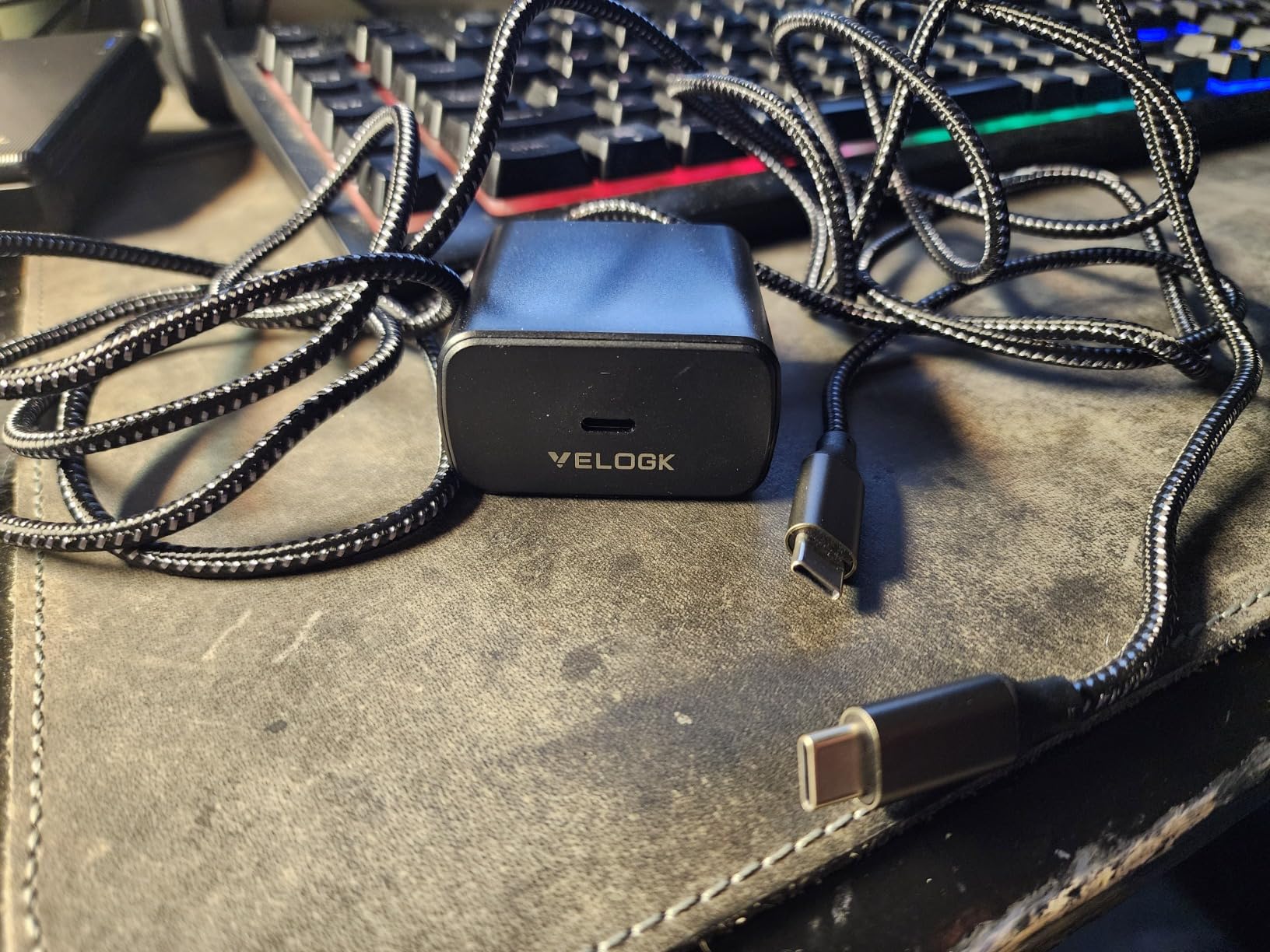
That waiting period used to serve a purpose. It was the moment when you put the phone down. When you walked away from the desk. When you took a break, however brief. Fast charging doesn’t eliminate that break, but it shortens it so dramatically that it no longer feels like a pause. It feels like a glitch.
The ten-foot cable changes the spatial relationship between charging and activity. You’re no longer tethered to a wall outlet. You can charge from across the room, from the couch, from the bed. The cable becomes a kind of tether, but one that permits movement within a generous radius. The phone is charging, but it’s also still accessible.
This creates a new kind of friction. The device is always within reach, even when it’s supposed to be recovering. The boundary between use and non-use blurs. The phone is charging, but you’re still scrolling. The battery climbs, but attention doesn’t disengage.
The emergence of 45-watt charging as a consumer expectation also reflects a shift in how people think about battery life. It’s no longer about making a full charge last the entire day. It’s about making incremental top-ups so seamless that daily battery anxiety disappears. You charge for fifteen minutes in the morning, twenty minutes at lunch, ten minutes before leaving the office. The battery never dips low enough to matter.
Previously listed at $21.99, current listings hover around $19.79. The price reflects commodification, but the behavioral shift is more significant. Charging is no longer a scheduled event. It’s continuous, ambient, and almost invisible—a background process that runs parallel to everything else.
"Note: Readers like you help support The Apple Tech. We may receive a affiliate commission when you purchase products mentioned on our website."