The iPhone didn’t used to live on the desk. It lived in pockets, bags, and hands. It was picked up, used, and set down. But somewhere in the shift to remote work and continuous notifications, it became a fixture. And fixtures need infrastructure.
The adjustable phone stand has become that infrastructure. It’s not a dock. It doesn’t charge the device or connect to peripherals. It just holds the phone at an angle, usually between 30 and 60 degrees, keeping the screen visible without requiring the user to crane their neck or reach across the desk. That’s it. That’s the entire function. And it’s everywhere.
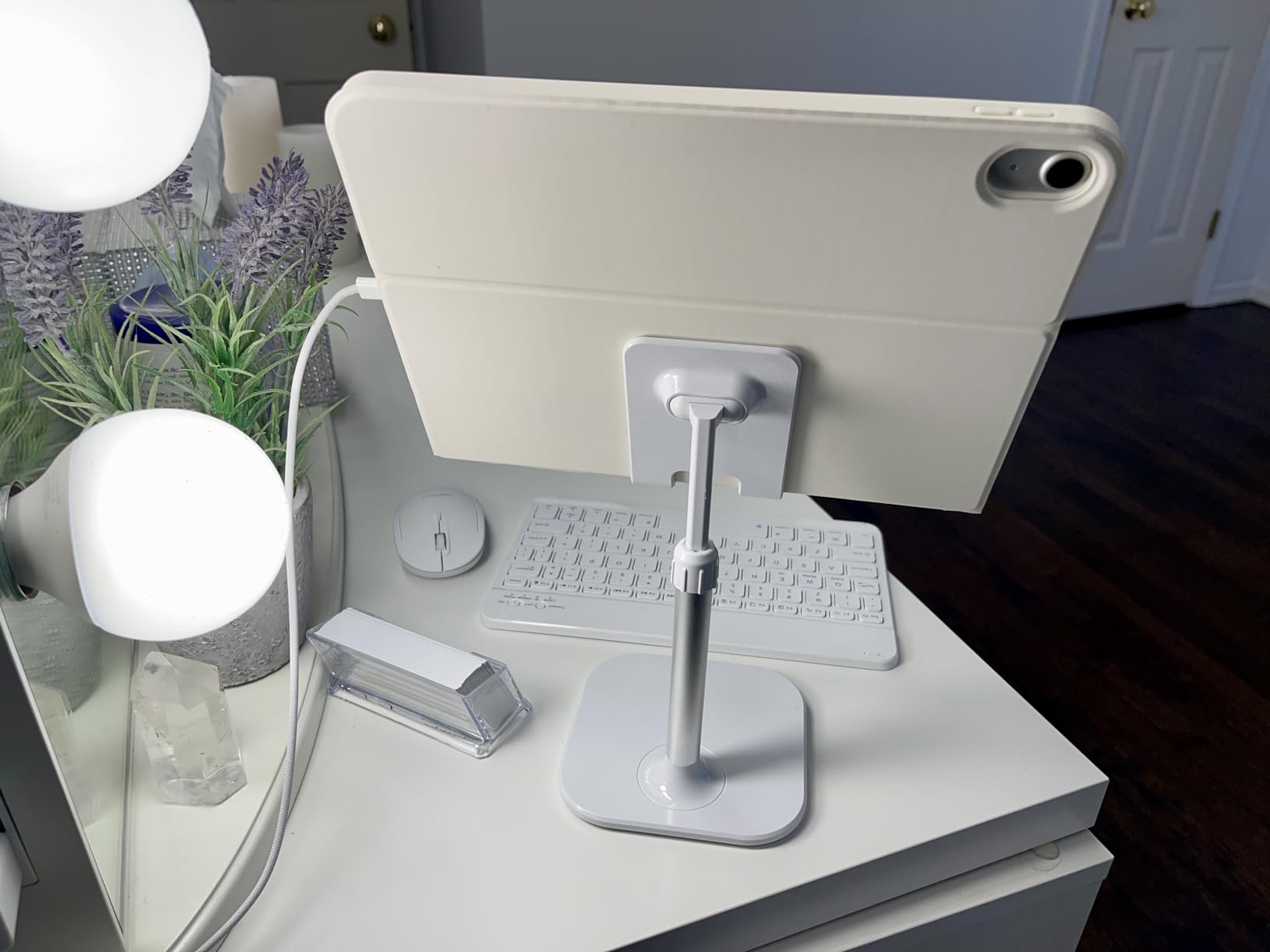
What the stand enables is passive monitoring. The iPhone sits upright, screen facing the user, displaying notifications as they arrive. Messages, emails, calendar alerts, news updates—all of them visible without unlocking the device. The phone becomes a second screen, not for content creation or active engagement, but for ambient awareness. It’s a window into the stream of information that used to require deliberate checking.
This changes the relationship between the user and the device. When the iPhone is flat on the desk, it’s inert. It’s a thing among other things. When it’s upright on a stand, it’s active. It’s participating in the workspace. It demands attention, even when it’s not being touched. The stand makes the phone harder to ignore.
There’s also a shift in how video calls happen. The iPhone on a stand becomes a makeshift webcam, positioned at face height, held stable without hands. FaceTime calls, Zoom meetings, quick check-ins—all of them benefit from a fixed angle that doesn’t wobble or shift. The stand professionalizes the iPhone as a communication tool, turning an improvised setup into something that feels intentional.
The stand also reflects a spatial reorganization. Desks are crowded. MacBooks, external monitors, keyboards, mice, notebooks, coffee cups—all competing for surface area. The stand takes the iPhone off the horizontal plane and lifts it into vertical space, creating room without requiring more desk. It’s an efficiency, but it’s also an acknowledgment that the phone has earned a permanent spot.
The pink color option mentioned in some listings is worth noting. Phone stands have become giftable objects, which suggests they’ve crossed over from utility into personality. The stand isn’t just functional. It’s decorative. It signals something about the user’s aesthetic preferences, their organizational habits, their relationship to their devices.
Previously listed at $15.99, current listings hover around $14.39. The price is low enough that the stand feels disposable, but the behavior it enables is anything but. The iPhone doesn’t get put away at the end of the day. It stays on the stand, upright, awake, waiting. The stand doesn’t just hold the phone. It anchors it to the desk, making it part of the workspace architecture rather than a visitor to it.
"Note: Readers like you help support The Apple Tech. We may receive a affiliate commission when you purchase products mentioned on our website."