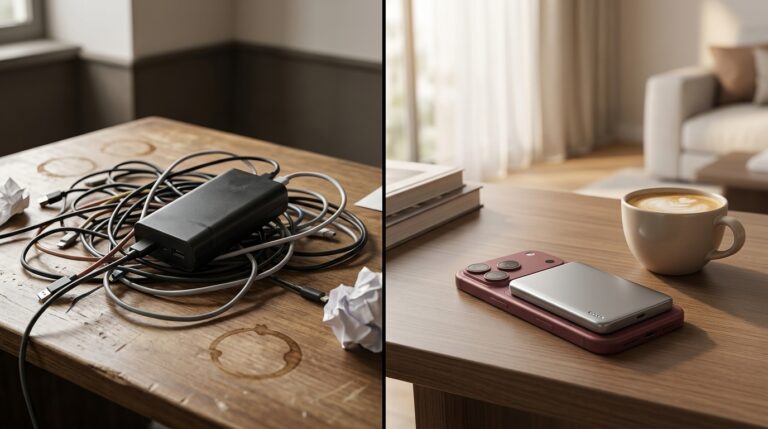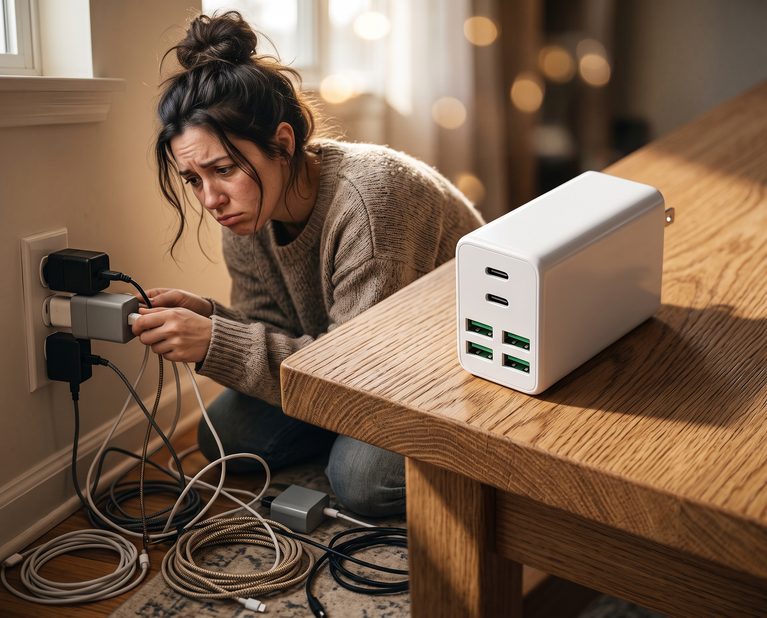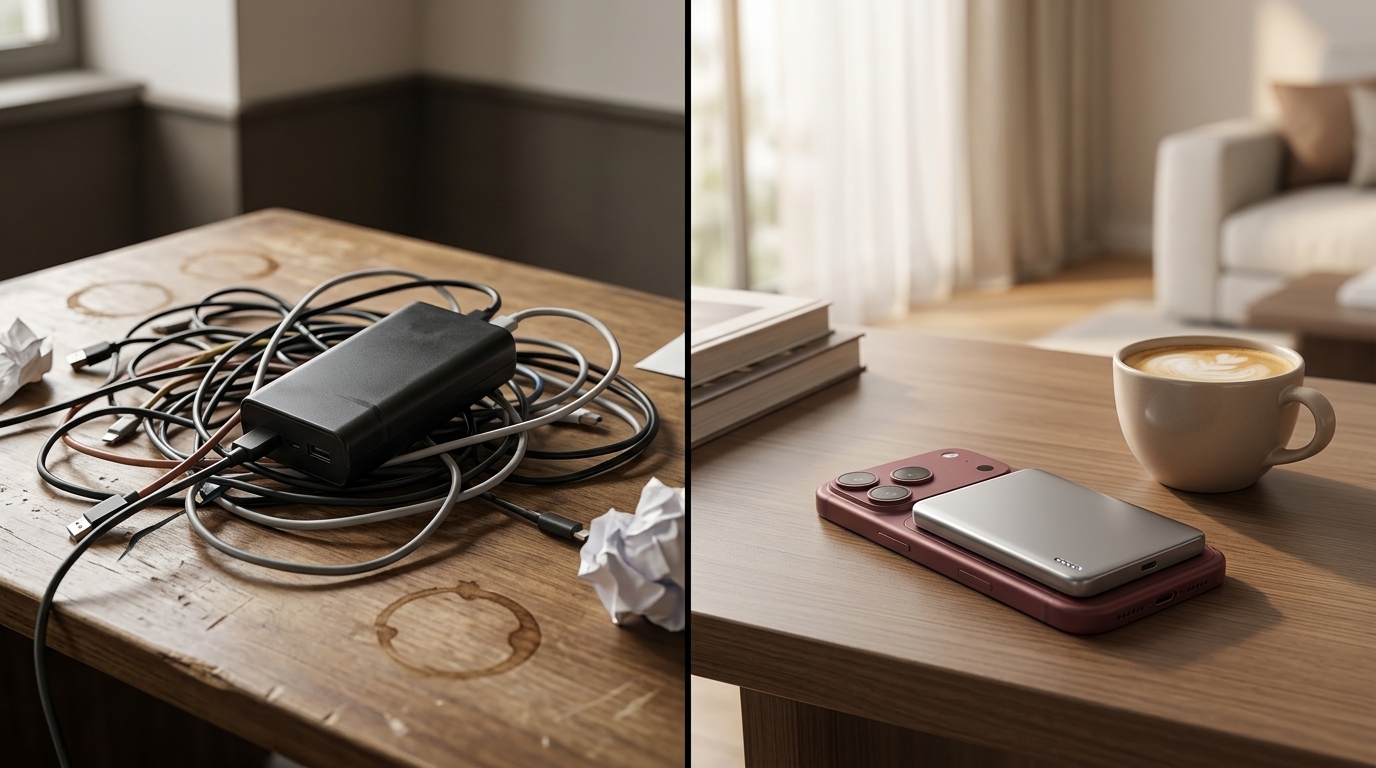


The traditional portable charger requires a separate wall adapter to recharge itself. You carry the battery, use it to charge your iPhone, then return home and plug it into a USB adapter connected to an outlet. The newer generation eliminates the adapter. The battery has an integrated AC plug that folds flat against the body. When it needs recharging, you flip out the prongs and plug the entire unit directly into the wall.
This design shift addresses a common failure point: forgetting the charging cable or adapter. The battery becomes self-sufficient. It doesn’t depend on finding a compatible cable or borrowing someone else’s adapter. It recharges wherever there’s an outlet, which means hotel rooms, airport terminals, coffee shops, and office spaces all become viable charging stations without requiring any additional equipment.
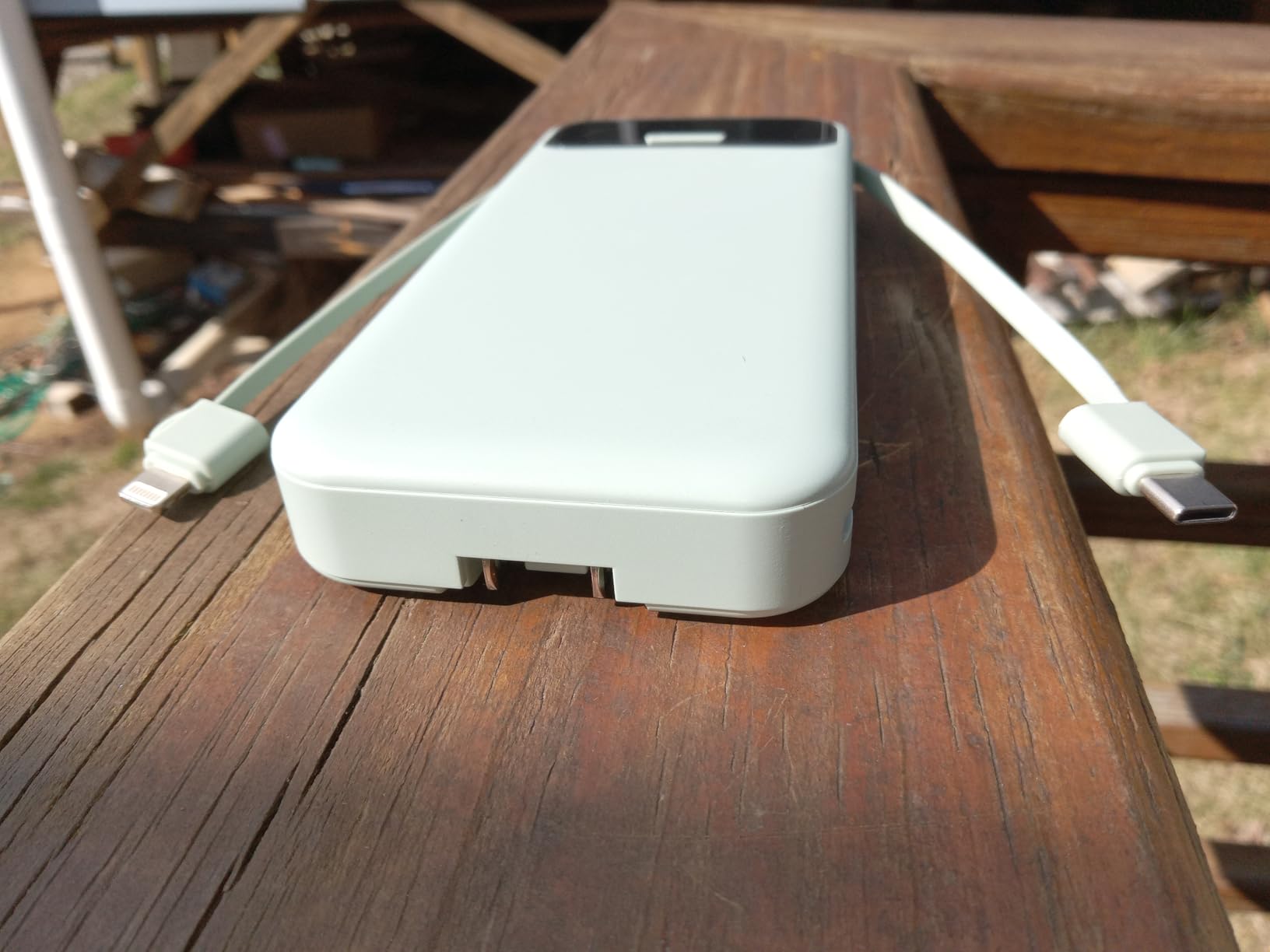
The inclusion of built-in cables—both Lightning and USB-C in some models—extends this self-sufficiency to the devices being charged. The iPhone doesn’t need its own cable. The cables are already attached to the battery, emerging from recessed slots and locking into place when needed. The entire charging ecosystem—battery, cables, wall plug—is contained in a single object that weighs less than a paperback book.
The LED display adds a layer of legibility that older power banks lacked. Battery percentage is visible at a glance, not estimated through a series of blinking lights that require interpretation. Users know exactly how much charge remains, which affects decisions about when to recharge the battery itself and how much power to allocate to which device.
What this configuration enables is a kind of charging independence. Travelers no longer need to pack a tangle of cables and adapters. The power bank handles everything: recharging itself, charging the iPhone, charging secondary devices via USB-C or USB-A ports. It’s a complete power solution in a form factor small enough to fit in a jacket pocket.
There’s also a behavioral shift in how the battery is used. When recharging the power bank required returning home and finding the right cable, users tended to let it deplete completely before recharging. Now, with the built-in plug, users top it off opportunistically. They see an outlet in an airport lounge and plug in the battery for twenty minutes. They charge it overnight in a hotel room without needing to unpack any cables. The barrier to recharging has dropped so low that the battery is almost always near full capacity.
The 20-watt fast charging capability means the battery can deliver power to an iPhone at near-maximum speed, and the battery itself can recharge relatively quickly when plugged into a wall outlet. The entire system moves faster, reducing downtime and increasing the utility of the battery as a continuous power source rather than an emergency backup.
Previously listed at $29.99, current listings hover around $24.98. The price reflects the integration of multiple components—battery, cables, wall plug, display—into a single unit. But the real value is operational. The power bank doesn’t require auxiliary equipment. It doesn’t depend on remembering to pack the right cable. It’s a closed system, self-contained and self-sufficient, designed for users who need power without the logistical overhead that usually comes with portable charging.
"Note: Readers like you help support The Apple Tech. We may receive a affiliate commission when you purchase products mentioned on our website."