
iPhone users who attend events—weddings, concerts, full-day outings—share a specific form of low-level anxiety that has nothing to do with the event itself. It’s the awareness that heavy camera and video use will drain the battery faster than normal usage, and that somewhere mid-afternoon or evening, a choice will need to be made about whether to keep documenting or preserve enough charge to get home safely.
The calculus became automatic—glance at battery, decide if this moment justifies the drain, sometimes skip the photo entirely to preserve enough charge for navigation or communication later. Low Power Mode helps extend runtime, but it also degrades camera performance and dims the screen, creating its own set of compromises. Users learn to ration usage, becoming selective about what gets captured not because of storage limits but because of power constraints.
This friction has existed since the first iPhone, but it intensified as cameras became central to how people experience and share events. The device that’s supposed to capture memories is also the device needed for ride-sharing, payment, tickets, and emergency contact. Running the battery to zero isn’t just inconvenient—it’s potentially isolating in unfamiliar locations.
For years, iPhone users managed this by carrying charging cables and hunting for outlets, or by bringing dedicated battery packs that required cables to connect. Both solutions work, but they introduce their own friction. Cables tangle in bags. Charging while shooting video is awkward. Stopping to plug in interrupts the flow of documentation, especially during spontaneous moments.
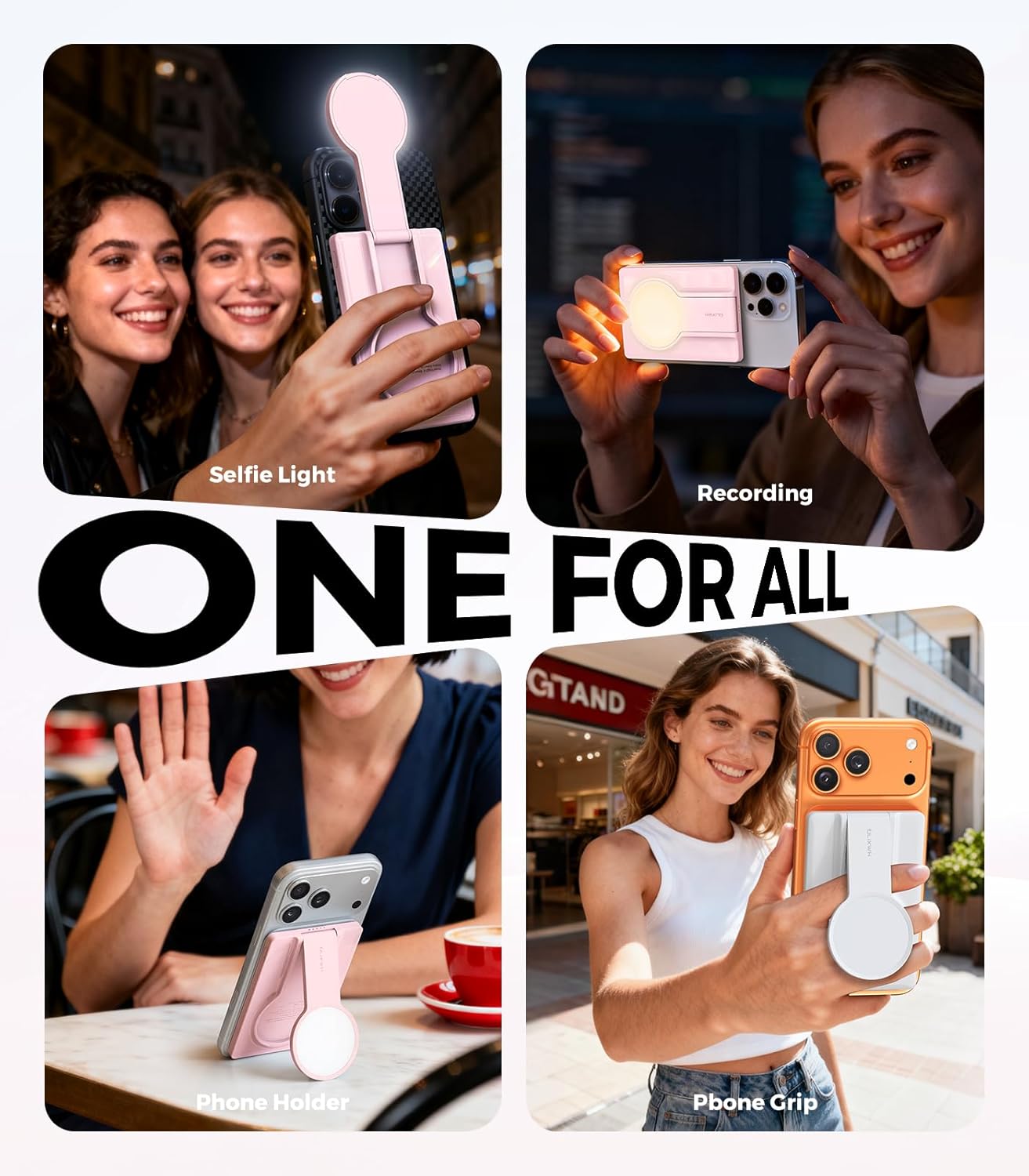
What changed with MagSafe-compatible battery packs is the elimination of cables and the ability to charge while actively using the camera. The battery attaches magnetically to the iPhone’s back, sits flat against the device, and delivers power without blocking the lens or requiring the phone to remain stationary. For users accustomed to Apple’s ecosystem—AirPods that charge wirelessly, Apple Watches that snap to magnetic pucks—this feels consistent with existing interaction patterns.
The behavior shift is subtle. Users stop performing the mental battery calculation before opening the camera app. They stop declining to film a moment because they need to save charge. The iPhone remains usable throughout the day without requiring strategic rationing or planning around outlet locations.
Some of these magnetic packs incorporate lighting elements, addressing a separate friction that iPhone users developed workarounds for—the challenge of being both photographer and subject in low-light social settings. The combination feels less like adopting new equipment and more like reducing two distinct but related annoyances simultaneously.
Listings for magnetic iPhone battery packs with integrated lighting currently reflect a reduction of roughly 25 percent compared with earlier availability.
"Note: Readers like you help support The Apple Tech. We may receive a affiliate commission when you purchase products mentioned on our website."